
My Week In Film: December 8, 2025
Wicked: For Good, The Mastermind, The Running Man, Bring Her Back, Arco, Alpha
The Golden Globe nominations are out today and I’ll be catching up on nominees for the next few weeks, so stay tuned! Until then: I put a musical epic to bed for good, I finally get on Kelly Reichardt’s wavelength, I check out that hunky running man and, thanks to Neon’s generosity, also get one of the biggest bombs at last spring’s Cannes Film Festival out of the way.
Ratings are out of 5.
Wicked: For Good
Jon M. Chu, 2022
Rating: BBB
Cast: Ariana Grande, Scarlett Spears, Cynthia Erivo, Jonathan Bailey, Ethan Slater, Bowen Yang, Michelle Yeoh, Jeff Goldblum, Marissa Bode, Colman Domingo, Bronwyn James, Aaron Teoh, Sharon D. Clarke, Dee Bradley Baker
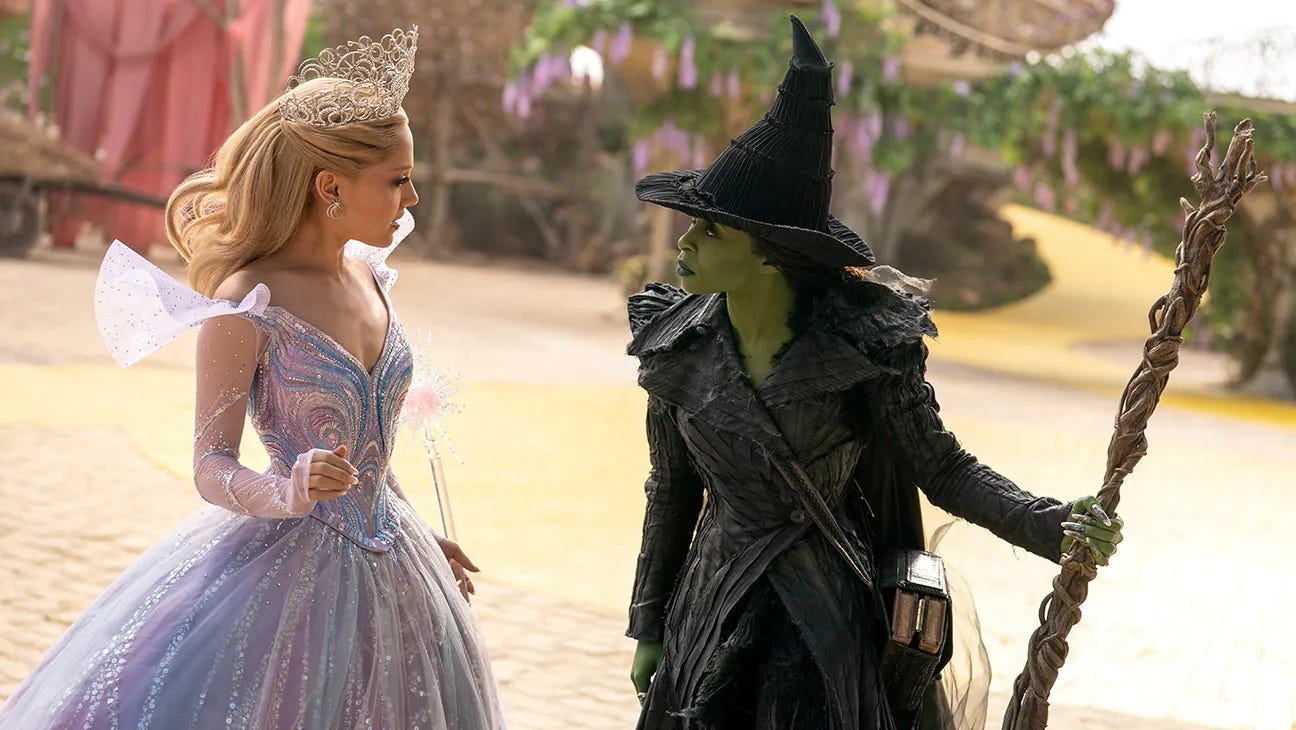
A popular novel, a runaway hit Broadway musical, a surprisingly successful, Oscar-winning first half on film and, for go(o)d’s sake, the conclusion! Studio executives are probably, right now as we speak, cooking up any excuse for a prequel involving Elphaba’s childhood or The Galinda Diaries, but until that comes to fruition, audiences can finally finish the magical tale of a woman who is labeled a Wicked Witch because she knows the Wizard isn’t as powerful as he pretends to be. Having been named an enemy of the people for her refusal to remain silent, Elphaba (Cynthia Erivo) is now keeping herself out of the public eye, popping up once in a green moon to write a politically motivated speech in the sky, but is seeing all her efforts to open the people’s eyes to the Wizard’s manipulations undone by the Machiavellian Madame Morrible (Michelle Yeoh). Her best friend G(a)linda (Ariana Grande) is manipulated by the powers that be into playing the part of spokesperson for Oz’s government despite having none of Elphaba’s magical powers, naive to what she sees as her friend’s obtuseness and blinded by her jealousy over Elphaba’s natural rapport with her boyfriend Fiyero (Jonathan Bailey).
Universal and Chu made the decision to split this Wizard of Oz prequel into two films in order to have the best of both worlds, incorporating as much as they could fit of Gregory Maguire’s plot into the script while retaining the entirety of Stephen Schwartz’s score (or so I believe, I haven’t actually checked, as all the songs sound to me like the same 1987 pop demo repeated over and over again). The second half is, for our good, twenty minutes shorter than the first, but is definitely the weaker portion, merely wrapping up the strands of a first act that has all the most popular (no pun intended) songs, while the latter section is bogged down by an omnipresence of sugary ballads. More significant, however, is that it’s much more obvious when getting to the lower half of the bill that we could easily have done this in one go, too much of it feels like filler and only half of the songs are good for moving the plot forward (Universal’s accounting department begs to differ, of course). Grande fares much better this time around, it’s the richer part of the role and makes her Oscar nomination for acting that much easier to understand, and the production design feels less like a video game than it did the last time (I will admit I saw the first part in 3D and it took a lot out of the experience for me). In the final analysis, however, I’d say that this is one for the fans and is not likely to win new converts; if it’s your thing, enjoy it, and don’t lecture anyone else about it (if you leave me a comment in the spirit of an angry virgin, I will delete it). For the record, and as someone who grew up an Oz fantatic, my favourite peripheral material inspired by L. Frank Baum’s world is the novel Was by Geoff Ryman.
The Mastermind
Kelly Reichardt, 2025
Rating: BBBBB
Cast: Josh O’Connor, Alana Haim, Sterling Thompson, Jasper Thompson, Hope Davis, Bill Camp, John Magaro, Gaby Hoffmann, Eli Gelb, Cole Doman, Javion Allen, Matthew Maher, Rhenzy Feliz, D.J. Stroud, Amanda Plummer
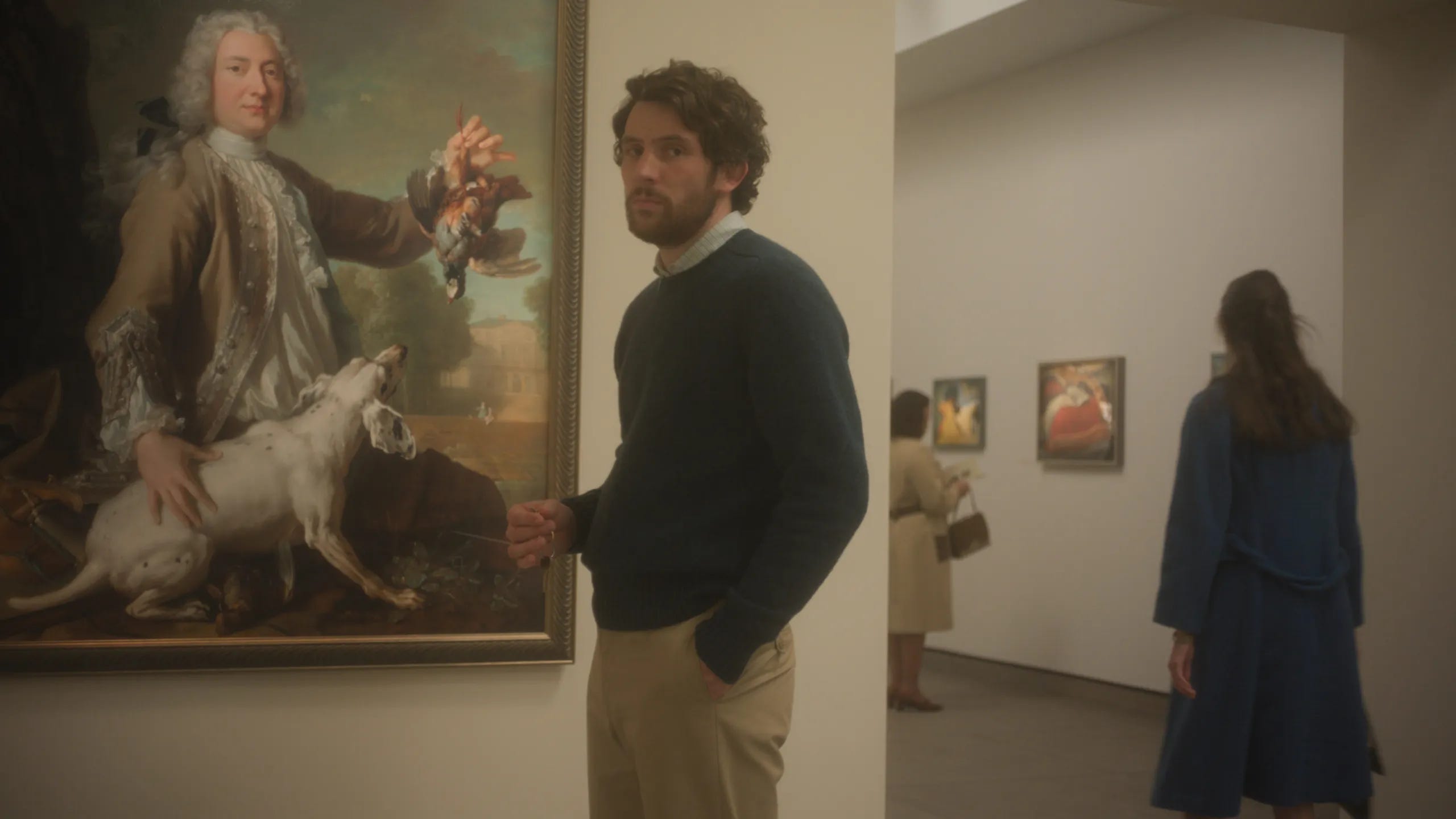
Reichardt’s talent for delivering the most unfettered version of a popular genre reaches a new height with this magnificently subtle, wholly absorbing crime drama. The fetish of a world free of electronic devices is alone a pleasure in the landscape of quiet, sparsely furnished rooms and wide, empty roads she presents, set in a small Massachusetts town in the early seventies. Josh O’Connor is an unemployed carpenter who, we later learn, was also an art major who never completed his education, and a life under the weight of the impressive career of his judge father (Bill Camp) probably has something to do with it. He decides that the solution to his incomplete life with a quietly unhappy wife (Alana Heim) and two boys to raise is to get a sizeable loan from his trusting mother (Hope Davis) under false pretences and use it to finance a robbery. Bringing two friends (Eli Gelb, Javion Allen) into his plan, he sets up a heist at the (fictional) Framingham Museum of Art that, because we’ve all seen it happen under much more dazzling circumstances in blockbuster movies, is to no one’s surprise a failure from the get-go. O’Connor’s character is frequently referred to as the “mastermind” behind a major crime but he can’t even remember the days his children are supposed to stay home from school, the first flaw in a robbery that has mistakes made at every step, and leading, to no one’s surprise, to our hero soon finding himself on the run from the law and from his own life. Unfolding with Reichardt’s almost magical confidence to never manipulate the viewer, this film has her usual long, quiet sequences of process that plunge you deeply into her world, but maintains throughout an undetectably delicate humour which finds its finest expression in the charming irony of the final scene.
Bring Her Back
Michael Philippou, Danny Philippou, 2025
Rating: BBB.5
Cast: Billy Barratt, Sora Wong, Sally Hawkins, Jonah Wren Phillips, Sally-Anne Upton, Stephen Phillips, Mischa Heywood
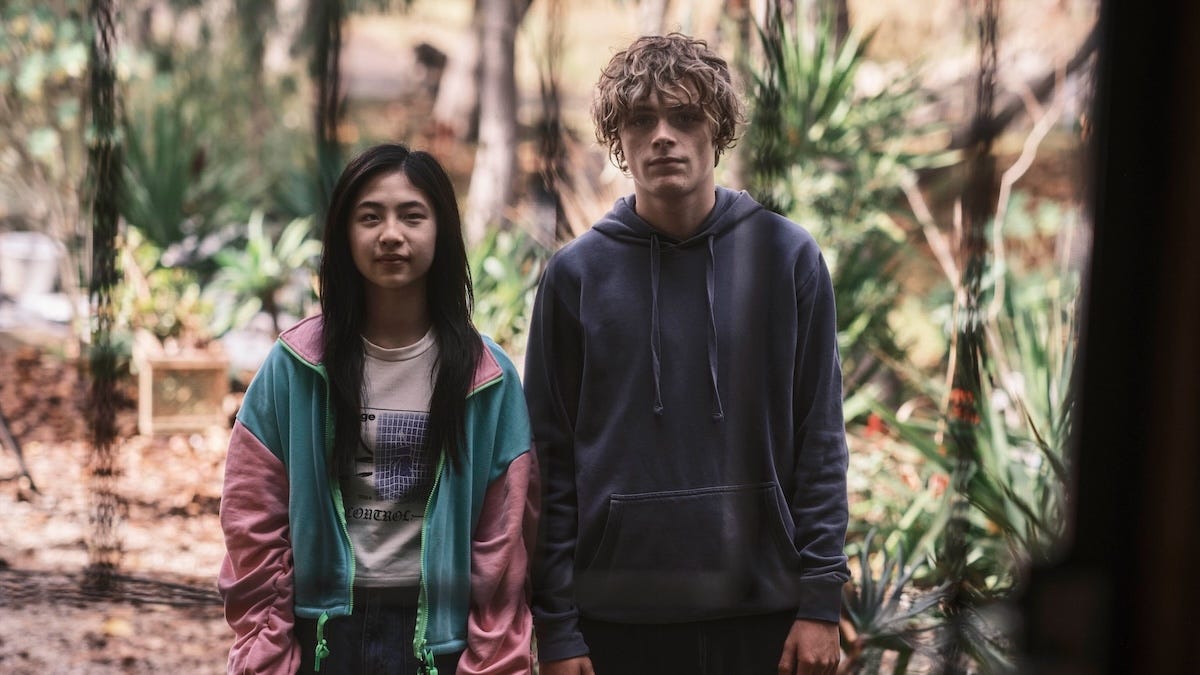
Teenager Andy and his little sister Piper are orphaned when their single father is found dead in the shower and, without any other relatives to take them in, they are subjected to the cruelties of the foster-care system. Refusing to be separated, both siblings adopted by a single woman (Sally Hawkins) and sent to live in her sprawling, messy home where she already has a little boy named Oliver living in her care. Andy is nervous about taking care of his young sibling, she’s legally blind and has a chipper, almost naive demeanor that allows other kids to be mean to her, and his paranoia and past history of rebellious behaviour are blamed when his instincts about Hawkins inform him that something is off about their current living situation. The place they’re living in isn’t just geographically secluded, it feels like their guardian is truly keeping them isolated from communicating with the outside world, and things get a lot weirder when Andy notices that Oliver is willing to put just about anything in his mouth and chew on it, including the furniture. The Philippou brothers follow their clever Talk To Me with a thrillride that relies on more clichés than their former film, but still keeps an audience guessing throughout. It’s great to see Hawkins return to fine form in the lead, a terrifying and wholly charismatic performance that helps erase the memory of her embarrassing turns in Spencer and the truly god-awful The Lost King by Stephen Frears. The final act takes too many familiar turns, the “twists” are easy to see coming and the conclusion feels overdrawn as a result, but its chilliest moments stay with you and it’s a fun watch.
The Running Man
Edgar Wright, 2025
Rating: BB.5
Cast: Glen Powell, Josh Brolin, Colman Domingo, Lee Pace, Michael Cera, Emilia Jones, William H. Macy, Daniel Ezra, Jayme Lawson, Alyssa and Sienna Benn, Katy O’Brian, Karl Glusman, Martin Herlihy, Sean Hayes, David Zayas, Angelo Gray, Oluniké Adeliyi, Sandra Dickinson, George Carroll, Simon Haines, Debi Mazar, Sophie Simnett, Corey Johnson, Bill O’Neill, Chi Lewis-Parry, Charley Palmer Rothwell, Danny McCarthy, Cat Cohen, Noah Ritter, Emma Sidi, Alex Neustaedter, Bebe Cave, James Frecheville, James Austin Johnson
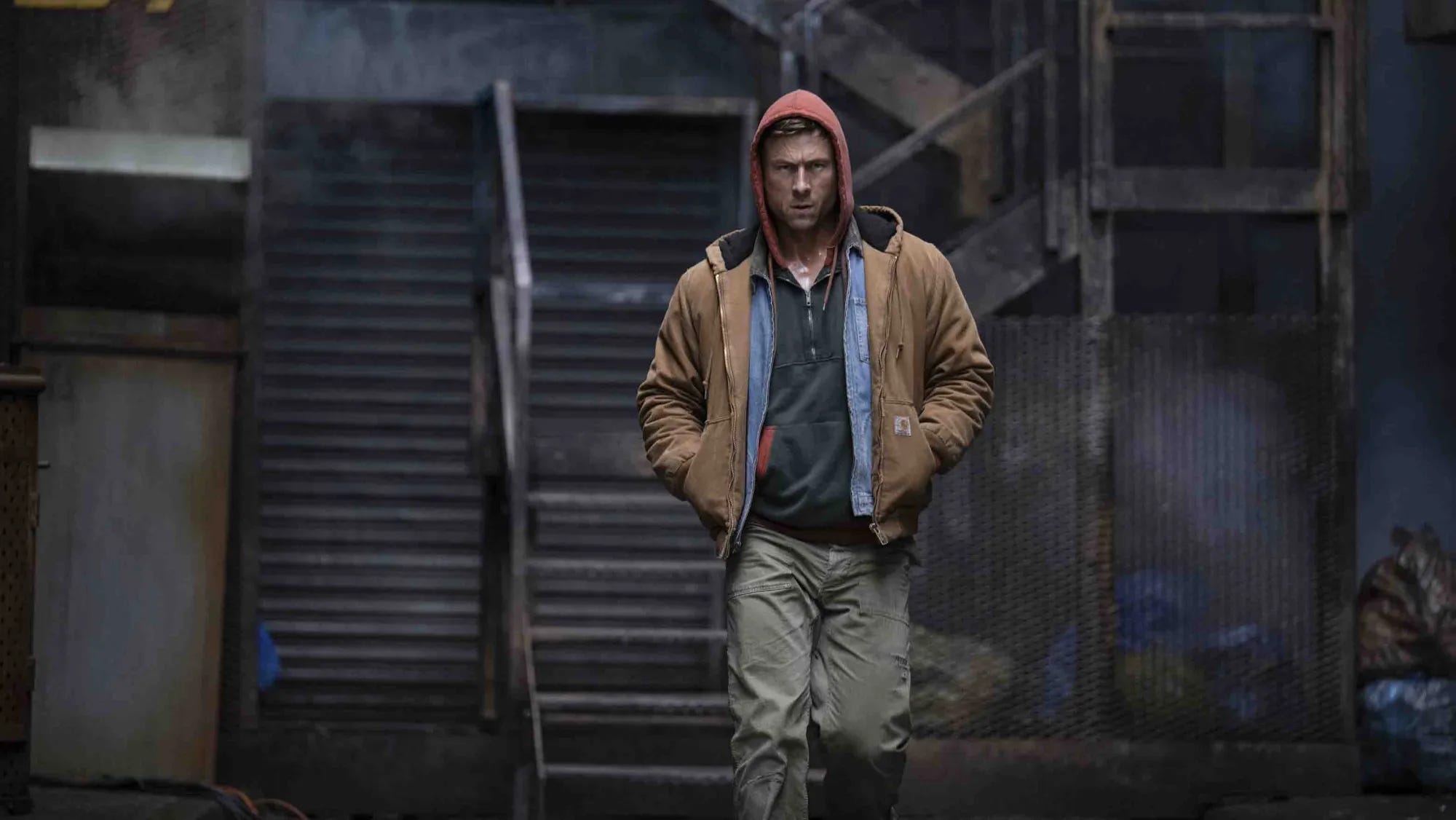
A police state expressing its authority through manipulative media in Paul Michael Glaser’s 1987 adaptation of the Stephen King novel (first published under his Richard Bachman pseudonym) was considered paranoid prophecy forty years ago, but today it’s simply a reflection of the times we are living in. Do you know how I know? Because Edgar Wright, as overrated a director foisted upon us by film bros as ever there was, reminds us about it in just about every scene of this well-meaning, beautifully shot but exhausting remake. Glen Powell, who we have been told is more of an Everyman than Arnold Schwarzenegger was (sure, Jan, cause women would still choose the bear if every man looked like that) is married to a bar hostess wife (Jayme Lawson) who is working endless shifts to keep them afloat while he struggles to find employment. Their daughter is dangerously ill and they can’t afford medicine, and while he knows that the violent reality-television shows that promise its contestants big cash are a fool’s errand, he decides to sign up for the most dangerous one, a dystopian nightmare of a program whose participants are hunted by elite snipers. Powell realizes that the game is purposely engineered for him to fail, having the contestants die is great for ratings, but he quickly develops ways to outwit his opponents and finds trusted allies, while the show’s amorally mercurial host Colman Domingo narrates the entire operation from a television studio.
This movie has everything lined up right, from top-notch visual effects, a script that finds a rich array of situations and settings for its hero and a breathless pace that never quits, but what it has in energy it is lacking in soul. Desperate to be loved for pulling out all the stops, Wright keeps the noise at max volume without ever taking a break and, even more desperate to be admired for having his finger on the cultural pulse, reiterates the script’s lessons about the evils about modern day media to the point of squeezing the air out of the experience; Elio Petri’s The Tenth Victim has the same plot, under much less impressive technical circumstances, but it also has humour and sexy chemistry and the message goes down much easier. Powell seems to have what it takes to be a movie star, he gleams with physical perfection and gives himself to whatever each scene requires, but he has yet to display that spot of vulnerability and lived-in quality that really makes an audience latch on to an actor (remember Brad Pitt brooding in the nineties? I still get misty-eyed over it). It’s a shame this film has done so poorly at the box office, it doesn’t deserve infamy, but it does underestimate its audience and I’m not sorry that The People have responded appropriately, closer to a remake of The Last Action Hero than Arnold’s original classic.
Arco
Ugo Bienvenu, 2025
Rating: BBB.5
Cast: Margot Ringard Oldra, Oscar Tresanini, Swann Arlaud, Alma Jodorowsky, Vincent Macaigne, Louis Garrel, William Lebghil, Oxmo Puccino, Sophie Mas, Mark Ruffalo, Natalie Portman, Will Ferrell, Andy Samberg, Flea, Romy Fay, Juliano Krue Valdi, America Ferrera
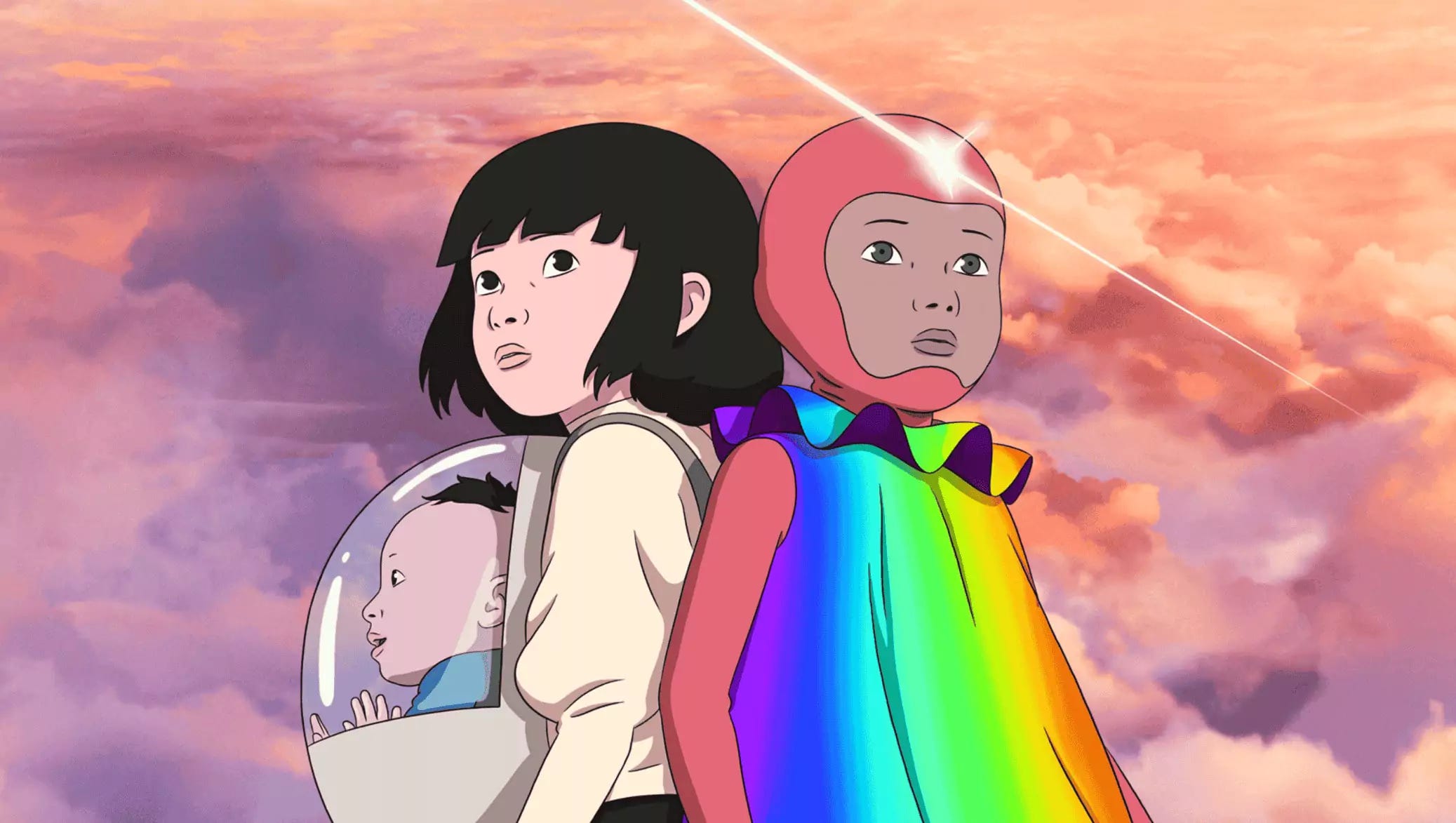
Centuries from now, humanity has survived the environmental destruction it has brought upon itself by living high above the earth’s surface in bubbled homes built on very high posts (and let’s not ask ourselves about the labour rights of the people who built them). Time travel is a common pastime but one cannot participate until they are at least twelve, which annoys little Arco as he watches the rest of his family don their special rainbow suits and have fun days playing with dinosaurs. Sneaking out of the house in the middle of the night with a stolen suit, Arco travels back to the year 2075 and meets a little girl named Iris. She is living at home with her baby brother and being supervised by a robot guardian while their parents work in another city, communicating with their children frequently through holographic technology that is meant to make them feel like they still spend time together as a family. It doesn’t work, of course, and Iris is lonely, forming a bond with this strange boy who is stuck in her time period and does not know how to get home, and through him realizing that technology has destroyed the bond of family life and is at the heart of her emotional sorrow. Things get even more dire when her guardian robot malfunctions and they must live without adult supervision until he can be repaired, while at the same time a strange trio of men have gotten wind of Arco’s presence and are obsessed with finding him, but whether or not they mean him harm is a mystery to us as we watch them close in on their target. The ecological message of this charming animated film is not subtle and it doesn’t need to be, its storytelling is gentle and its characters endearing, while the world it creates, enhanced by the almost awkward simplicity of the animation and the bold and beautiful colours, is more haunting than the big budget dazzle coming from bigger studios with zillion-dollar budgets.

Alpha
Julia Ducournau, 2025
Rating: BB
Cast: Tahar Rahim, Golshifteh Farahani, Mélissa Boros, Emma Mackey, Finnegan Oldfield, Louai El Amrousy, Marc Riso, Jean-Charles Clichet, François Rollin, Ambrine Trigo Ouaked, Driver
Ducournau returned to Cannes four years after her triumph as the first solo woman to win a Palme D’Or with this project, which was more or less ignored and for good reason. Subtler than Titane and in search of a more serious and dramatic narrative, it’s a film whose innovations are sprinkled broadly through a plot that goes in search of a soul and never actually finds one, and that’s a tragedy considering how good the acting is from the entire cast. Mélissa Boros is superb as Alpha, a teenage girl whose rebellion against her doctor mother (played by the magnificent Golshifteh Farahani) reaches its height when she comes home from a party with an impromptu, amateurishly administered tattoo that she doesn’t remember getting. Terrified that her daughter has been exposed to a disease thanks to the use of a shared needle, her mother immediately gets her tested for a virus that is killing people and for which there is no cure, among them Alpha’s uncle Amin (Tahar Rahim), a drug addict who has come to live with them. Alpha’s being tested becomes common knowledge and makes her a pariah at school, while flashbacks to the height of the epidemic of this disease, when her mother was still starting out and working at a hospital overrun with dying patients, slowly reveal family secrets that have been kept hidden since her childhood.
The allusion to AIDS and, by extension, the more recent COVID-19 panic, is not meant to be subtle, and one of the few interesting, imaginative turns that Ducournau comes up with here is a communicable disease which turns people into marble statues. Limbs that slowly calcify into strangely beautiful stone and people breathing dust as an indication that they have been infected is a terrific conceit, and the effects that bring these images to life are terrifying and potent, but it’s impossible to know what else the director wanted to do with this project. The characters are all sympathetic, their being the children of North African immigrants has a message to tell as well, but the story is boring, and what we’re meant to glean from it by the end is baffling to say the least. The director’s first-rate talent with visuals is combined with a screenplay still in its first draft (to be fair, I felt the same way about Titane), and it’s a shame that something with so many good elements in it is, ultimately, so deeply forgettable.