
The Films of Joan Crawford: Part 4
1960-1970: Camp Classic
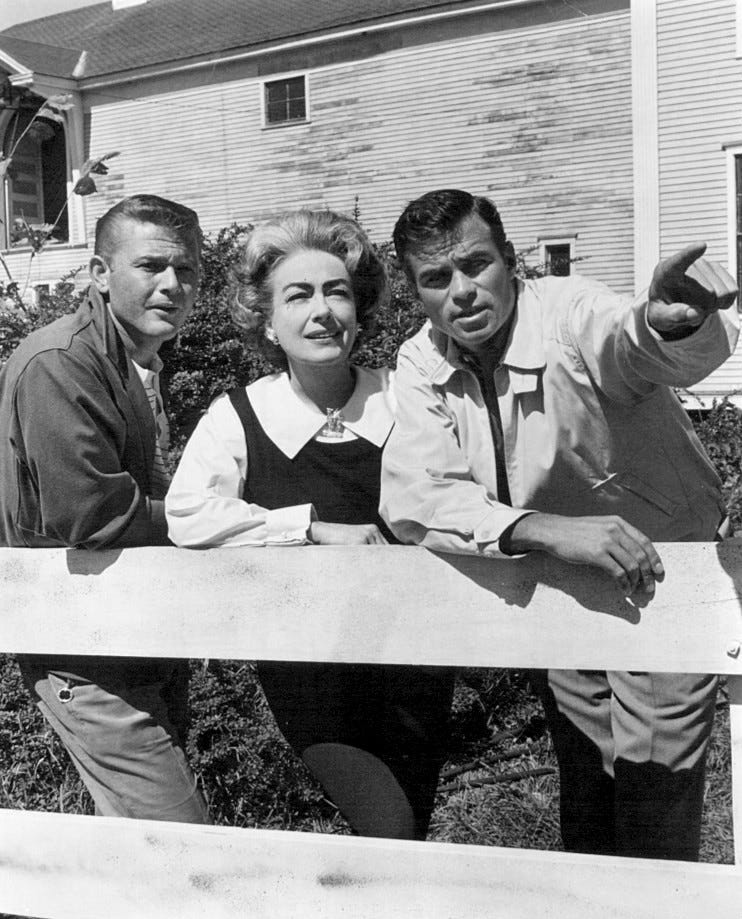
Ryan Murphy’s first season of Feud, focusing on the relationship between Crawford and Bette Davis that peaked with their collaboration on What Ever Happened To Baby Jane in 1962, is well researched fiction, but I have no trouble believing its presentation of Joan’s last years in filmmaking as a study in contradictions. Her success in Baby Jane and the schlocky horror films that followed were a great way for her to stay present in the public mind, but finding herself swinging an axe through a crowd of teenagers in a movie theatre to promote her William Castle exploitation flicks was a far cry from the classy material she was commanding even a decade prior. What’s notable about the films she made in this era, however, is the poise and confidence in front of the camera that has been honed by years of hard work and is undercut only by the quality of the material itself. By the time she reached her last film, Trog, she was done fighting uphill, and lived her final years off screen. She continued on the board of the Pepsi-Cola Company before being forced into retirement in 1973, then four years later was dead of a heart attack, her age reported as 69.
What Ever Happened To Baby Jane?
Robert Aldrich, 1962
Rating: BBBB
Cast: Bette Davis, Joan Crawford, Julie Allred, Debbie Burton, Gina Gillespie, Victor Buono, Wesley Addy, Anne Barton, Marjorie Bennett, Bert Freed, Anna Lee, Maidie Norman, Dave Willock, William Aldrich, Ernest Anderson, Russ Conway, Maxine Cooper, Robert Cornthwaite, Michael Fox, B. D. Merrill, Don Ross, James Seay, John Shay, Jon Shepodd, Peter Virgo, Bobs Watson
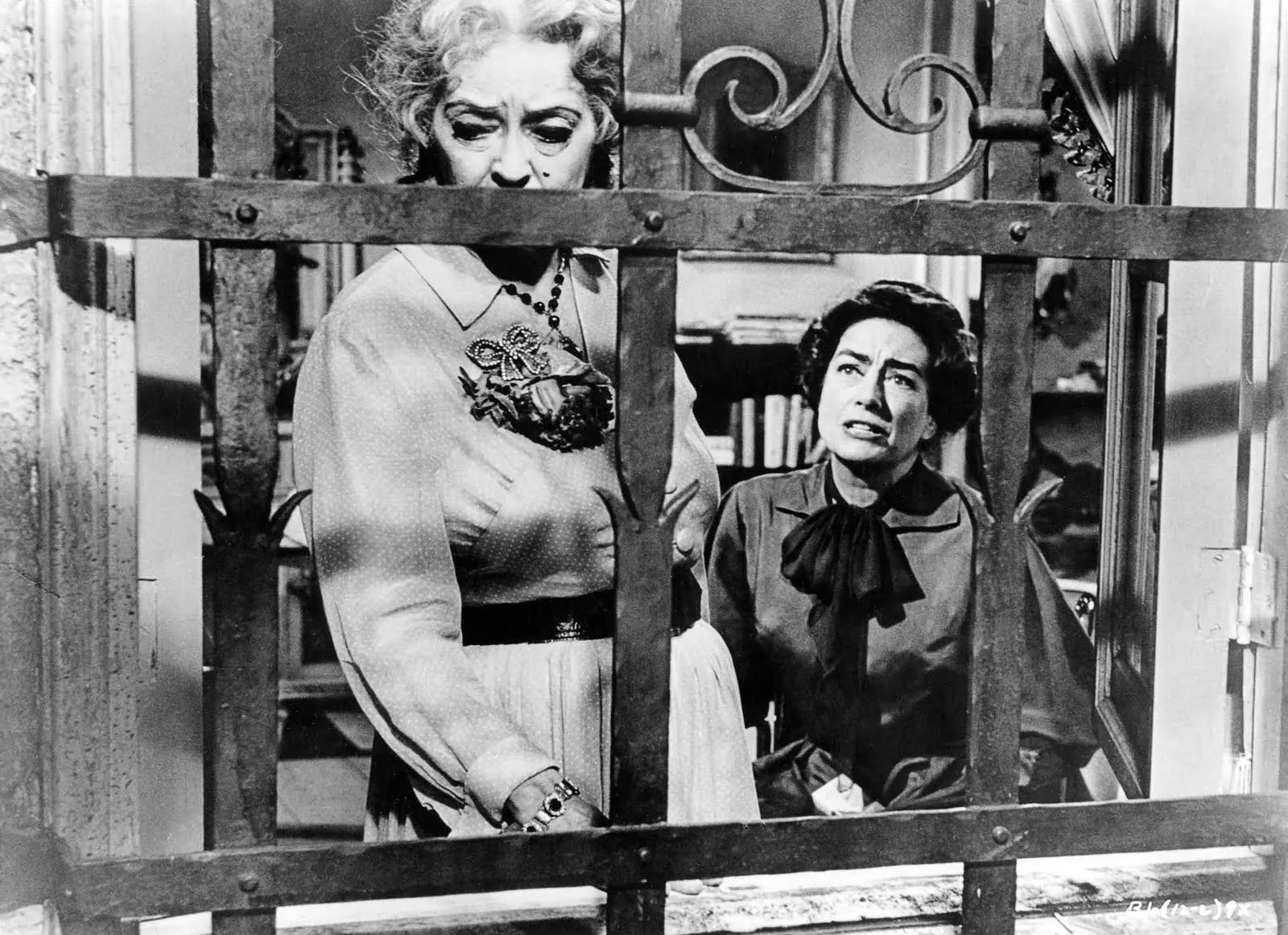
The things these ladies do to each other will make your head spin, though the truly scary thing is that Crawford and Bette Davis made this film at the same age as Susan Sarandon and Goldie Hawn were when they filmed The Banger Sisters. One of the many things that Ryan Murphy got right on his series about the making of this film was pointing out, as Catherine Zeta-Jones playing Olivia de Havilland says, that feuds are about pain, not hatred, there was as much professional respect as personal conflict that kept these two at each other’s throats and intimately connected for so long. The box office success of this early horror classic revitalized the careers of both its stars, though it was a bittersweet victory considering it relegated them to ghoulish roles for the rest of the decade (which, in Crawford’s case, led to her giving acting up for good). She and Davis play sisters whose show business careers are in the past, one a former child star and the other a Thirties glamour vamp who stopped working after being run down by a car driven by her sister, relegating her to life in a wheelchair. Decades later, Crawford is forced to endure her sister’s controlling behaviour, which turns abusive as soon as she tries to assert her own authority. It’s far too long, as if director Aldrich is anxious to make sure we think of it as a prestige project, but his excellent direction gets as much paydirt from the haunted house cinematography and Norma Koch’s perverted Oscar-winning costumes as it does from a genuine, if somewhat thin, character examination of the madness behind Davis’s villainy. Both actresses were hoping for Oscar nominations for their roles and only Davis made it in, understandably given that she has more screen time and a number of Ophelia-on-acid mad scenes, but Crawford holds her own with her quiet desperation.
The Caretakers (1963)
Strait-Jacket
William Castle, 1964
Rating: BBBB
Cast: Joan Crawford, Diane Baker, Leif Erickson, Howard St. John, John Anthony Hayes, Rochelle Hudson, George Kennedy, Edith Atwater, Mitchell Cox
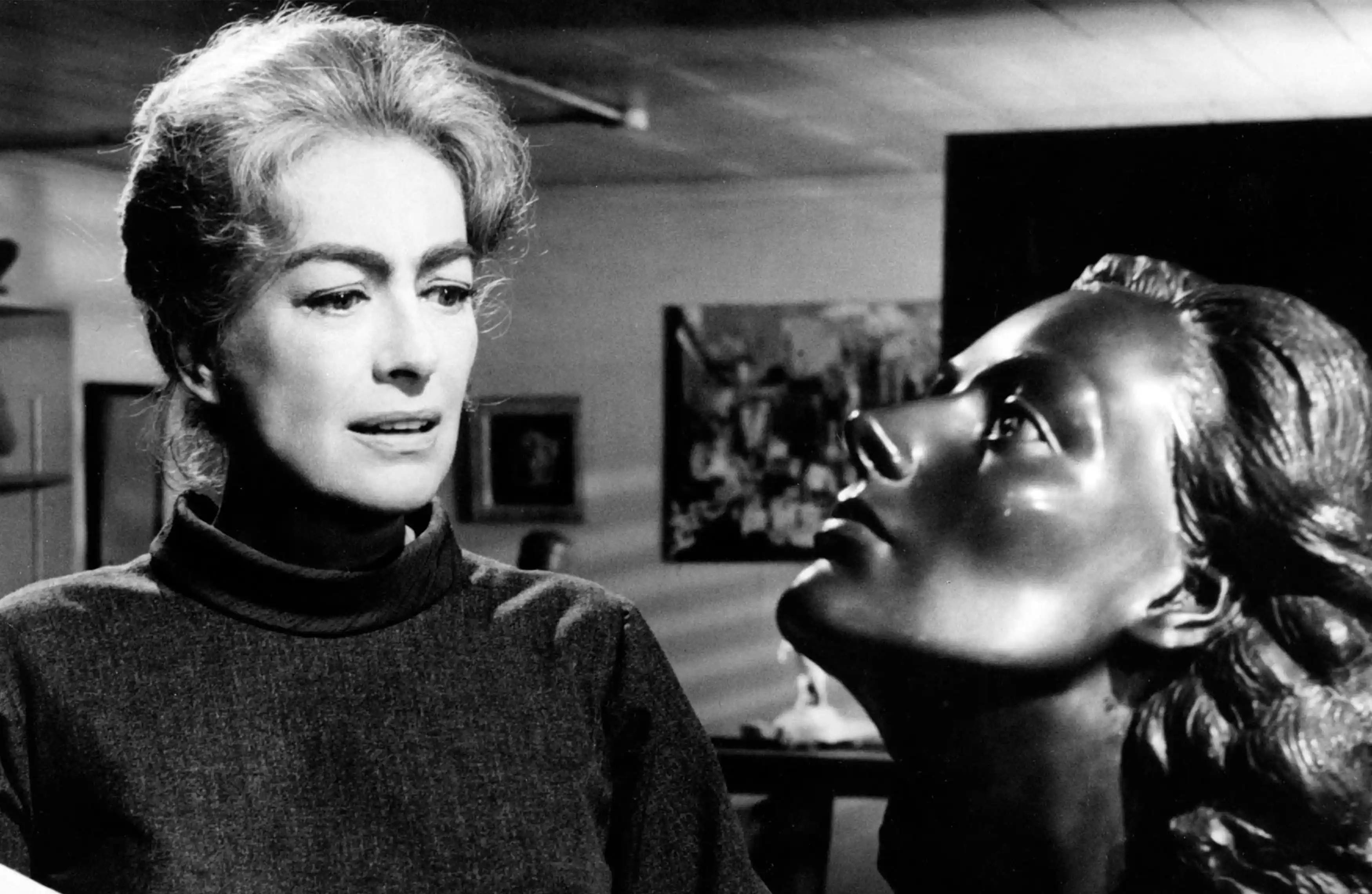
Crawford is magnificent in this surprisingly engrossing, exploitative psychodrama. As a young woman (played in flashbacks at the age of 59) she hacked up her husband and his girlfriend to pieces, then spent twenty years of her life locked up in an asylum. Now released and declared sane, Crawford is sent to live with her brother and sister-in-law on a remote farm where they have been raising her daughter (Diane Baker) during her mother’s incarceration. Baker is thrilled to have her back and desperate to make up for all the years that she missed out on having her near, so she buys her mother the clothing and jewelry she used to wear and has her sport a wig to replicate her youthful appearance. All seems to be going well, but is it? Crawford behaves strangely in her get-up and starts giving Baker’s new boyfriend the fish eye, and there’s that small matter of heads that continue to be chopped up now that she’s back in town.
It is pure B-movie kitsch, complete with bad makeup effects and contrived setups for its violence, but at the centre of its false dialogue and stilted performances it is surprisingly sensitive to its main character, and generous towards the star’s ability to fill out all aspects of the character’s emotional life. This is a woman who had film stock flowing in her veins, and her years in the movies contribute to a performance that is strangely laughable but impressively smooth at the same time. There’s no denying the strength of her experience, and because of this the film is incredibly compelling. Of course, it’s also hilarious, and while you can see its influence in many films (Almodovar’s Women on The Verge Of a Nervous Breakdown and Volver immediately come to mind), it is safe to assume that its influence on the planet’s drag queen population is far stronger. The sight of a confused Jessica Lange swinging an axe down an aisle of screaming teenagers on the episode of Feud dealing with Crawford’s post-Baby Jane career really tells you everything that she was feeling about this stage in her career, but she’s wrong if she thinks her fans aren’t still enjoying watching a pro at the top of her game here. Features the uncredited screen debut of Lee Majors.
Della (1964)
I Saw What You Did (1965)
Berserk
Jim O’Connolly, 1967
Rating: BB.5
Cast: Joan Crawford, Ty Hardin, Diana Dors, Michael Gough, Judy Geeson, Robert Hardy, Geoffrey Keen, Sydney Tafler, George Claydon, Philip Madoc, Ambrosine Phillpotts, Thomas Cimarro, Peter Burton, Golda Casimir, Ted Lune, Milton Reid, Marianne Stone, Miki Iveria, Howard Goorney, Reginald Marsh, Bryan Pringle
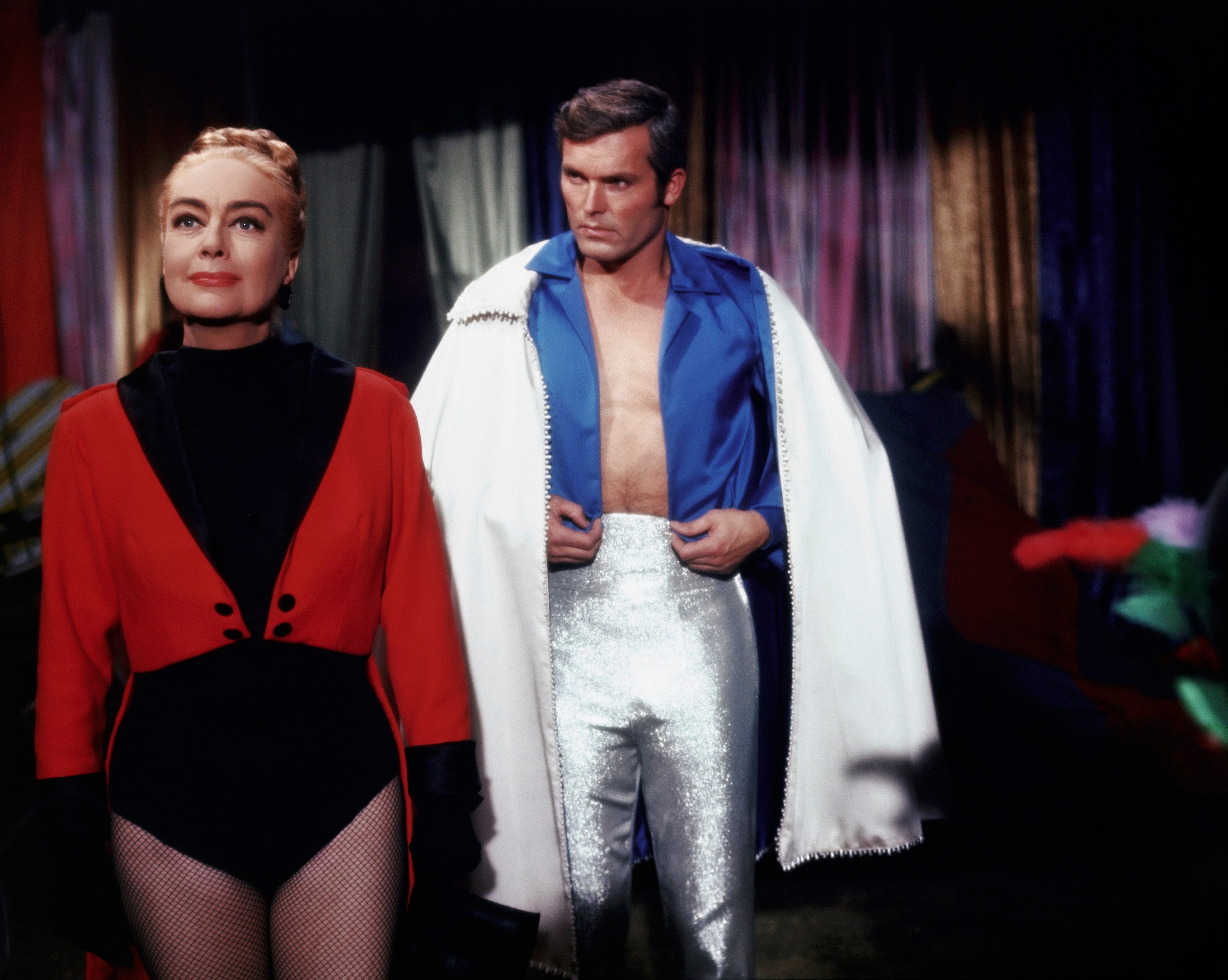
This hilariously goofy thriller’s kitschy qualities are what make it so entertaining. Crawford plays the head of a circus troupe travelling through London in the hopes of making enough money to see a profit. Their smooth ride is being interrupted by a series of murders that are taking place among the performers, but since they only improve box office receipts, Joan isn’t going to do anything too drastic about it. Meanwhile, her new tightrope walker (Ty Hardin) is a hot stud who has plans to shack up with her for good and maybe take over the business from her as well. The fact that Joan was old enough to be her male co-star’s mother is of no importance, I’m happy to see her enjoy a bit of beefcake, but it would be a lot less ridiculous if she wasn’t trying pushing the soft focus and makeup to try and look thirty years younger.
Journey To Midnight (1968)
Trog
Freddie Francis, 1970
Rating: B.5
Cast: Joan Crawford, Michael Gough, Bernard Kay, Kim Braden, David Griffin, John Hamill, Thorley Walters, Jack May, Geoffrey Case, Simon Lack, Chloe Franks, Joe Cornelius, Rachel Stephens, Maurice Good, David Warbeck
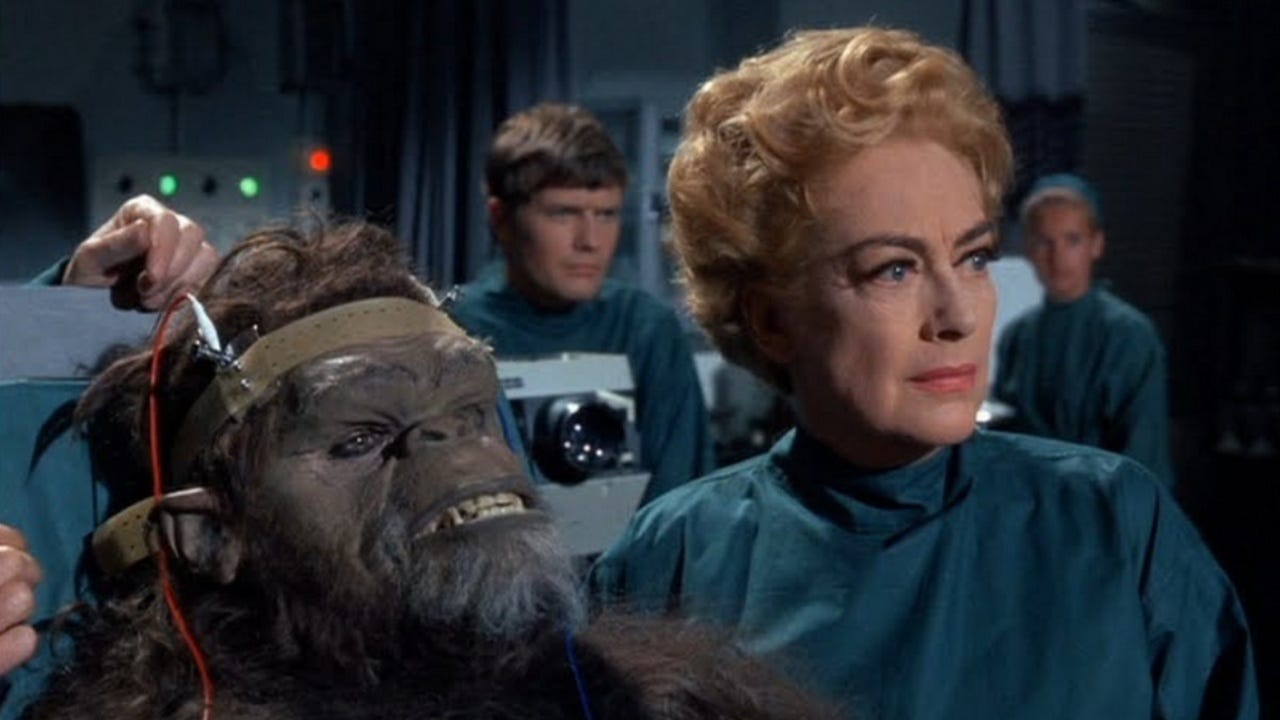
Geologists exploring a subterranean cave make a shocking discovery when one of them is murdered by a primitive creature living underground. The other two report the experience to an anthropologist (Crawford in her final film) who insists on going in to see it for herself, then has the troglodyte sedated and brought back to her lab for study. Crawford believes that the caveman that she lovingly names “Trog” can be brought up to speed with modern-day humanity, even performing surgery to give him the power of speech in the hopes of learning everything she can for her own research, but conservative powers (mainly in the form of Michael Gough) react in fear and want him destroyed.
Touches of Frankenstein in the narrative might have landed a little more poignantly if it wasn’t for the painfully bad characterization at the movie’s core, you are very clearly watching a wrestler wearing a Halloween mask (actually a costume left over from the filming of Kubrick’s 2001: A Space Odyssey). Crawford is, as always, rock solid and poised, giving as much credibility to her silly dialogue as she can and looking fabulous in bright colours and flawless makeup, somehow managing to not embarrass herself despite never actually seeming like she’s having that good a time either. It’s impressive how much the rest of the cast commits, but there’s the creative team behind this film have absolutely no idea how to have fun with this nonsense concept.