
My Week In Film: December 22, 2025
Ella McCay, Jay Kelly, Predator: Badlands, My Father's Shadow, Below The Clouds, Zootopia 2, Merrily We Roll Along, La Grazia, Angel's Egg
I wrote my first film review when I was in high school, for the school paper, and wrote my first review on the internet in 1998. I started a film blog as a hobby and, by the time I shut it down over twenty years later, had reviewed every single film I’d ever seen, at this point somewhere in the ballpark of ten thousand reviews. It goes without saying that I repeat a lot of expressions, and I repeat them a lot, and sometimes I hate it about myself, but if you can come up with ten thousand completely original ways to describe a film, by all means share your secret with me. Until then, I’ll just have to deal with my habit of repeating phrases like “aesthetics are there in place of substance” and scripts never finding their “centre of gravity”, or overusing words like “unfettered” and “vibrant” (to no one’s surprise, the raves are harder to write than the pans, because why ruin a great emotional experience by intellectualizing it?)
This week is more bad than good, beginning with what I think is the worst film of the year as well as disappointments from directors I can usually count on (Baumbach, Sorrentino). The surprise is that an adventure with the evils of the Weyland-Yutani corporation is one of the most beautifully designed and exciting film experiences I’ve had in a theatre in months.
I took my Index offline because I figured out a way I could improve it, so it’ll be back later. “B” Ratings are out of 5.
Ella McCay
James L. Brooks, 2025
Rating: B
Cast: Emma Mackey, Jamie Lee Curtis, Jack Lowden, Kumail Nanjiani, Ayo Edebiri, Julie Kavner, Spike Fearn, Rebecca Hall, Albert Brooks, Woody Harrelson, Becky Ann Baker, Sheetal Sheth, Joey Brooks, Tracey Ullman
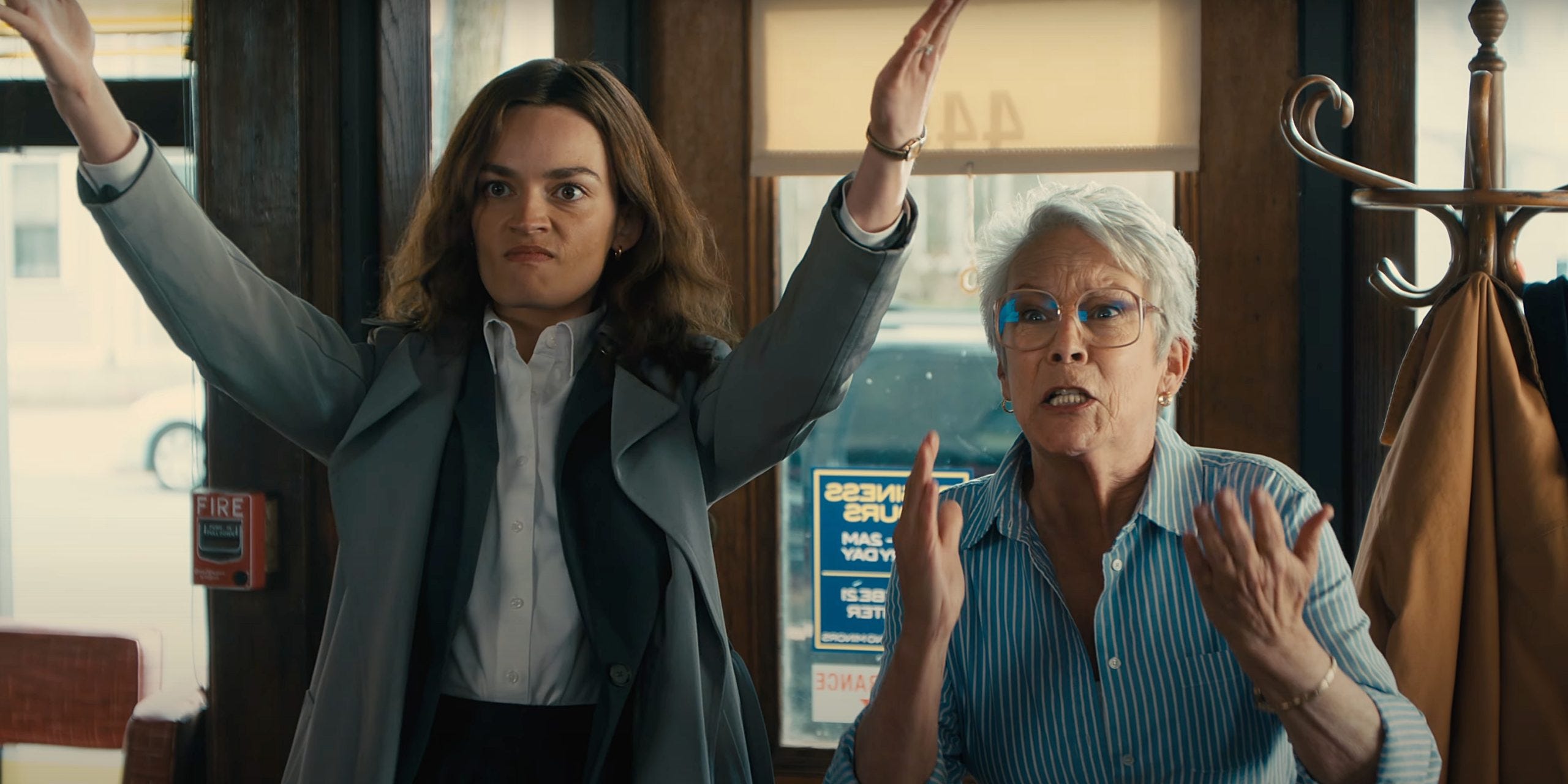
The rarity of Brooks making a feature film between all his producing projects and television work means it is that much more of a damn shame when they don’t work out, and in this case he has laid an egg so big and stinky that it makes his last major failure, Spanglish, look better in the rearview (I missed his 2010 film How Do You Know, so I cannot include that in my comparison). Even wizards get old and lose their powers, and the prescient strength of Broadcast News to very accurately predict the undercutting of news media by corporate interests and personality cults is not a feat that Brooks repeats here, trying and failing to comment on the current political climate by setting a story in a previous one, the beginning of the Obama years. Emma Mackey, a very talented performer, is the first major mistake of this turkey, poorly cast as the Lieutenant Governor of an unnamed American state who is pushed into the top job when her mentor and boss (Albert Brooks) moves on to a higher position in the federal government. The third-youngest person to sit in this seat of government, Ella is a studious, highly principled politician whose clear ideas for improving the lives of her constituents is impractical in the world of ego-stroking and pencil-pushing that big government tends to foster. It doesn’t help that her personal life is an absolute mess, including the trauma of her womanizing father (Woody Harrelson) and the toll it took on her mother (Rebecca Hall in flashbacks, who is not old enough to be her mother no matter how much bad anti-aging CGI they do on Mackey’s face), her manchild fool of a husband (Jack Lowden), whose only concern for her career is how it can benefit him (and whose mob-wife-esque mother, played by Becky Ann Baker, is one of the film’s most poorly calculated choices) and her anxiety-ridden younger brother (Spike Fearn), who causes her a great deal of worry thanks to his suffering from agoraphobia (and whose romance subplot is infuriating and could be easily cut out without affecting the script one bit). Ella’s only relief from these struggles, and quite frankly the only part of the movie we can enjoy without reaching for a cyanide tablet, is her loving aunt, played by a refreshing and warm Jamie Lee Curtis, who has her niece’s back no matter what the circumstances.
Brooks gets numerous plates spinning in the air and we watch as they all come crashing down in pieces thanks to a poorly constructed screenplay that never finds its footing. Broadcast News did a captivating job of pitting a love triangle against a professional background by convincingly presenting that background, you really felt like you saw television studios in action and the stakes were believably high; Terms of Endearment told its story in small arcs, it’s basically a two hour episode of a soap opera, but done with such sincerity and poignant wisdom that it is still a deservedly beloved heartbreaker. Here, Brooks is delivering a rather tone-deaf message about the need for good politicians to get out of high-level politics, but doesn’t know where between The West Wing and Frank Capra he wants his version of that world to exist. There’s a heavier emphasis on the personal over the political and it’s all varying levels of aggravating, after Ella’s aforementioned sibling there is the father subplot, which resolves illogically, and the husband subplot, which is stupid because it’s hard to believe she would put up with that satirically-designed moron in the first place. Then we have narration by Julie Kavner, who plays Ella’s assistant and first line of defence, which offers no insight or perspective to justify its being included in the first place. For those of us who grew up in the eighties and for whom this kind of movie was how we learned about grownups, this one is a particular disappointment, I was really looking forward to being back in the world of colonial houses and overly emotional musical scores that dominated the films I used to view with reverence as a kid next to my older relatives, but instead of the boring version of throwback movie, what we have here is something that is downright inane.
Jay Kelly
Noah Baumbach, 2025
Rating: BB.5
Cast: George Clooney, Charlie Rowe, Adam Sandler, Laura Dern, Billy Crudup, Louis Partridge, Riley Keough, Grace Edwards, Stacy Keach, Jim Broadbent, Patrick Wilson, Eve Hewson, Greta Gerwig, Alba Rohrwacher, Josh Hamilton, Lenny Henry, Emily Mortimer, Nicôle Lecky, Thaddea Graham, Sadie Sandler, Isla Fisher, Jamie Demetriou, Patsy Ferran, Parker Sawyers, Lars Eidinger, Kyle Soller, Tom Francis, Giovanni Esposito
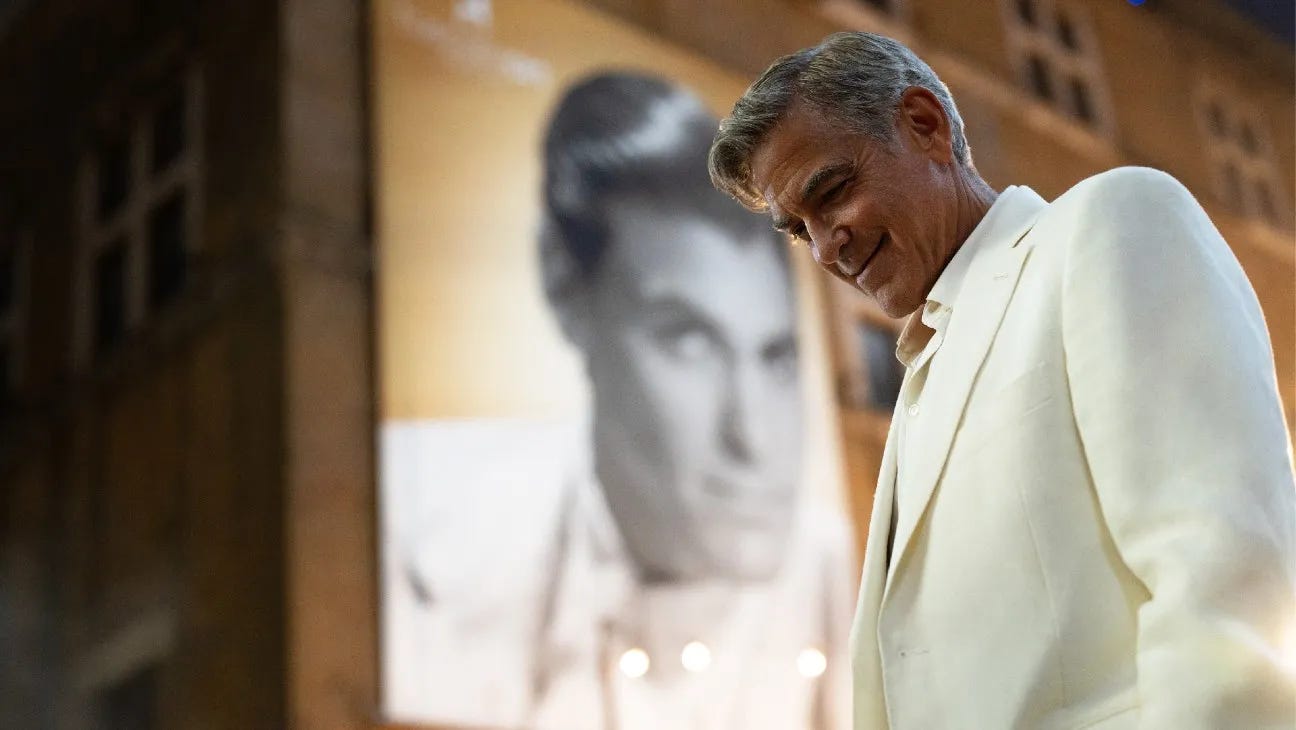
The title character, played by George Clooney, is a venerated film star we meet on the last day of shooting his latest movie, wondering if he has many more like it left in him. When he learns of the death of Peter Schneider, the director who gave him the big break that jump-started his career (played by Jim Broadbent in a fun if tired stereotype of Hollywood pompousness), it adds to Jay’s self-reflective funk; this is further compounded by his running into Timothy Galligan (Billy Crudup) at Peter’s funeral, a therapist and ex-actor who was Jay’s best friend in acting school until they were separated by Jay’s success. They go for drinks to catch up and Timothy tells Jay that he’s happy to not be in the spotlight, satisfied with his transition to a private career, but after one too many drinks, and in a scene too poorly written and directed to make the transition believable, Timothy reveals his anger at Jay for stealing the part that should have established his career. Wondering if the fluke of his stardom renders his achievements meaningless, and worried that he has let the best years of his family’s life escape him, Jay announces to his devoted manager Ron (Adam Sandler) that he’s pulling out of his next planned movie shoot and heading to Europe to find his daughter Daisy (Grace Edwards, who for some reason mumbles under her breath and we’re supposed to believe anyone can hear her), who is crossing the continent on a train with her friends. A tribute that he initially turned down at a film festival in Tuscany is placed back on the schedule as an excuse for his going across the pond, which involves Jay’s foregoing the usual VIP indulgences and dragging his entourage (which also includes publicist Liz, played by Laura Dern) onto a third class train car where he finds Daisy and tries to convince her to come to his tribute event. The joke that Nora Ephron wrote in her unfortunate misfire Bewitched, however, that actors look like real people but “deep down inside, there’s no deep down inside” seems to hold true for everyone in Jay’s life, especially his daughters (the other one played by Riley Keough) who don’t really know him, while his employees give him everything and get very little in return, and his father (played by Stacy Keach) cannot properly communicate with him to atone for their own past woes. By the time he reaches the heavenly beauty of the verdant Italian countryside, Jay has no one left at his side with whom to celebrate a retrospective on a career that he sacrificed so much for (and, for some reason, even though young Jay is played by Charlie Rowe in flashbacks , we get a sizzle reel of his career that has clips of the real Clooney’s past film and television work).
Imagine if Bergman’s Wild Strawberries was directed by Fellini (or if 8 1/2 was blended with Satyajit Ray’s The Hero, perhaps) and you have this blending of classic European aesthetic with Baumbach’s more introspective style, a confused and unaffecting comedy. I don’t mind that it is merely amusing instead of being outright funny, but poignant observations and meaningful interactions are usually the reason why a film can get away with not including too many big laughs (though there’s a giggle-worthy running joke about a contract rider involving cheesecake, one that does, admittedly, lead to an ending out of Being Julia). It’s admirable of Baumbach to make a movie about the hollow nature of fame while giving his character the opportunity to still see the value of his achievements, but how Baumbach actually feels about an industry that is both ridiculous and important at the same time is hard to glean; more specifically, what is motivating Jay and where he gets to is even harder to figure out. Ron has a much sharper trajectory than Jay does and, while he gives a wonderful and warm performance, the character’s being easier to understand and sympathize with, for holding on to a naive ideal of his boss before finally facing the truth of how disposable he is to him, is a huge part of why audiences are praising Sandler’s performance above all the others. Linus Sandgren’s gorgeous cinematography is the film’s biggest win, while the screenplay includes about twenty minutes more plot than we need and never finds its centre of gravity.
Predator: Badlands
Dan Trachtenberg, 2025
Rating: BBBB.5
Cast: Elle Fanning, Dimitrius Schuster-Koloamatangi, Reuben de Jong, Mike Homik, Stefan Grube, Rohinal Narayan, Cameron Brown, Alison Wright, The Duffer Brothers
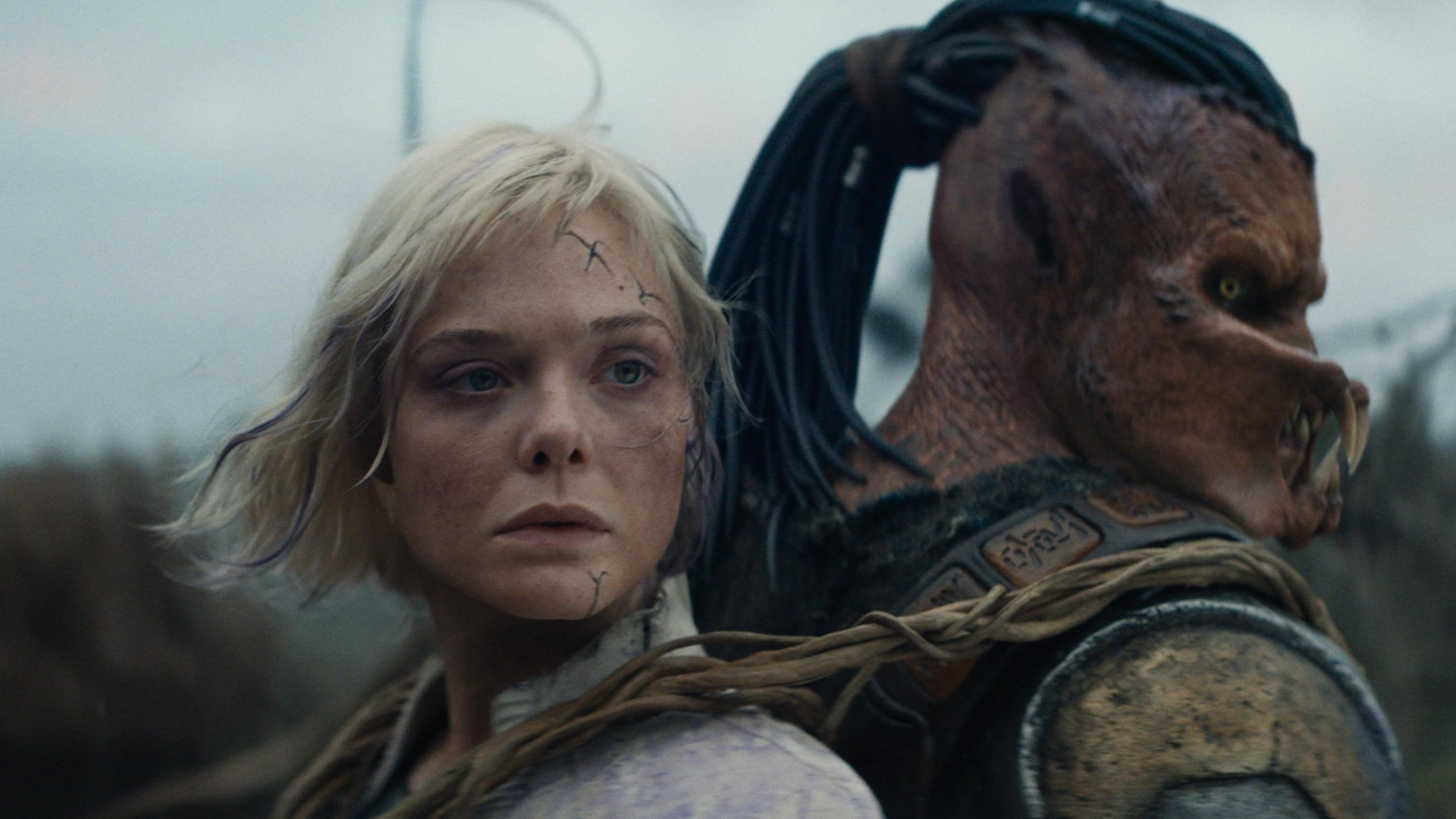
The franchise that began when Arnold Schwarzenegger took a bad vacation in the jungles of South America reaches one of its highest achievements in this gorgeously shot, inventive and exciting entry. The species of the title are actually known to themselves as Yautja, and on their planet, a clan leader makes clear to his two children that his elder son Kwei is his pride and joy, while the younger Dek is the runt of whom he is ashamed. Determined to prove his father wrong and motivated by a killing made in his name and against his wishes, Dek escapes the planet of Yautja Prime and heads to the “death planet” Genna, where a creature called the Kalisk lives, a monster that even his father fears. Killing the Kalisk and taking it as a trophy would prove Dek a great warrior, but first he must survive an impressively harsh environment on a planet where even the blades of grass are deadly weapons, though even these conditions are nothing compared with the ethos of emotional invulnerability that Dek believes he must live up to (warning, allegory incoming).
Genna, it turns out, is also a testing ground for the Weyland-Yutani corporation, who have sent a team of androids for research purposes, one of whom is a friendly replicant named Thia (Elle Fanning, who is magnificent) who inadvertently joins Dek on his journey towards his goal. This film has been screened in 3D in its theatrical run and is the first time since the first Avatar that the technology has been used effectively, turning the worlds it creates into deep, beautiful nightmares that lay the groundwork for a plot that never takes its foot off the gas. Themes familiar to the Alien and Predator films are present here once again, toxic masculinity, corporate greed and colonialism, woven beautifully into a series of characters who, even in the case of the monstrous face of what we always thought of as a villain, become endearing and familiar.
My Father’s Shadow
Akinola Davies, 2025
Rating: BBB.5
Cast: Sope Dirisu, Godwin Chiemerie Egbo, Chibuike Marvellous Egbo
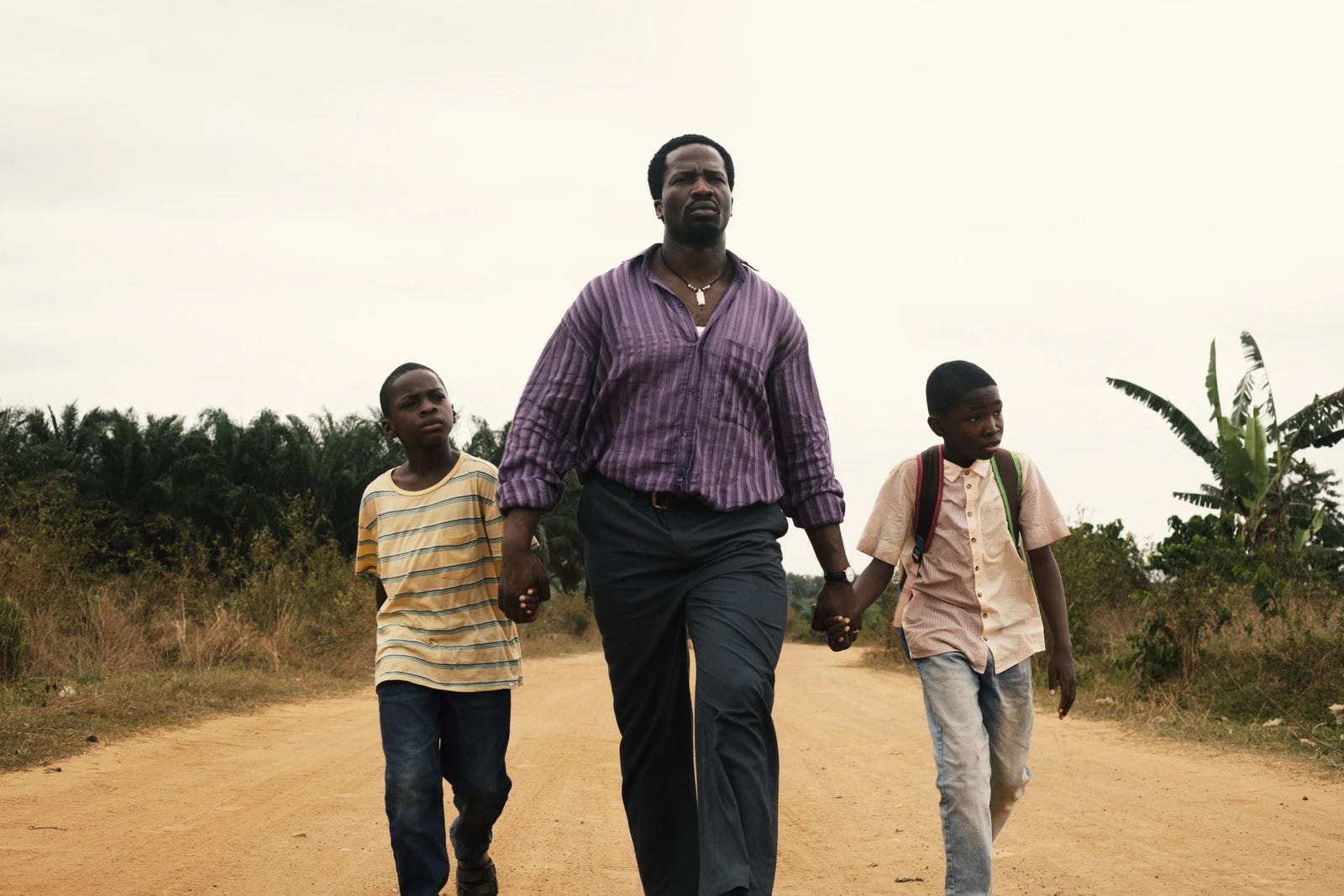
The cruelty of a world in turmoil is seen through the eyes of children in a film that plays as sort of a Nigerian Aftersun. After their mother goes out to run errands, brothers Aki and Remi are surprised by the appearance of their father Fola, who spends weekdays working at a factory in Lagos and is only at their suburban home on weekends. Fola decides on the spur of the moment to take his boys with him into the city, where he plans to find his boss and collect the payment that is overdue to him. As they rarely get to spend quality time with their dad, Aki and Remi are thrilled to go along, not knowing that the events of the day will only further emphasize their unhappiness over his general absence, which is threatening to tear their little family apart. Initially travelling by bus, the vehicle they are riding breaks down and strands the three of them on the road before they eventually reach the city and undergo a series of set backs and increasingly dangerous delays. It is 1993 and Nigeria is on the precipice of change, with an election looming that will hopefully oust the military dictatorship of Ibrahim Badamasi Babangida and bring in the promise of popular candidate Moshood Abiola. The boys have zero interest in politics, and are far more intensely focused on discovering their father as a man with a life and a past that is more than just what they need from him, but the reality of their surroundings affects their experience when the city grows restless after the election results are subjected to the whims of a corrupt government.
Sope Dirisu delivers a starmaking performance in the lead of Davies’ debut feature, creating the kind of character that exists in one’s memory as an outsized legend, handsome and charismatic and vulnerable at the same time. As the brothers, real life siblings Chibuike Marvelous Egbo and Godwin Egbo give uncompromised performances that feel like real kids and not child actors, and the recreation of the chaos of the riots that occurred as a result of Babangida’s challenging the election results feel genuine (and terrifying). The familiarity of the story is the only drawback to what is otherwise a solid experience, it’s hard not to see the next step and very little of it is surprising, but I will happily take a movie that doesn’t feel manipulated over one that doesn’t feel fresh.
Below The Clouds
Sotto le nuvole
Gianfranco Rosi, 2025
Rating: BBBB
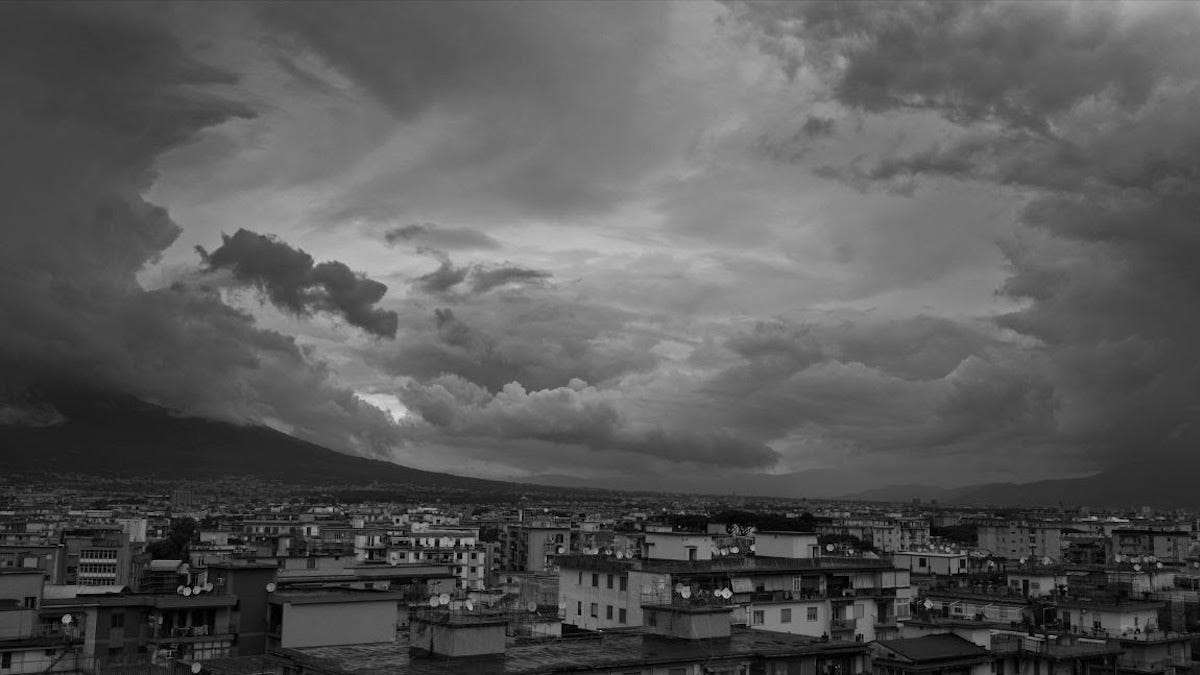
Rosi’s meditative visual style once again captures the complications of a place while never seeming to editorialize on the content, his intense gaze focused this time on the Neapolitan lands under Mount Vesuvius. We observe the daily lives of a variety of professionals and citizens, including a man tutoring students in their after-school preparatory classes and a woman who catalogues and studies the various ancient relics that have been unearthed from the ground. We spend time in an emergency call centre where the famed volcano that once sank the city of Pompeii still creates a great deal of anxiety for locals, who feel tremors and place calls expressing terror at the destruction they fear is coming. Criminal activity, tourism, Syrian sailors and even a trip to the ocean floor, this is a full-scale experience whose monochrome photography only adds to a sense of otherworldly beauty, and gives us an opportunity to see Naples as more than just the land of Camorra mobsters (though there’s a bit of that too).
Zootopia 2
Jared Bush, Byron Howard, 2025
Rating: BBB.5
Cast: Ginnifer Goodwin, Jason Bateman, Ke Huy Quan, Fortune Feimster, Andy Samberg, David Strathairn, Shakira, Idris Elba, Patrick Warburton, Quinta Brunson, Danny Trejo, Nate Torrence, Bonnie Hunt, Don Lake, Michelle Gomez, David Fane, Stephanie Beatriz, Wilmer Valderrama, Jean Reno, Alan Tudyk
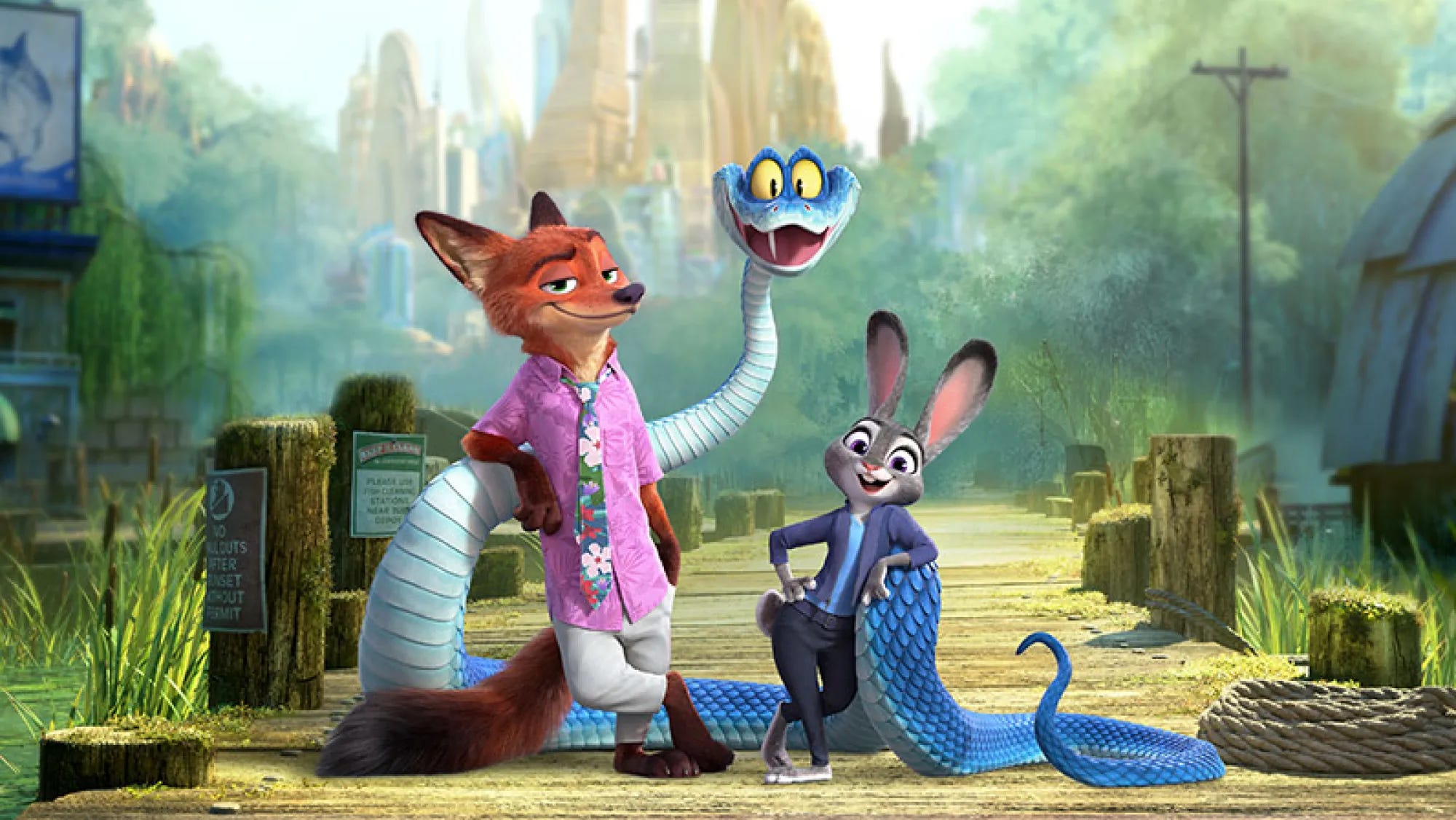
Disney returns to an Oscar-winning hit for another beautifully animated tale of critters that is meant to, in no subtle terms, inform us of injustices in our own real world (which is always a funny message coming from corporations that, we’re pretty sure, are not exactly healing the injustices of our world). Bunny cop Judy Hopps (Ginnifer Goodwin) and sly fox detective Nick Wilde (Jason Bateman) have been made partners after their success in capturing criminal ovine mastermind Dawn Bellwether (Jenny Slate), but are struggling to resolve their personal differences. Even more complicated is that their careers explode when Judy attends a gala held by the aristocratic Lynxley family and it is interrupted by the appearance of a snake (voiced by Ke Huy Quan). The slithering creatures have long been banned from living in Zootopia for the safety of its residents, but Judy learns that something much darker is involved in their exclusion from her society and that their being a threat to other animals is actually Lynxley propaganda. When Judy comes to understand that the ruling class family have secrets that they will do anything to keep hidden, it threatens her job with her exasperated boss, but doesn’t dampen her determination to get to the bottom of things and restore law and order. The characters remain as delightful as they were the first time around, and the quality of animation really is the studio working at the top of its game, but the painfully low-hanging fruit of the film’s allegory (Trump, the one percent, etc) will only challenge kids; for adults, the message is (hopefully) so obvious that it makes the whole thing feel charming but flimsy.
Merrily We Roll Along
Maria Friedman, 2025
Rating: BB.5
Cast: Daniel Radcliffe, Jonathan Groff, Lindsay Mendez
The 1981 Broadway opening of Merrily We Roll Along, a musical inspired by a 1934 play by Kaufman and Hart, was a highly anticipated reunion of composer Stephen Sondheim, writer George Furth and director Hal Prince after their production of Company had pushed the boundaries of the artform a decade earlier. Merrily was met with far less enthusiasm than Company and, since its debut, has been staged infrequently compared to his more popular hits like Into The Woods and Sweeney Todd, and you’ll hear far fewer of its tunes on Sondheim retrospectives than you will those from his other shows (”Not A Day Goes By”, which is not even a centrepiece number in this one, is usually the only inclusion). Later productions have tried reworking the material to improve the flawed original (the West End premiere in 2000 even won an Olivier for Best New Musical), but as we see from this filming of the 2023 Broadway production, directed on stage and film by Maria Friedman, it’s still one that is only particularly meaningful for the late genius’s diehard fans. Sondheim’s most daring works took a genre usually associated with big, mechanical plot devices and audaciously presented shows that focused, instead, on the inner workings of emotional growth, and in the case of Company, did so in ways that were memorable both thematically and tunefully. Here, his plot about the disintegration of a friendship between three people, told in reverse order to emphasize the tragedy of their very human failings, isn’t as easy to connect with.
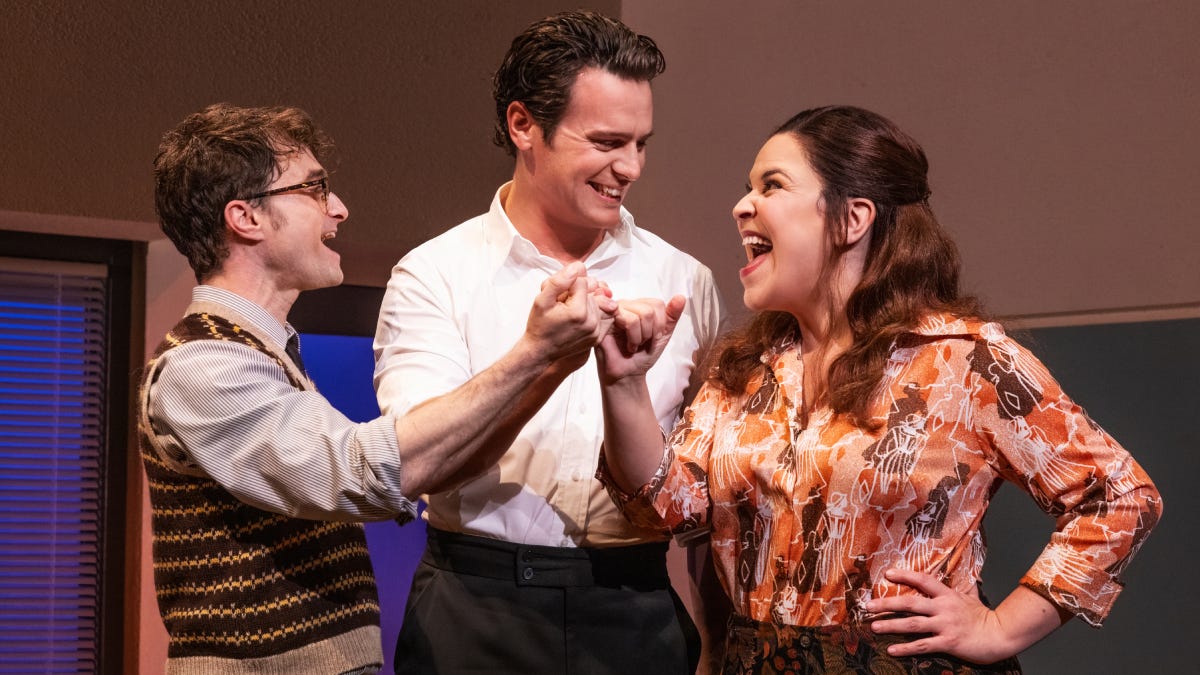
The story in this current, revised version, begins in 1976 with debonair Hollywood power player Frank Shephard (Jonathan Groff, who is handsome and talented but, for some reason, can never look rich) hosting an industry party to celebrate his latest film success. His best friend Mary Flynn (Lindsay Mendez), a theatre critic who drinks to forget her unrequited love for him, is disgusted by all the shallow people at the party and is critical of Frank’s having abandoned both his promising music career as well as the best friend, Charley Kringas (Daniel Radcliffe), with whom he first achieved fame. Each scene to follow takes place before the previous one, revealing the machinations that caused the results of what you have already watched, a gimmick that is fascinating when done well (Francois Ozon’s 5 x 2) and baffling when it isn’t. Jumbling up a plot’s timeline is customarily used to reveal certain ironies or perspectives that a straightforward treatment wouldn’t, and aside from raising the story’s interest above a casual perusal, moving backwards increases the thematic vagueness here, rather than putting it in sharper focus.
More distracting for those of us watching this show on a movie screen is that Friedman shoots a presumably live performance that doesn’t feel the least bit alive, and when the alleged audience laughs or applauds it sounds canned (as does some of the dialogue, which I suspect the actors looped to sound more intimate and not like they’re shouting to reach the third balcony). An emphasis on closeups is meant to expand the possibilities of capturing the emotional realities of theatrical acting, but it actually seems that Friedman is worried about pissing off the kind of people who hate musical theatre (and, in doing so, denies theatre fans the opportunity to see the mechanics of the actors’ stamina and skill).
La Grazia
Paolo Sorrentino, 2025
Rating: B
Cast: Toni Servillo, Anna Ferzetti, Massimo Venturiello, Orlando Cinque, Milvia Marigliano, Giuseppe Gaiani, Giovanna Guida, Alessia Giuliani, Roberto Zibetti, Linda Messerklinger, Vasco Mirandola, Rufin Doh Zeyenouin
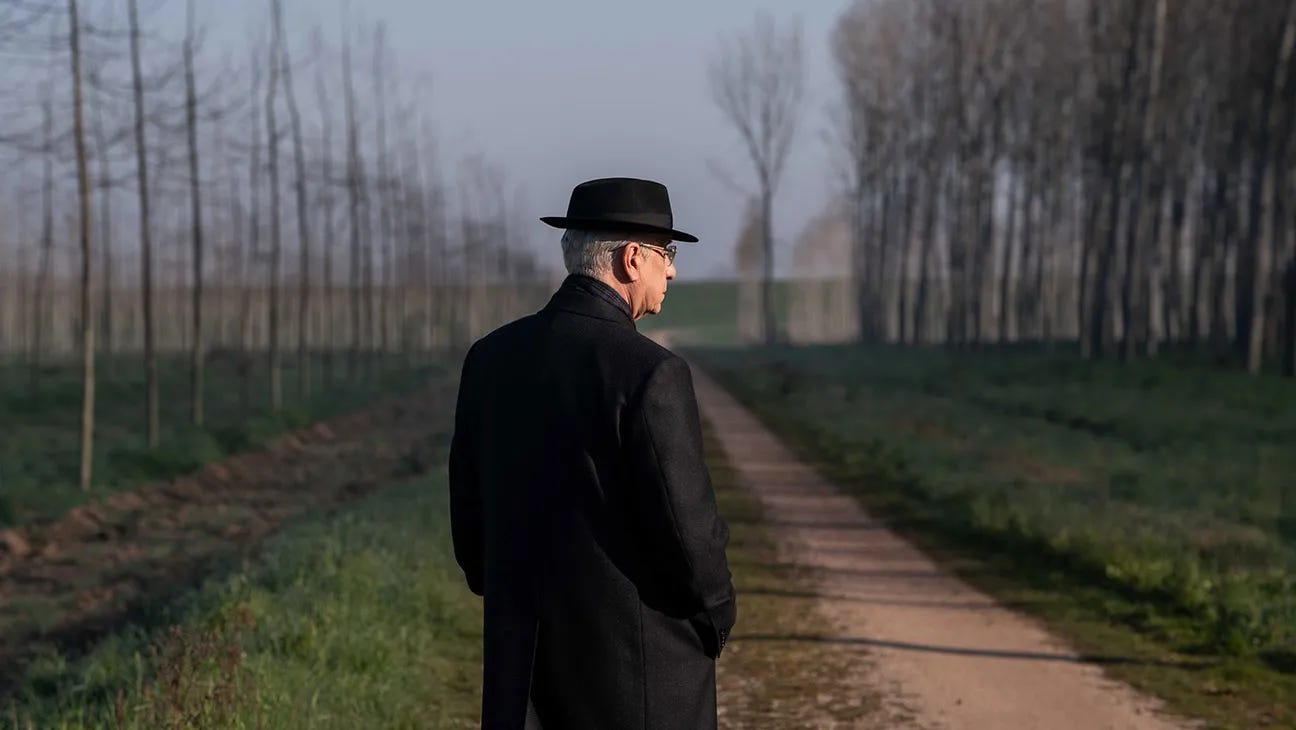
Sorrentino returns to the world of politics he handled so deftly in Il Divo, though this time doesn’t use a real-life figure as his subject. Instead, it is a fictional creation named Mariano De Santis (played by Sorrentino mainstay Toni Servillo) who has come to the end of his tenure as the President of Italy (which in that country is the head of the state, separate from the Prime Minister, who is the head of the government). De Santis has a bill looming on the horizon that he needs to make a decision on before leaving office, and in a country that still holds to conservative Catholicism as the basis of its social and moral structure, it’s not a decision that he can rush. If he signs it and legalizes euthanasia on his way out the door, his doing so without having to endure the consequences of his actions will weigh heavily on his conscience. He is also grappling with the opportunity that he has been given as part of his retirement to pardon two prisoners, one a woman who killed her husband to stop him abusing her (and always speaks like an oracle when questioned about it), the other a man who killed his wife to spare her the ravages of dementia. On a more personal level, the man known to the world by his nickname of “Cemento Armato” (reinforced concrete) is being eaten up by his own memories of his late wife, who once cheated on him at a critical point in their marriage but he does not know with whom. She has been dead for some time, but he cannot let it go, and between bouts with fellow politicians and meetings with prisoners is consumed by an obsession to find out the identity of the man who cuckolded him.
Sorrentino is frequently preoccupied with poking holes in the puffed-up facade of male ego that he feels runs his country’s major institutions, but unlike Elio Petri and Pietro Germi before him, who were frequently concerned with the same subject, he substitutes satirical humour for a bittersweet, lyrical romanticism (Youth, from 2015, being the best example). He’s welcome to return to the subject once more here, and as always he creates a beautiful visual landscape that brings out the rich textures and shadows of the Italian political world, but his aesthetic powers highlight the emptiness of his script rather than reinforcing them the way they did in The Hand of God. The protagonist’s personal plight involving his wife is not one that is in the least bit sympathetic or interesting, and the political maneuverings are only mildly more captivating but never actually get into complicated discussions about the big themes they grapple with, or their implications for the future. A subplot involving De Santis’ attorney daughter and her getting mixed up in the pardon cases feels like it’s there to kill time, the film spinning around in circles and never landing on anything substantial.
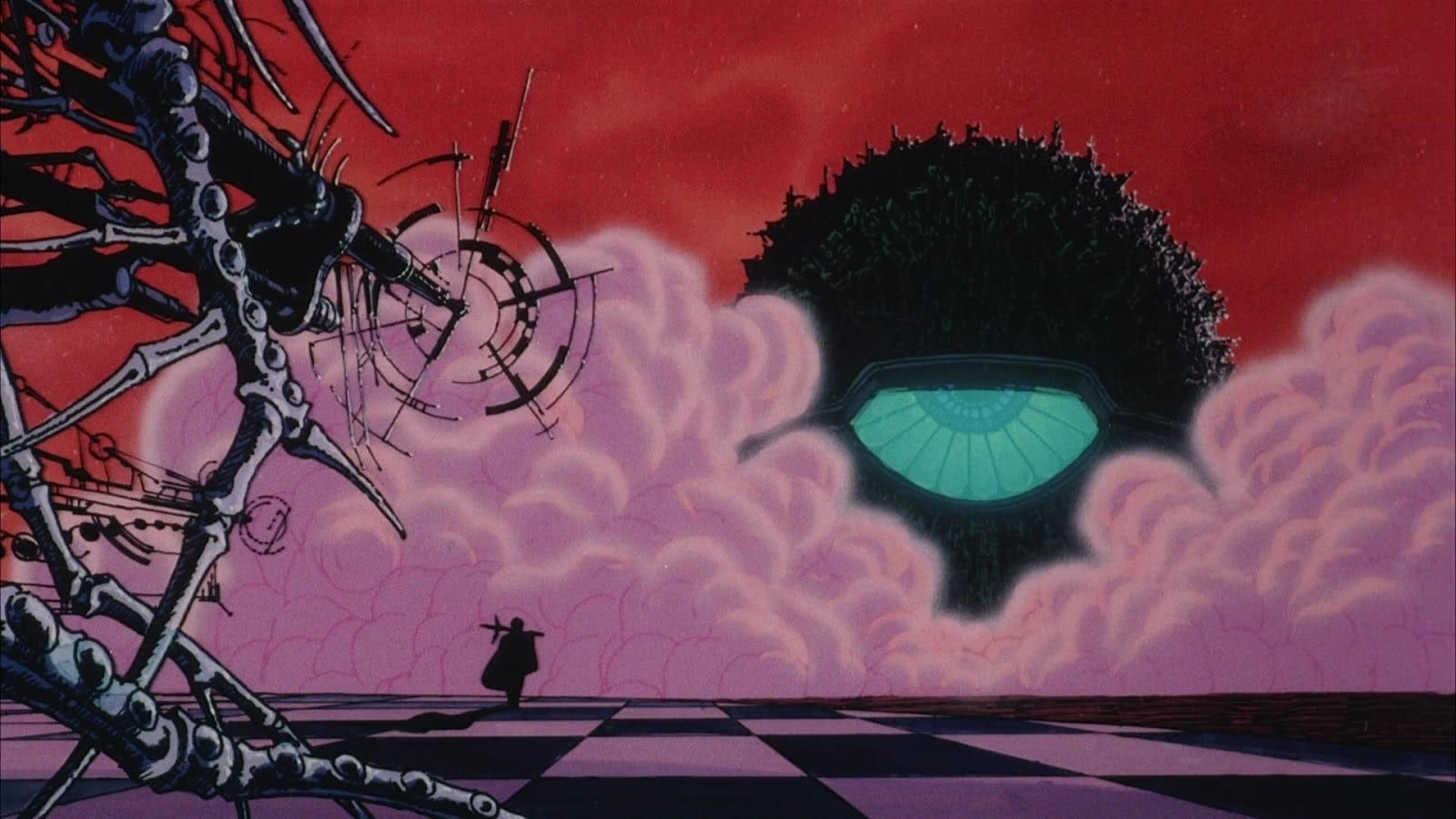
Angel’s Egg
Tenshi no Tamago
Mamoru Oshii, 1985
Rating: BBB
Cast: Jinpachi Nezu, Mako Hyōdō
The fact that Oshii has himself stated that he struggles to find the meaning in this cult classic is relieving to hear, as the rest of us don’t have to twist our brains into pretzels to figure it out either. Long unavailable for distribution, it has recently been given a 4K restoration and I had the pleasure of discovering this film for the first time on a big screen, one whose obscurities keep it from being wholly satisfying but which features images that will last in my mind. At its essence, it involves a ghostlike Dickensian girl who is obsessed with an egg she carries everywhere and which, through her dreams, she believes contains an angel, and her interactions with a post-apocalyptic soldier who does not answer her questions when she asks who he is. Fears of nuclear annihilation, images of giant destructive machinery and some kind of environmental message involving whales swimming through the air abound, as do Biblical allusions to Noah’s Ark that have been given a darker spin. Adherents of anime filmmaking rightly hold this one up as a significant entry in its history; those not particularly devoted to the genre will only be passably amused.