
The Films of Isabelle Huppert: Part 2
Leading Lady (1978-1988)
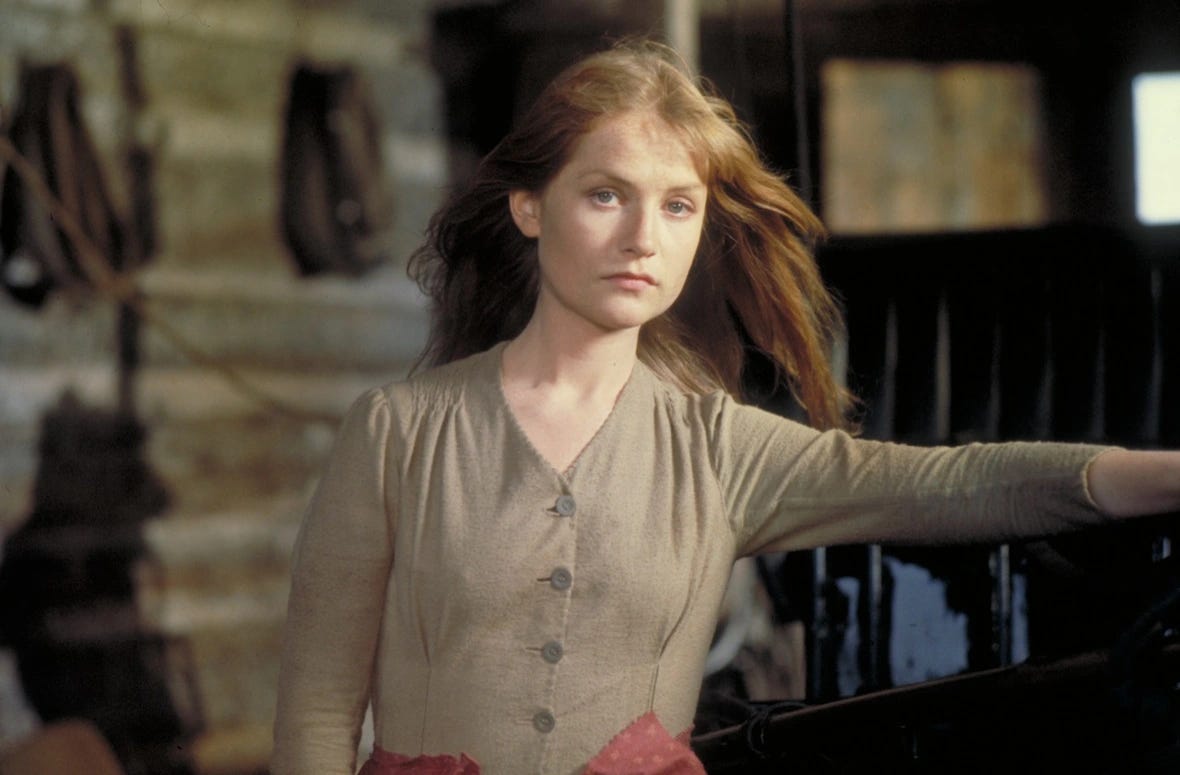
The Lacemaker established a reputation that has never been tarnished, and Huppert has had her pick of directors and projects ever since. The year after Goretta’s film, Huppert won her first of two prizes at the Cannes Film Festival, and then spent the eighties collecting awards at major festivals around the world (most of them for Chabrol films). While amassing an incredible filmography with the most respected directors in the business, she also attempted a few Hollywood projects, but a crossover in the style of Deneuve or Binoche was not to be.
Violette Nozière
Claude Chabrol, 1978
Rating: BBBB.5
Cast: Isabelle Huppert, Jean Carmet, Stéphane Audran, Jean-François Garreaud, Zoé Chauveau, Jean-Pierre Coffe, Jean Dalmain, Guy Hoffman, Henri-Jacques Huet, Bernadette Lafont, Bernard Lajarrige, Bernard Alane, Lisa Langlois, Fabrice Luchini, Dominique Zardi
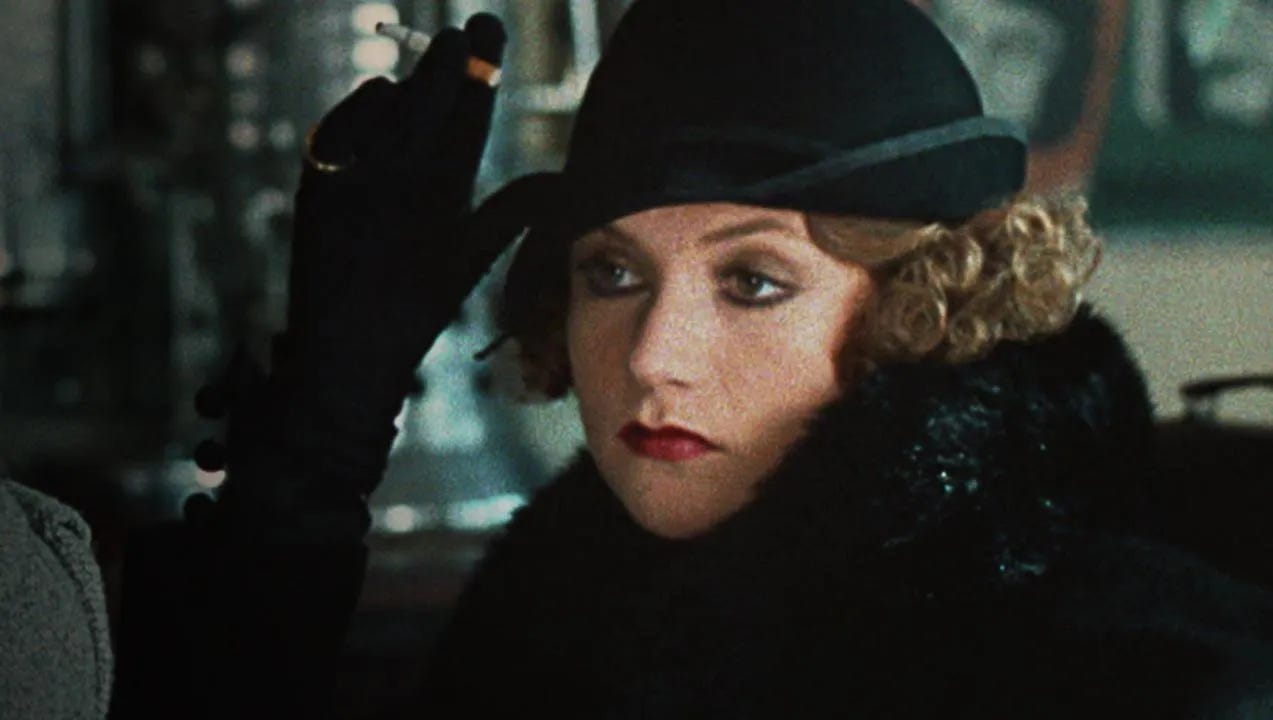
Huppert earned her first Best Actress award at the Cannes Film Festival for her performance in the true story of a rebellious teenaged girl who dresses like a child at home to please her conservative parents, then spends her nights out on the town dressed like a glamorous siren and bedding an assortment of handsome men. Falling in love with a dreamy charlatan, she becomes obsessed with giving him money to keep him close to her, eventually deciding to kill her parents in order to have easier access to funds. This fascinating look at one of France’s most famous murder cases is a probing examination of family life and parent-child relationships. Huppert shows exceptional acting skill while only in her early twenties, while Stéphane Audran (then Mrs. Chabrol) matches her every step of the way with her marvelous supporting performance.
Return To The Beloved
Retour à la bien-aimée
Jean-François Adam, 1979
Rating: BBB.5
Cast: Isabelle Huppert, Jacques Dutronc, Bruno Ganz, Christian Rist, Jean-François Adam, Rodolphe Schacher
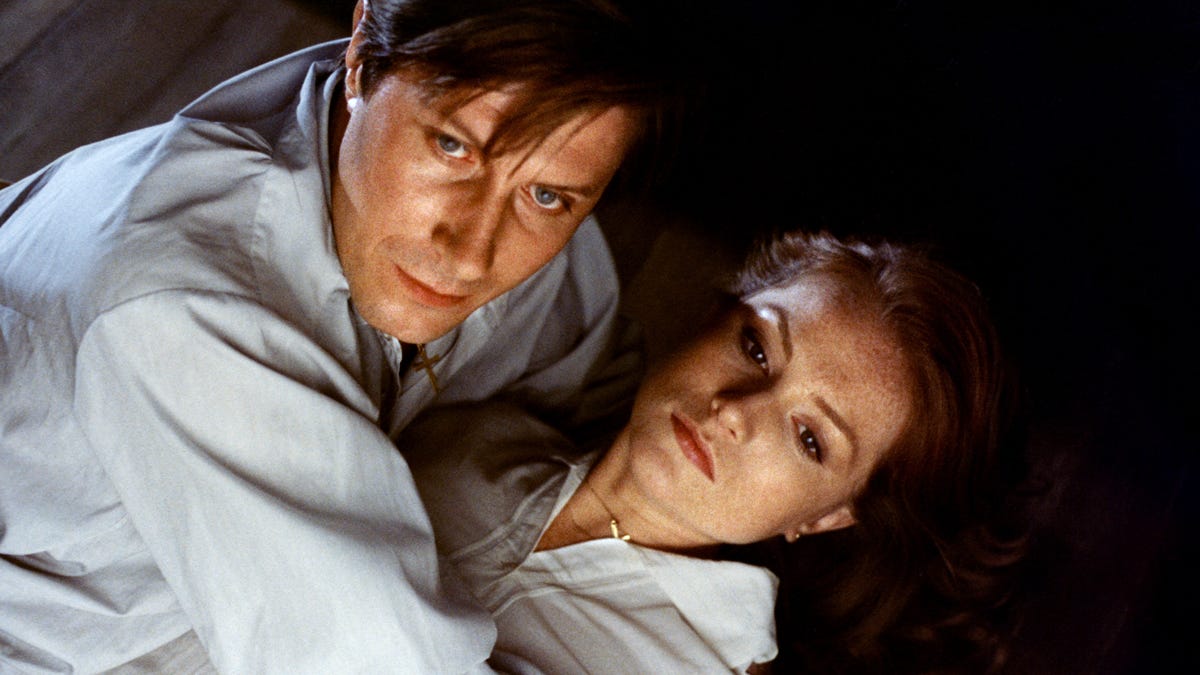
Prettily photographed French melodrama, played out in a minor key. Jacques Dutronc is a pianist who is still burned over the breakup of his marriage to Huppert, who is now happily situated with new husband Bruno Ganz. With thoroughly planned out, almost Chabrol-like delicacy, Dutronc creates an elaborate scheme that results in him murdering a man on Ganz’s property and making it seem as if his romantic rival is the guilty party. When police come along and start asking questions, Huppert needs emotional support and reaches for her ex-husband, who seizes the opportunity to work his way back into his old life. The film doesn’t quite commit enough to one direction or the other, it’s neither a creepy tale of obsession nor a richly emotional romance, but the performances are well executed and it’s always lovely to look at.
The Brontë Sisters
Les Sœurs Brontë
André Téchiné, 1979
Rating: BBBB.5
Cast: Isabelle Adjani, Marie-France Pisier, Isabelle Huppert, Pascal Greggory, Patrick Magee, Hélène Surgère, Roland Bertin, Alice Sapritch, Xavier Depraz, Adrian Brine, Julian Curry, Rennee Goddard, Jean Sorel, Roland Barthes
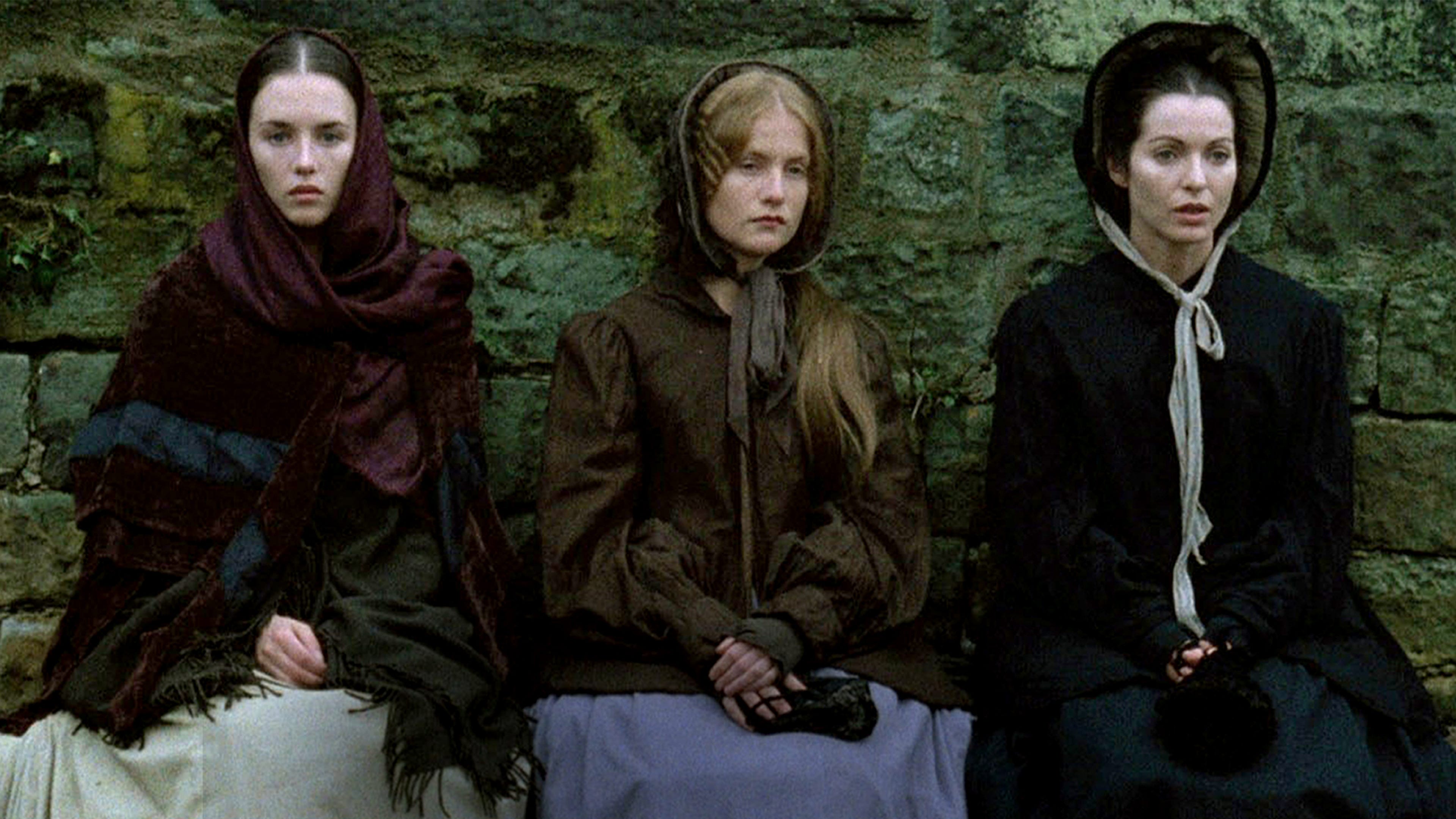
An exquisite period piece whose every shot looks like a darkly beautiful period painting, and whose performances highlight an intelligent script and studied, intense pace. The passions of three sisters are held back by a strict religious upbringing and the privations of early nineteenth-century English country life as intelligent but careful Charlotte (Marie-France Pisier), wildly passionate Emily (Isabelle Adjani) and young, dutiful Anne (Huppert) try to make futures out of virtually nothing given to them. Meanwhile, their brother Branwell (Pascal Greggory) is their father’s future hope but is taken to emotional extremes by a lack of direct ambition and a propensity for hopeless love affairs. Eventually, the three female children of the dour Patrick Brontë would become among the most famous literary figures of all time, but what this superb film captures is the moment when an artist chooses to reveal themselves: their being writers is a fundamental element of their being, not just an activity, but the decision to put pen to paper, and then later to do so under their own names, is an undertaking that challenges their souls, each in their own way. An unforgettable masterpiece whose power and exceptional attention to detail have not aged a bit.
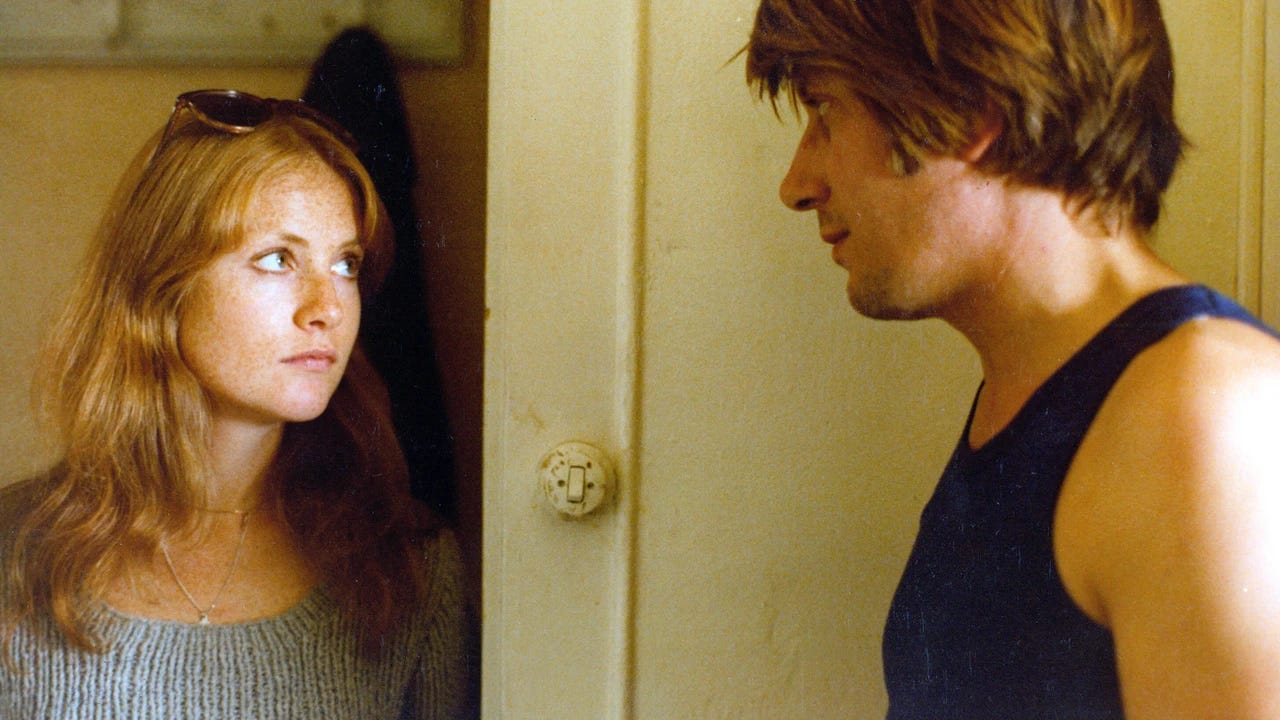
Every Man For Himself
Sauve qui peut (la vie), Slow Motion
Jean-Luc Godard, 1980
Rating: BBB
Cast: Jacques Dutronc, Isabelle Huppert, Nathalie Baye, Cécile Tanner
Godard called this his “second first film”, as it marks the latter half of his career when his experimentation achieved a newfound commercial confidence. Jacques Dutronc plays a filmmaker (curiously named Godard!) who is having trouble accepting the end of his marriage. His ex-girlfriend (Nathalie Baye) wants to go to the country, but he can’t decide if he wants to commit to her or not. Meanwhile, a sex worker (Huppert) spends her days going through some of the most curious adventures on the seedy side of life. Godard’s unnerving photographic and editing techniques, which will thrill some and aggravate others, sporadically service the story, in which he notes that the ideals of his culturally revolutionary days have all disintegrated into a world of selfish capitalists. Huppert and Baye are both exceptionally good in their roles.
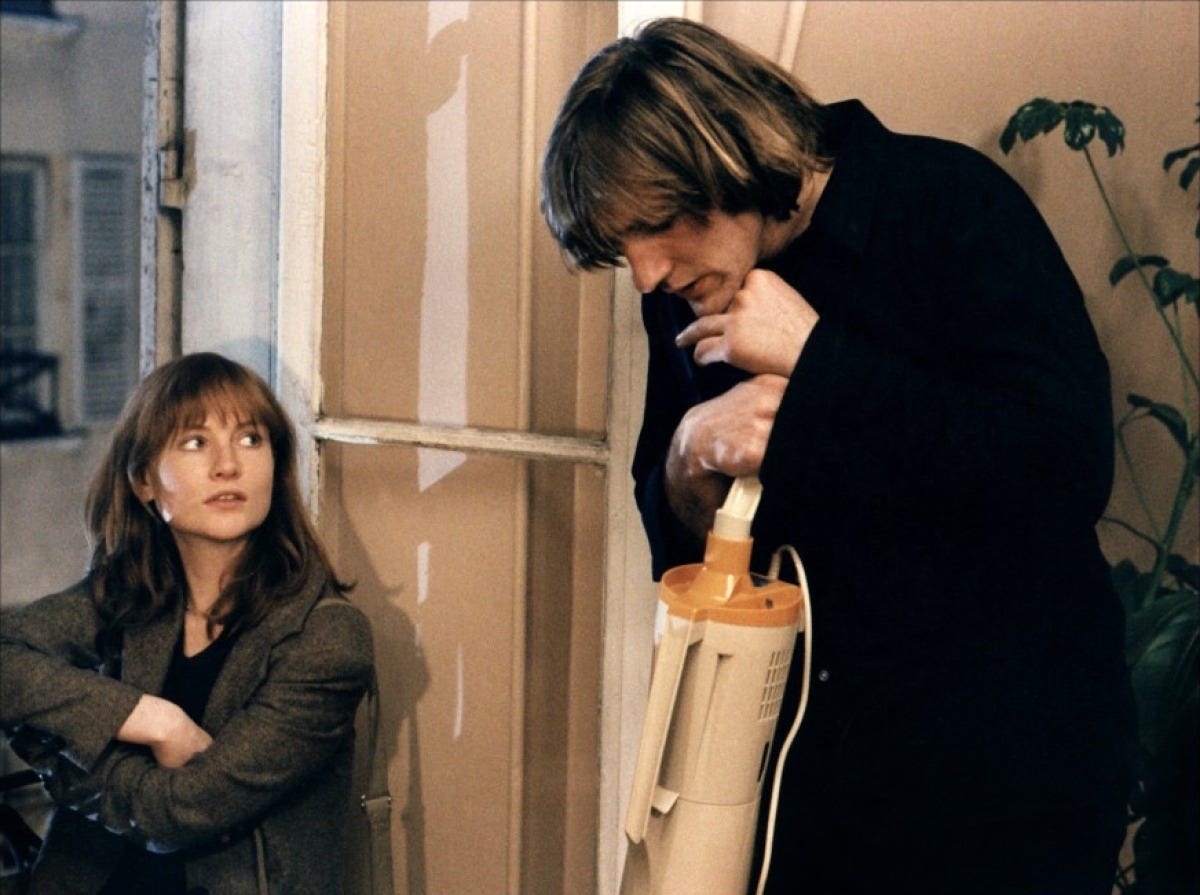
Loulou
Maurice Pialat, 1980
Rating: BBBB
Cast: Isabelle Huppert, Gérard Depardieu, Guy Marchand, Humbert Balsan, Bernard Tronczak, Christian Boucher, Frédérique Cerbonnet, Jacqueline Dufranne, Willy Safar, Agnès Rosier, Patricia Coulet, Jean-Claude Meilland, Patrick Playez, Gérald Garnier, Catherine De Guirchitch, Jean Van Herzeele, Patrick Poivey, Xavier Saint-Macary
Depardieu is once again the reckless wanderer who messes up people’s lives in this excellent, erotically charged drama. He has a one-night stand with a wealthy, unhappily married woman (Isabelle Huppert), and the two of them enjoy each other’s company so much they decide to move in together. This does not go over well with Huppert’s husband (Guy Marchand), and the game of human pinball that ensues as she bounces back and forth between the two men makes up the fascinating conflict that unfolds with startling realism. Huppert and Depardieu have marvelous chemistry, the both of them giving dead-on performances, while Pialat’s keen eye for dialogue and naturalistic camera work enhances the emotional connection of the audience to his morally ambiguous characters.
Orokseg (1980)
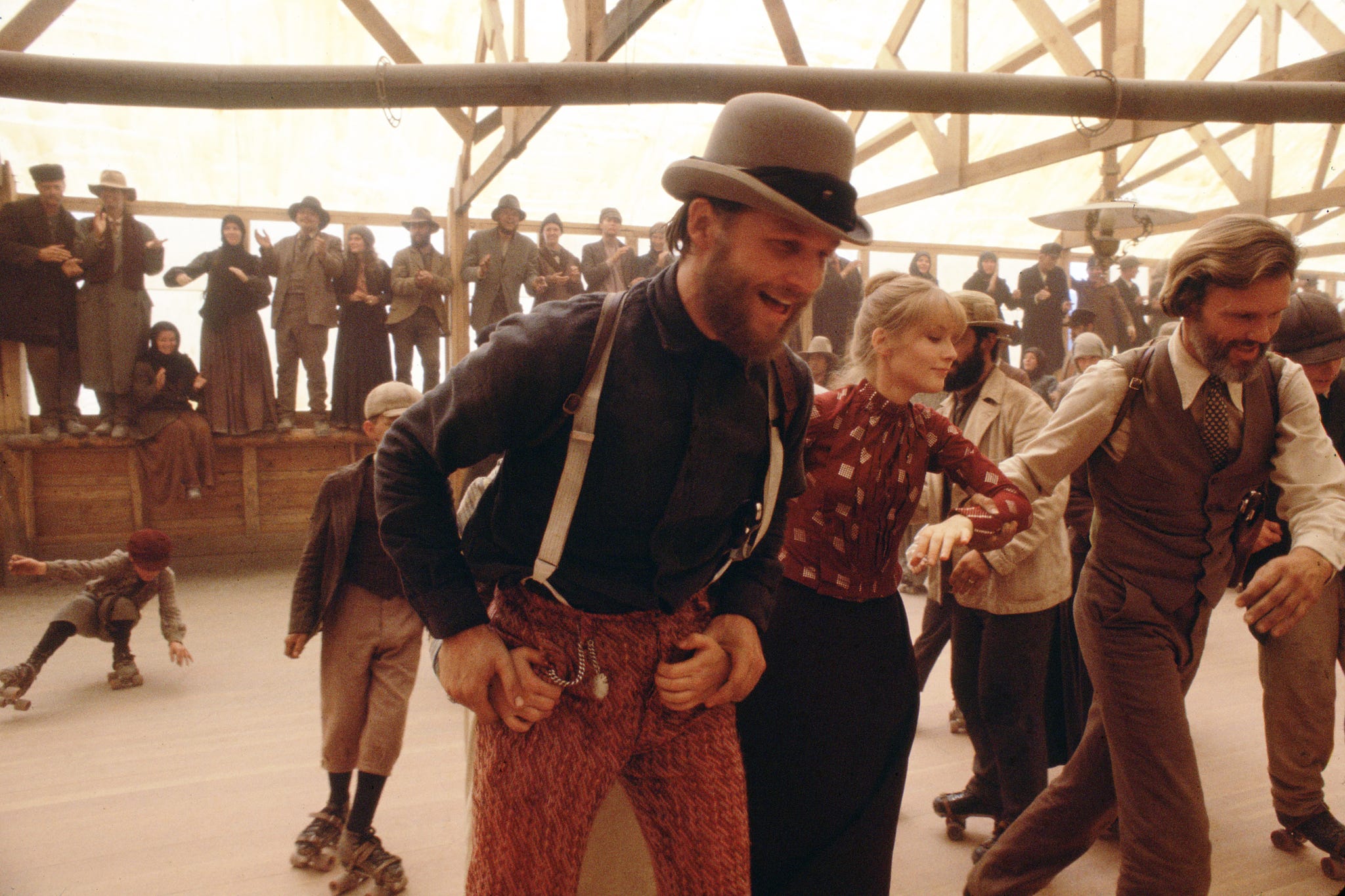
Heaven’s Gate
Michael Cimino, 1980
Rating: B.5
Cast: Kris Kristofferson, Christopher Walken, John Hurt, Sam Waterston, Brad Dourif, Isabelle Huppert, Joseph Cotten, Jeff Bridges, Geoffrey Lewis, Paul Koslo, Richard Masur, Terry O’Quinn, Robin Bartlett, Tom Noonan
Bleeding heart sentimentality has led many critics to hail this as a misunderstood masterpiece in recent years, but I still find it incredibly boring. One of the most notorious films ever made, more famous for being the biggest bomb of all time than for anything involving its story or cast, it concerns itself with the tragedy of the Johnson County Wars in 19th century Wyoming. Cattle barons conspire to murder over a hundred immigrant farmers in cold blood in an effort to take over their properties, with university-educated lawman Kris Kristofferson standing in the middle of the feud to uphold decency and prevent the bloodbath that will occur. Huppert shines as a brothel madam who loves both the upstanding Kristofferson as well as the morally tainted Christopher Walken, but neither this love triangle nor the political intricacies of the plot reach anything more than a confusing muddle in Cimino’s terrible screenplay. The film started with a two million dollar budget which escalated to an enormous forty million after weeks of delay, mostly attributed to the auteur’s painstaking desire for perfection. His efforts pay off visually, as the film is positively gorgeous, with authentic sets and costumes and staggeringly beautiful, Days Of Heaven-esque photography by Vilmos Zsigmond, but the four hour running time is ridiculous considering there’s only about ninety minutes worth of good plotting in it. History books consider Heaven’s Gate the reason that the great decade of seventies filmmaking, where directors called all the shots, was ended thanks to the debacle of Cimino’s production (it actually forced United Artists to sell to MGM), but the truth is it would have happened anyway: corporations were slowly taking over the studios in the early eighties and moviemaking would become all about the bottom dollar whether Cimino made this clumsy, dull film or not.
The Wings of the Dove (1981)
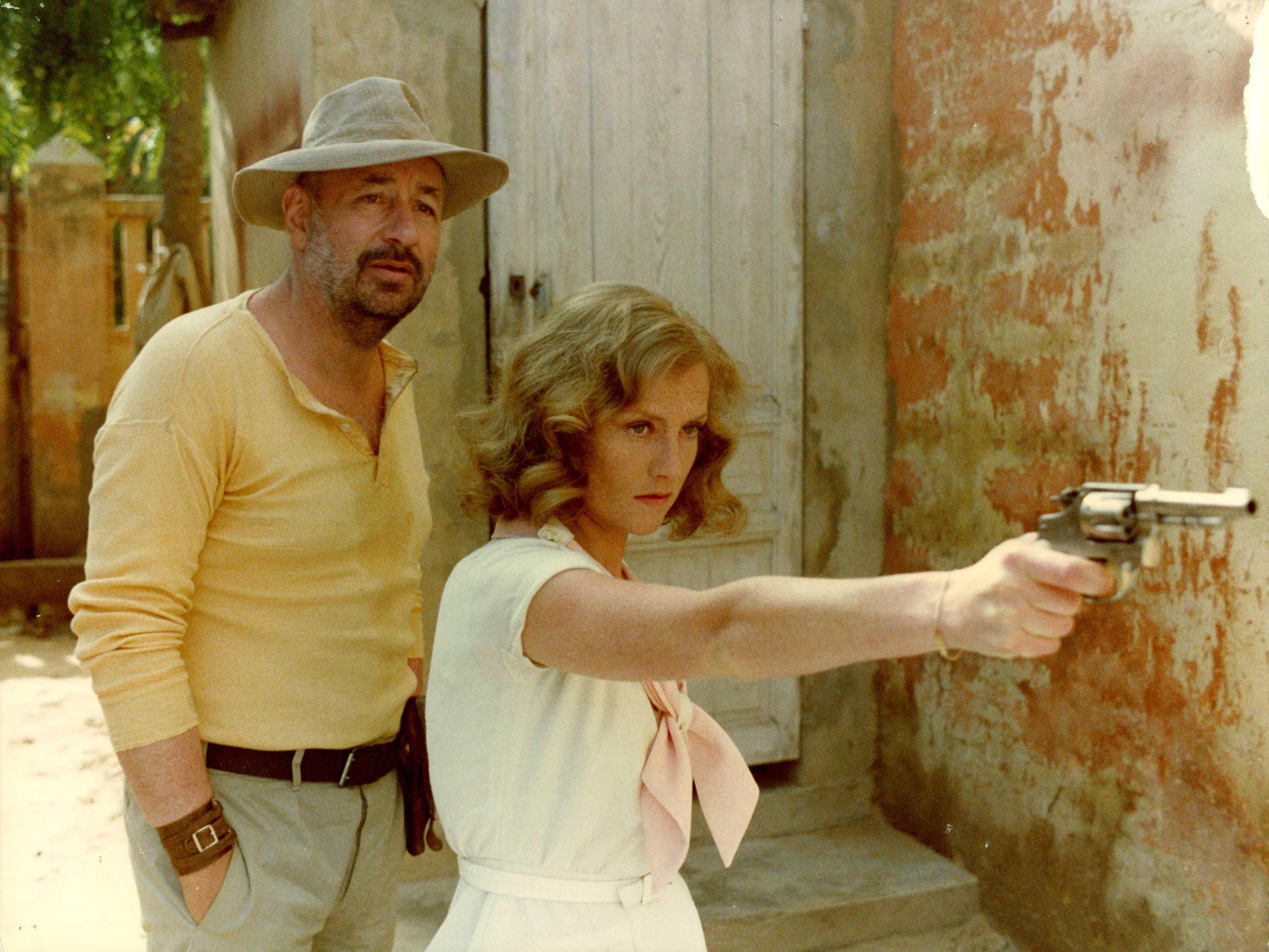
Clean Slate
Coup de Torchon
Bertrand Tavernier, 1981
Rating: BBBB
Cast: Philippe Noiret, Isabelle Huppert, Jean-Pierre Marielle, Stéphane Audran, Eddy Mitchell, Guy Marchand, Irène Skobline, Michel Beaune, Jean Champion, Victor Garrivier, Gérard Hernandez, Abdoulaye Diop, Daniel Langlet, François Perrot, Raymond Hermantier, Mamadou Dioumé, Samba Mané
Stunning on both the visual and narrative front, this is Tavernier’s adaptation of the American pulp novel Pop. 1280 by Jim Thompson (The Grifters), moving the setting from Texas to French-controlled West Africa in the late thirties. Philippe Noiret is excellent as a useless sheriff in a tiny Senegalese town in the 1930s (the original novel took place in the American south) who is respected by no one. His wife (Stéphane Audran) cheats on him and humiliates him wherever she can, the local racist population generally taunts him in public, and he himself turns a blind eye whenever any criminal activity is to be found. His only real connection is with a sexpot housewife (a spirited Huppert) with whom he shares mutually delightful diversions, but his lazily foolish personality spills over into insanity when he decides to stop taking everyone’s guff. He goes on a killing spree of those who bother him, hiding behind his reputation as a buffoon to stay out of trouble, eventually seeing himself as a kind of avenging angel. While other period epics of the eighties showed colonial projects as a meeting of superior European minds taking the rich resources of faraway lands, Tavernier describes a lawless breeding ground for corruption and gangster law.
Eaux Profondes
Michel Deville, 1981
Rating: BBBB
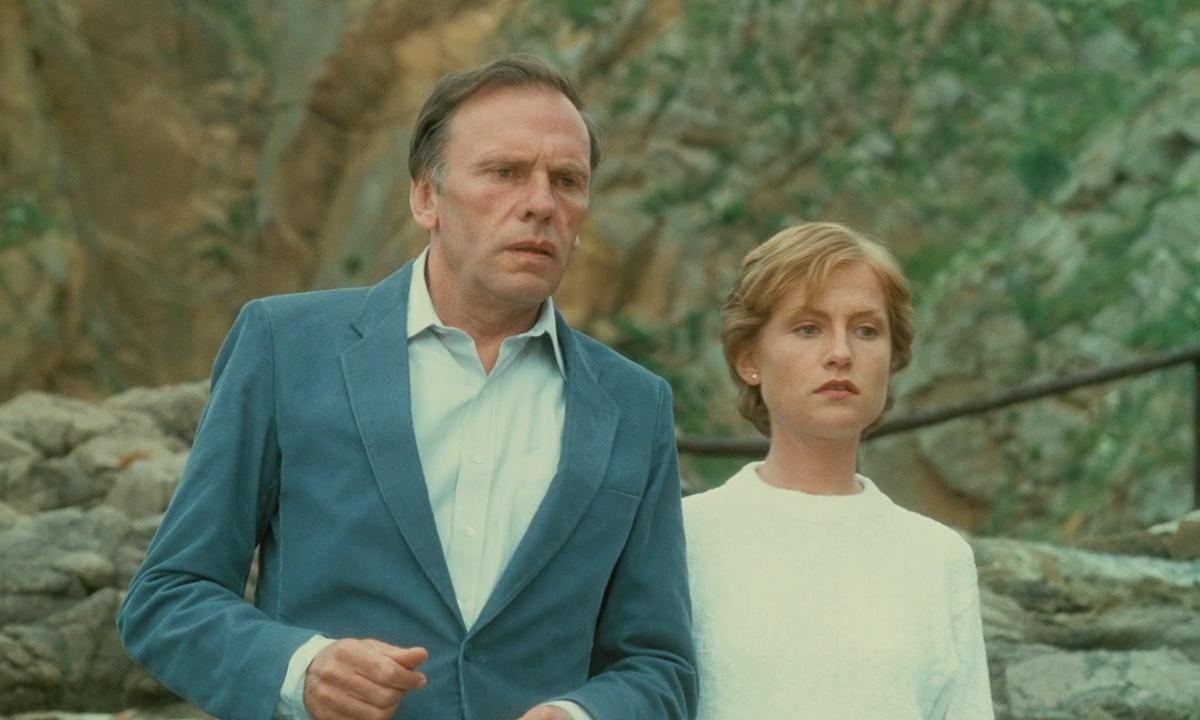
Cast: Isabelle Huppert, Jean-Louis Trintignant, Sandrine Kljajic, Éric Frey, Christian Benedetti, Bruce Myers, Bertrand Bonvoisin, Jean-Luc Moreau, Robin Renucci, Philippe Clévenot, Martine Costes, Évelyne Didi, Jean-Michel Dupuis, Bernard Freyd, Anne Head, Maurice Jacquemont, Sylvie Orcier, Pierre Vial
Jean-Louis Trintignant is married to gorgeous young Huppert, their passionless marriage held together by an unspoken agreement to let her play around with other men. She has a tendency to do this directly in front of him, so when sublimating his masculine pride becomes too much, Trintignant turns to murder with little regret. Their friends find Huppert’s claims against her husband impossible to believe, since how could someone so calm and boring be a killer, placing the two of them against each other in a dance of wills that sees her trying to draw him out while his rage grows. This adaptation of Patricia Highsmith’s Deep Water (filmed by Adrian Lyne in 2022) is a subtle, smooth thriller that never overstates its genre: there are no dramatic swells of music or shadowy alleyways, it plays everything straight and simple and its atmosphere is all the more bone chilling for it. Trintignant does great service to Highsmith’s tradition of invisible men who strike back, while Huppert is mysteriously bewitching as the object of his affection.
Lady of The Camelias (1981)
The Trout
La Truite
Joseph Losey, 1982
Rating: BBB
Cast: Isabelle Huppert, Jean-Pierre Cassel, Jeanne Moreau, Daniel Olbrychski, Jacques Spiesser, Isao Yamagata, Jean-Paul Roussillon, Roland Bertin, Craig Stevens, Ruggero Raimondi, Alexis Smith, Lucas Belvaux, Pierre Forget, Ippo Fujikawa, Yûko Kada, Pascal Morand
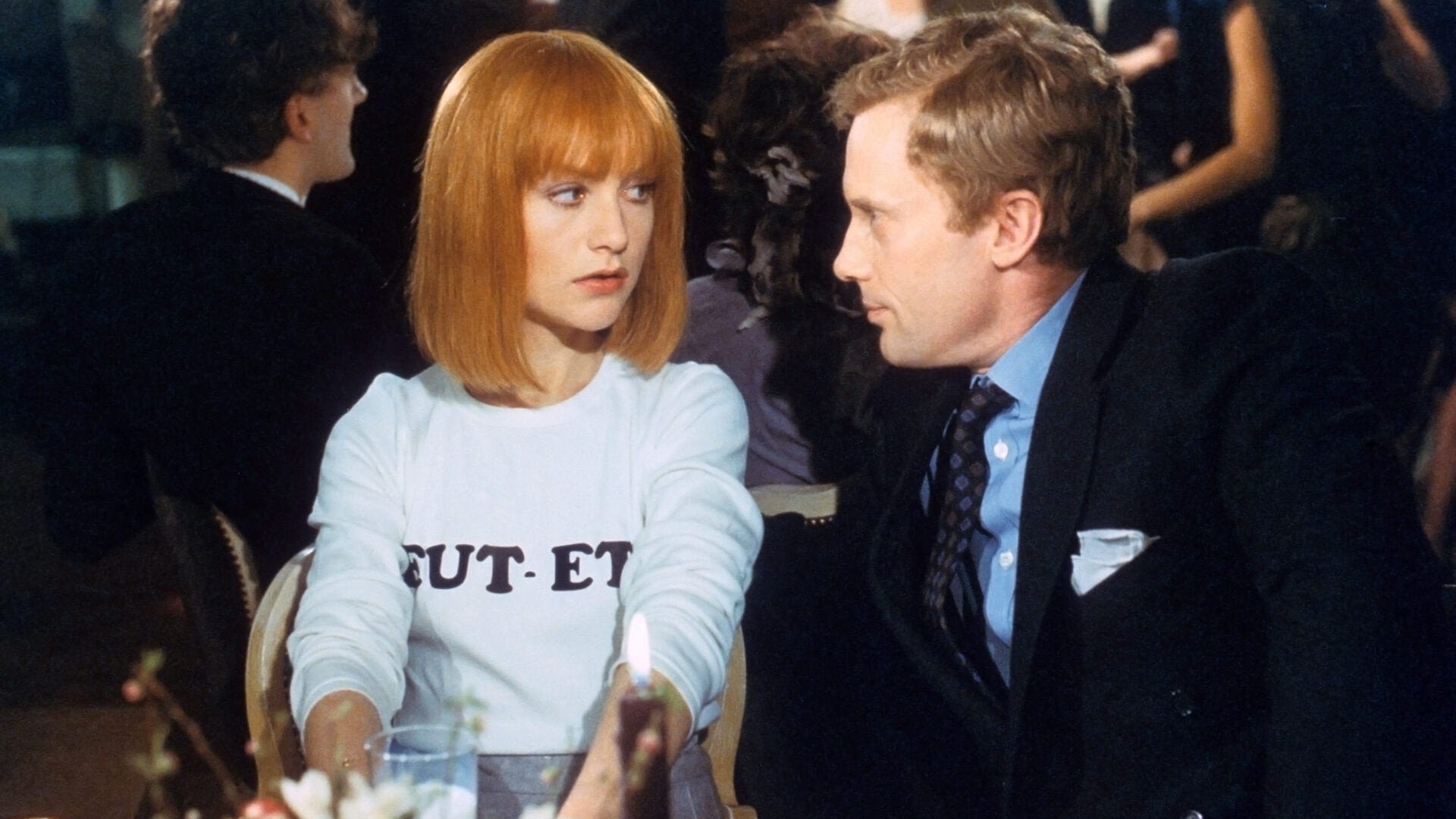
Obscure melodrama made in France by celebrated British filmmaker Losey. Huppert is terrific as a married woman who decides on the spur of the moment to leave her high school sweetheart husband and take off with a rich businessman (Daniel Olbrychski). She follows her lover to Japan and becomes his high-class mistress, constantly seeking a more exciting life but eventually feeling the guilt of whom she has hurt to achieve her wild fantasy. Meanwhile, her husband (Jacques Spiesser) is having an affair with her boyfriend’s business associate (Jean-Pierre Cassel), a sad reality that takes Cassel’s wife (Jeanne Moreau, as always stunning) to dire consequences. The staid pacing and flat cinematography will turn all but the most devoted viewers off.
Passion
Jean-Luc Godard, 1982
Rating: BB
Cast: Jerzy Radziwilowicz, Isabelle Huppert, Hanna Schygulla, Michel Piccoli, László Szabó, Myriem Roussel, Sophie Loucachevsky
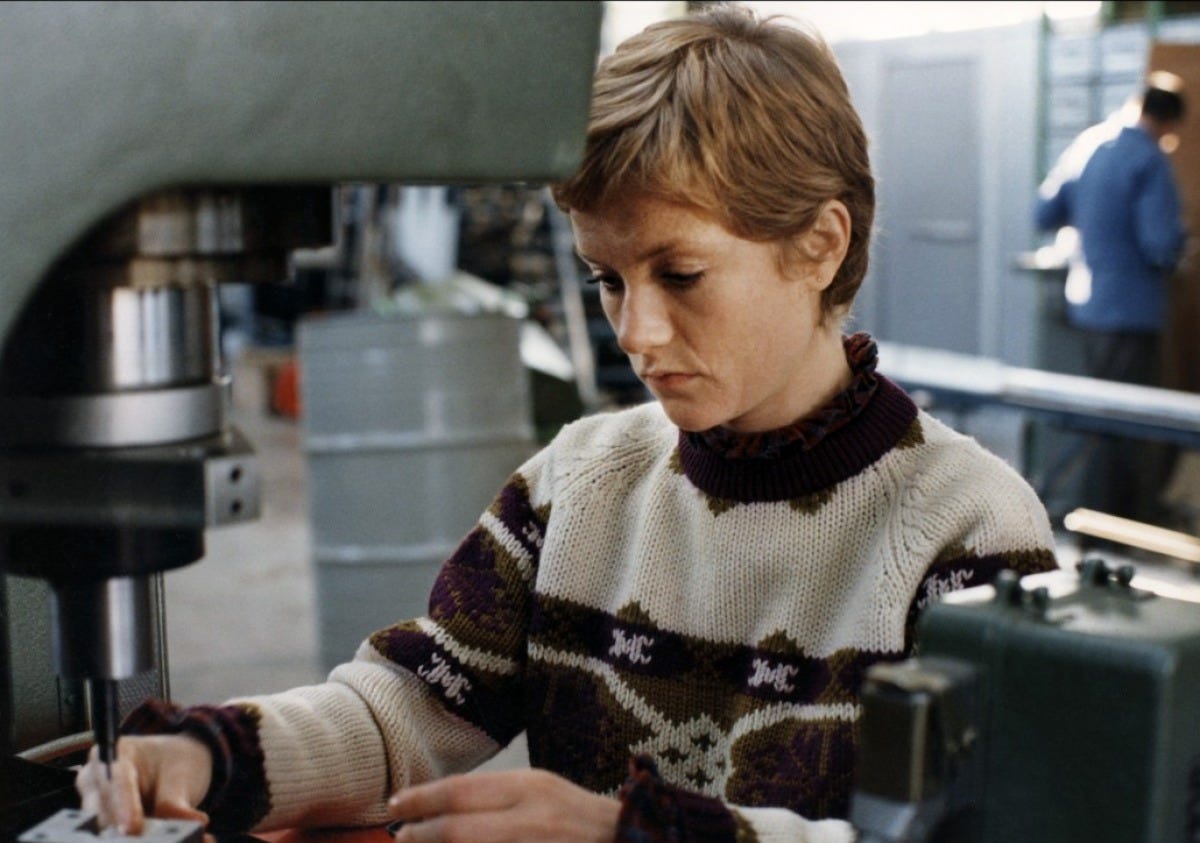
Huppert is adorable as a factory worker who resists being fired by her boss (Michel Piccoli), who is himself canoodling with the lovely Hanna Schygulla in the hotel that she owns. Both women are drawn to a filmmaker (Jerzy Radziwilowicz) who has abandoned the solidarity movement in Poland to come and make a listless film that brings to life the classics of the visual art world. He’s having difficulty finding the inspiration to make anything worthy, while the maids at Schygulla’s hotels are happily quitting their jobs to be nude models on his set. No one can deny the obvious exuberance with which Godard directs from behind the camera, and the performances and cinematography are excellent, but the infuriating, jumbled-up plot is the last word in pretentious European art house cinema.
My Best Friend’s Girl
La Femme de Mon Pote
Bertrand Blier, 1983
Rating: BBB
Cast: Coluche, Isabelle Huppert, Thierry Lhermitte, François Perrot, Daniel Colas, Frederique Michot, Farid Chopel
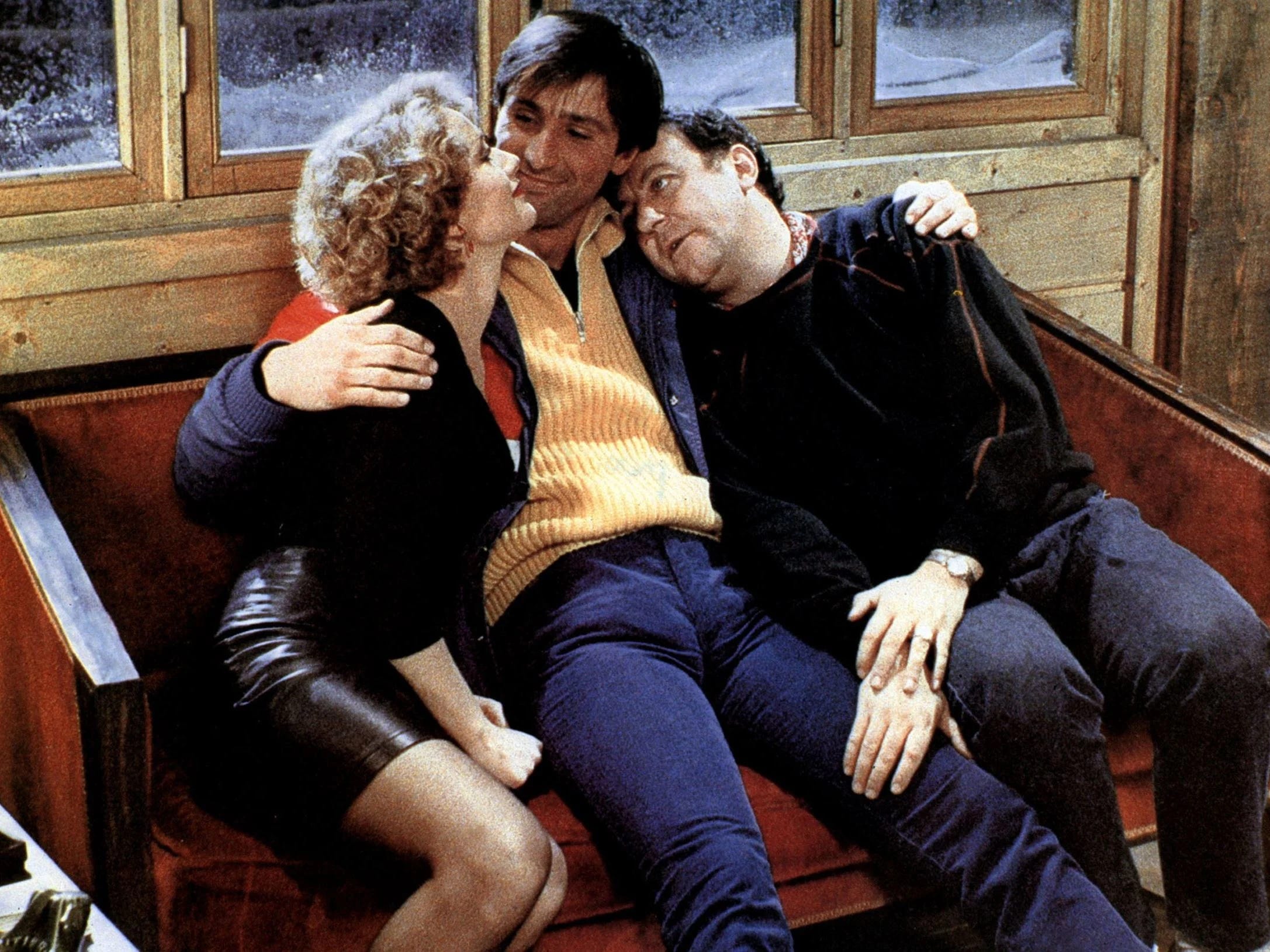
Shallow but entertaining comedy about two best friends (Thierry Lhermitte, Coluche) who live in a French ski resort and have their perfect existence interrupted by a gorgeous femme fatale (Huppert). She moves in with Lhermitte after one night and now his aging, frumpy pal feels all the more insecure around them; this gets even trickier when she starts putting the moves on the friend and finds herself unable to decide whom she’d prefer. Blier’s world is one where men are rambunctious boys trapped inside the bodies of rapists, and women are sex kittens just begging to be slapped around, so don’t be surprised if the bedroom farce nature of the story doesn’t thrill your modern sensibilities, even if you understand, as is often the case in his films, that he’s using these archetypes to critically question the patriarchal underpinnings of his culture.
The Story of Piera
Storia di Piera
Marco Ferreri, 1983
Rating: BBB.5
Cast: Isabelle Huppert, Hanna Schygulla, Marcello Mastroianni, Angelo Infanti, Tanya Lopert, Bettina Grühn, Renato Cecchetto, Maurizio Donadoni, Aiché Nanà, Girolamo Marzano, Lidia Montanari, Laura Trotter, Marina Zanchi, Lina Bernardi, Elisabetta Ambrosini, Fiametta Baraila, Serana Bennato, Rita Caldana, Cristina Forti, Loredana Bertè
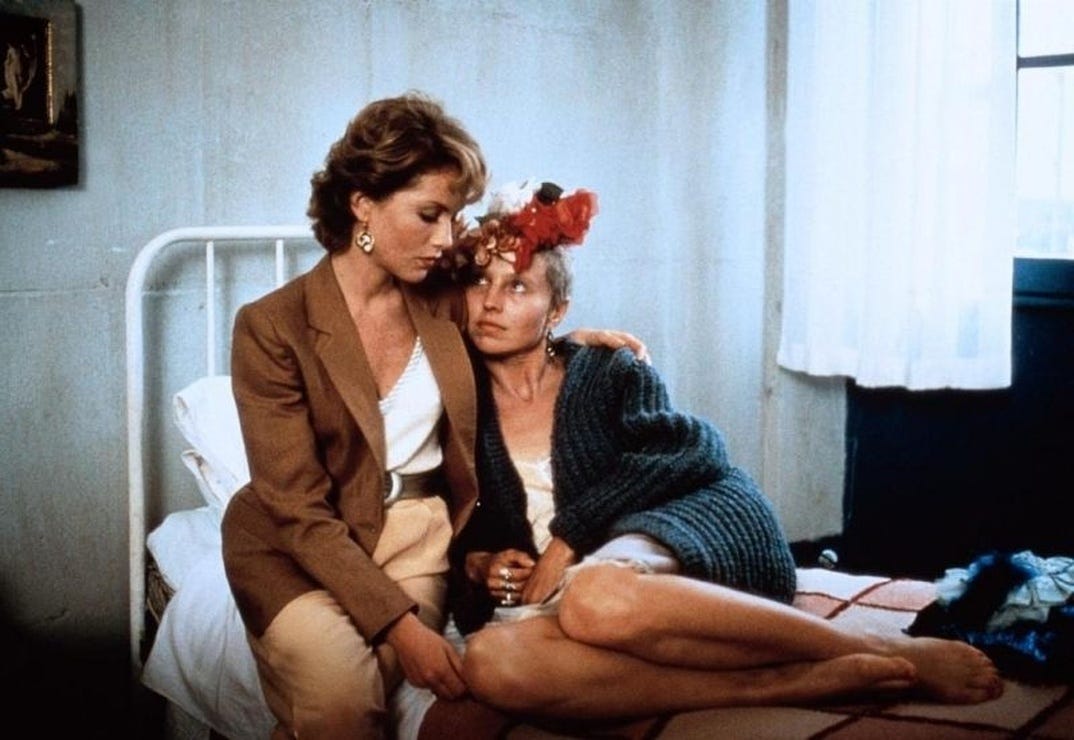
Isabelle Huppert plays Piera, a young woman who grows up under the parentage of two extremely original overseers: both her mother (Hanna Schygulla) and father (Marcello Mastroianni) have incestuous relations with her before they are committed to supervised care. Based on a semi-autobiographical synopsis by actress Piera Degli Esposti, the film focuses mainly on Piera’s viewpoint of her mother as she watches her navigate the world with both her charismatic charm and her damaged sense of sexual freedom. Oddly enough, the film features postcard-pretty images that recall innocent memories, but, of course, they’re just dressed that way. Huppert has the thankless, mild role here, while Schygulla shines as the fiery matriarch whose indulgence of passion leads her straight to the loony bin.
Entre Nous
Coup De Foudre
Diane Kurys, 1983
Rating: BBBBB
Cast: Miou-Miou, Isabelle Huppert, Guy Marchand, Jean-Pierre Bacri, Robin Renucci, Patrick Bauchau, Jacques Alric, Jacqueline Doyen, Saga Blanchard, Guillaume Le Guellec, Christine Pascal, Corinne Anxionnaz, Jacques Blal, Bernard Cazassus, Gérard Chambre
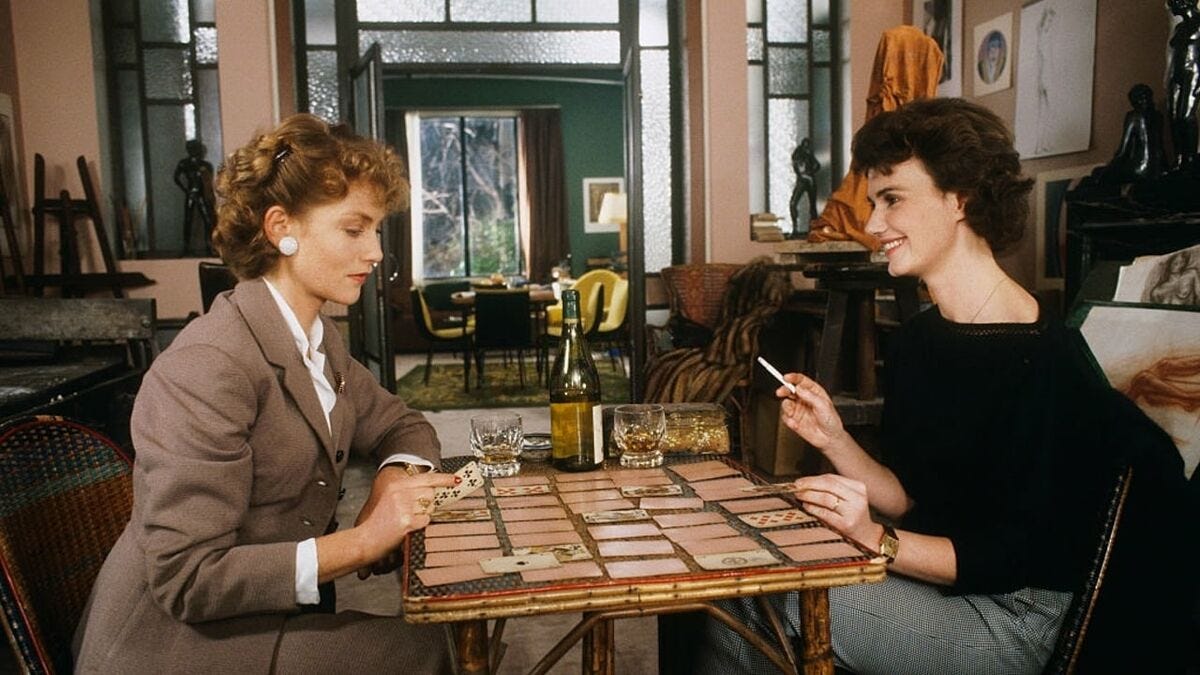
One of the very best films to come out of France in the eighties, and a masterpiece for director Kurys. Just after the second World War, two women (Huppert, Miou-Miou) are married to husbands because of circumstances other than true love. They meet at a school pageant and become best friends, eventually realizing that there is much more love between them than with their men. This does not go down too well with their spouses, Huppert’s (Guy Marchand) reacting quite violently, Miou-Miou’s (Jean-Pierre Bacri) descending further into his selfish existence. Stunningly photographed to look like a film from the period it depicts, this features a top-notch performance from Miou-Miou (who sheds her sex kitten image without the slightest sign of effort) and one of the most vibrant and exciting turns by the always incomparable Huppert. Truly the modern milestone that the critics claimed it to be when it was first released.
La Garce (1984)
Sincerely Charlotte
Signé Charlotte
Caroline Huppert, 1985
Rating: BB.5
Cast: Isabelle Huppert, Niels Arestrup, Christine Pascal, Roland Blanche, Nicolas Wostrikoff, Josine Comellas, Bérangère Gros, Eduardo Manet, Tina Sportolaro, Jean-Michel Ribes, Luc Béraud, François Berléand
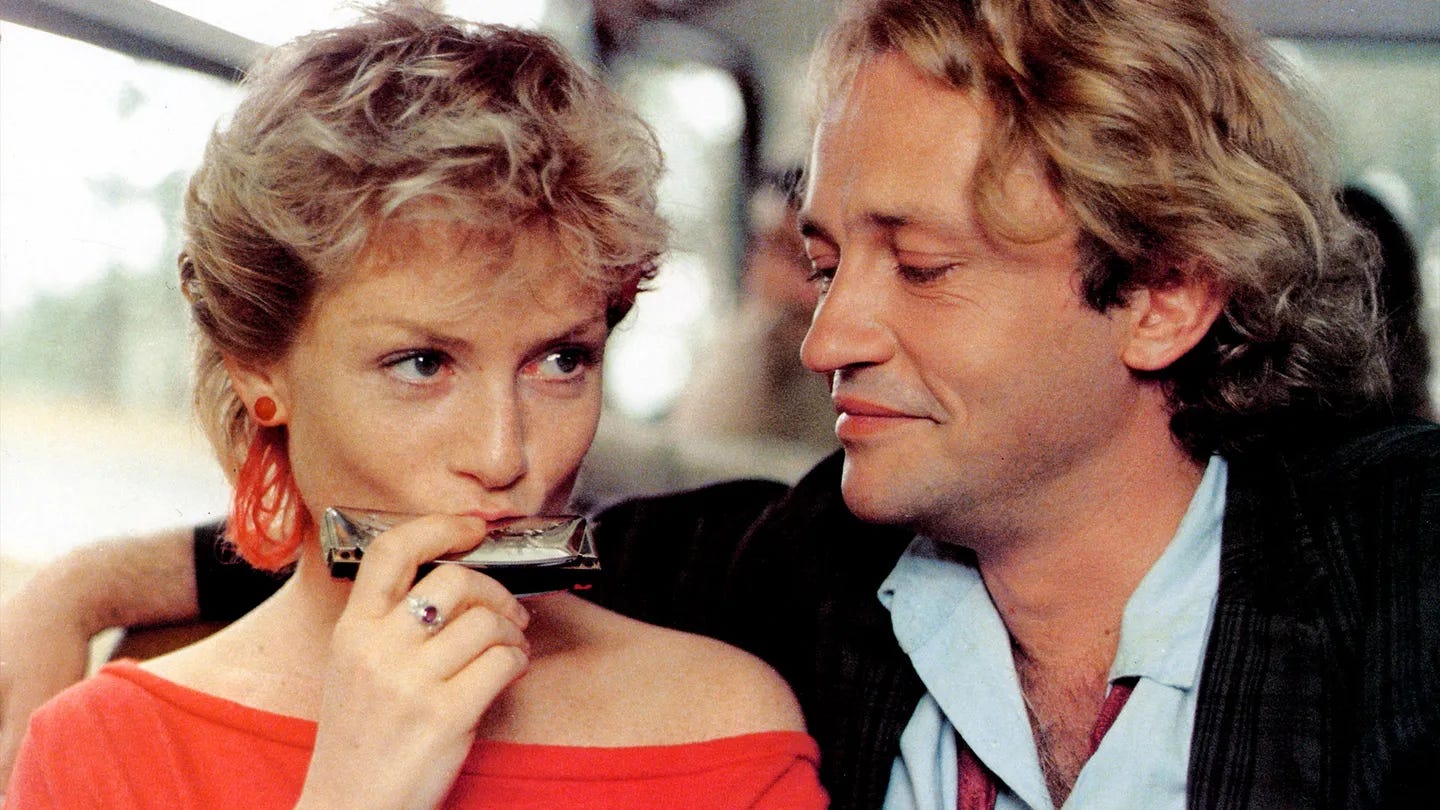
Happily settled into a new relationship, Niels Arestrup is thrown for a loop when his wild ex-girlfriend (Huppert) shows up for a reunion. She tells him that her lover has been murdered and she can’t face the police for fear that she might be a prime suspect, so he decides for old times’ sake to help her hide until she can make it to Spain in safety. Meanwhile, Arestrup’s new fiancee is getting frustrated at his absence, particularly when he complicates things by asking for money to further aid his ex in her escape. Huppert’s bravura performance is the best thing about this average romantic comedy, her free-spirited character the complete antithesis of the more pent-up, subdued women she’d become popular for playing in the years to come.
Sac de Noeuds (1985)
Cactus
Paul Cox, 1986
Rating: BBB.5
Cast: Isabelle Huppert, Robert Menzies, Norman Kaye, Monica Maughan, Banduk Marika, Sheila Florance, Peter Aanensen, Julia Blake, Jean-Pierre Mignon, Ray Marshall, Maurie Fields, Sean Scully, Dawn Klingberg, Kyra Cox, Tony Llewellyn-Jones
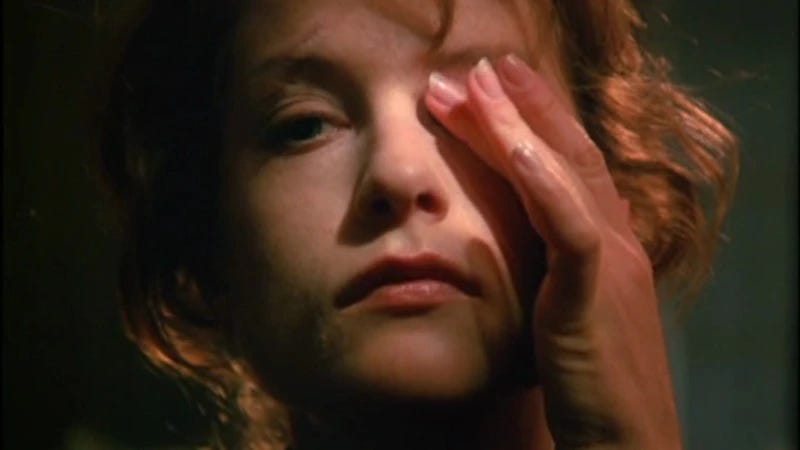
Huppert plays a French tourist staying with friends in Australia who is severely injured after a car accident. She loses sight in one eye, and is told that the sight in the other will go as well unless she has surgery to remove the damaged one. While deciding what she wants to do, she befriends a blind man and has a romance that pushes her towards an eventual decision. Told with very little fanfare, this tale of a very sad experience is photographed in bright, lush colours that display the world that Huppert is constantly threatening to lose if she doesn’t make up her mind. Cox directs with delicate grace, and gets a fiercely subtle performance from his leading lady.
The Bedroom Window
Curtis Hanson, 1987
Rating: BBB
Cast: Steve Guttenberg, Elizabeth McGovern, Isabelle Huppert, Paul Shenar, Carl Lumbly, Wallace Shawn, Frederick Coffin, Brad Greenquist, Penelope Allen, Robert Schenkkan, Mark Margolis, Sara Carlson, Jodi Long, Leon Rippy, Maury Chaykin
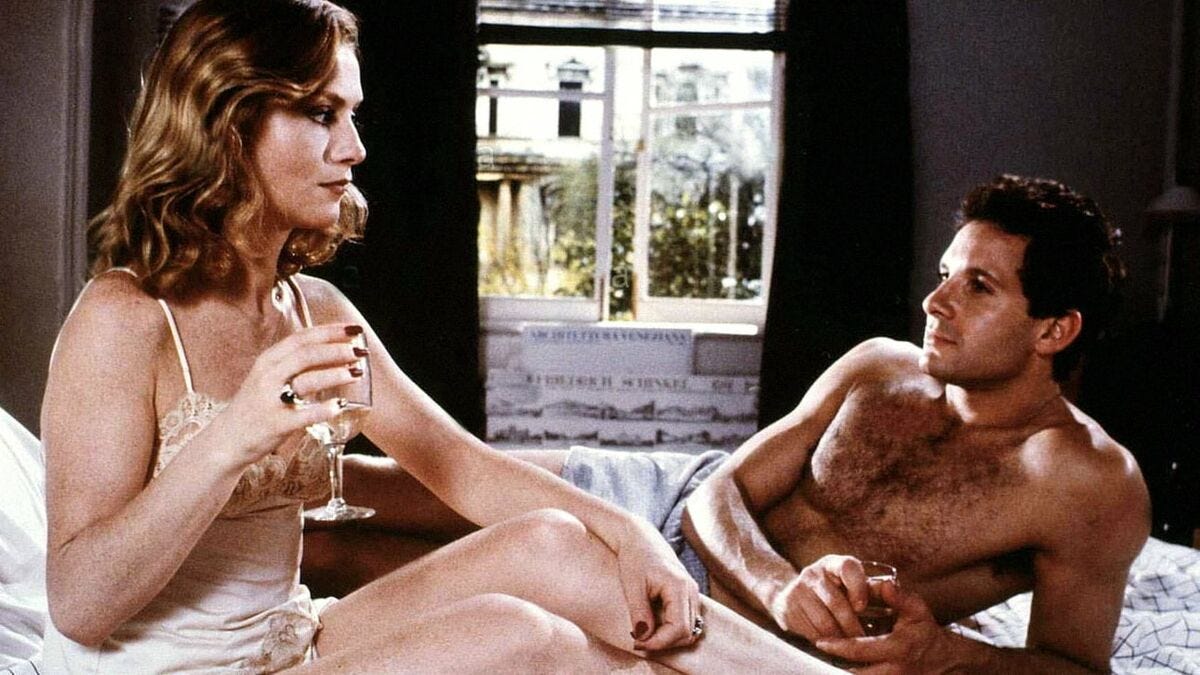
Steve Guttenberg takes his boss’s wife (Huppert) home after a work function and they spend the night together. Late into the evening he goes to the bathroom and she is drawn to the window by the sound of a woman screaming. Huppert witnesses a man trying to rape a young woman (Elizabeth McGovern), but her seeing the event causes the man to run away. When the couple find out later that another young woman was raped and murdered in the same neighbourhood, they decide to go forward with their testimony but Huppert is hesitant: how can she tell the police what she saw without exposing their affair? Guttenberg decides to pretend to be the witness, but telling this well-intentioned lie leads to a whole slew of complications that include meeting McGovern and teaming up with her to catch the bad guy, and discovering that Huppert’s morals are even more complex than your average wealthy adulteress. Hanson puts together an entertaining and almost humorously ripe tribute to old film noirs whose character have much to recommend themselves, while the performances are strong (particularly Huppert in a wonderfully fatale role). Guttenberg is winsome and surprisingly astute as the star of a thriller, but he’s undone by a number of plot twists in the film that are unbelievable to the point of ridiculously contrived.
Milan Noir (1988)
The Possessed (1988)