
My Week In Film: January 12, 2026
Marty Supreme, Is This Thing On?, The Testament of Ann Lee, Song Sung Blue, Orwell: 2+2=5, Father Mother Sister Brother, Sentimental Value
I actually saw Sentimental Value in Athens when I was there in September, it was playing at an open-air theatre across the street from my hotel in the snazzy Gazi neighbourhood. I don’t know if any of you have ever done open-air theatres in Greece (or anywhere else). They’re incredibly pleasant, sort of like a drive-in except you’re not awkwardly positioned in the bucket seats of your car (modern technology means drive-ins really can’t be as good as they once were), instead you’re sitting in patio chairs with tables between them for smoking, eating, drinking or, because it’s Europe, more smoking. A lot of them are on the upper floor of the building they’re situated in so you’re not smack dab in the middle of city noises, but if you didn’t grow up going to these kinds of theatres, it can be very hard to concentrate on what you’re watching. I find that the night sky is still a bit too bright and the city noises can still cut in, plus if it’s a nice night and there’s a delicious breeze, that’s a distraction too. Add to that the fact that I was watching a Norwegian film with Greek subtitles and I was amazed I was able to take the whole thing in. I was grateful to get Neon’s screener of this movie more recently because, watching it again, I could really soak in a lot more nuance (while still appreciating that my Greek was good enough to watch a movie with subtitles, thank you), so I got around to writing my review now and include it here. Plus Chalamet’s Oscar bid is here, as is Amanda Seyfried’s, and my disappointment in the latest Jarmusch, and more!
Marty Supreme
Josh Safdie, 2025
Rating: BBBB
Cast: Timothée Chalamet, Gwyneth Paltrow, Odessa A’zion, Kevin O’Leary, Tyler Okonma, Abel Ferrara, Fran Drescher, Luke Manley, Emory Cohen, Larry “Ratso” Sloman, Ralph Colucci, Géza Röhrig, Koto Kawaguchi, Pico Iyer, John Catsimatidis, Sandra Bernhard, George Gervin, Ted Williams, Penn Jillette, Isaac Mizrahi, David Mamet, Fred Hechinger, Spenser Granese, Levon Hawke, Isaac Simon, Hailey Gates, Mitchell Wenig, Philippe Petit, Tracy McGrady, Kemba Walker, Naomi Fry, Ronald Bronstein, Ray Tintori, Paul Grimstad, Mariann “from Brooklyn” Tepedino
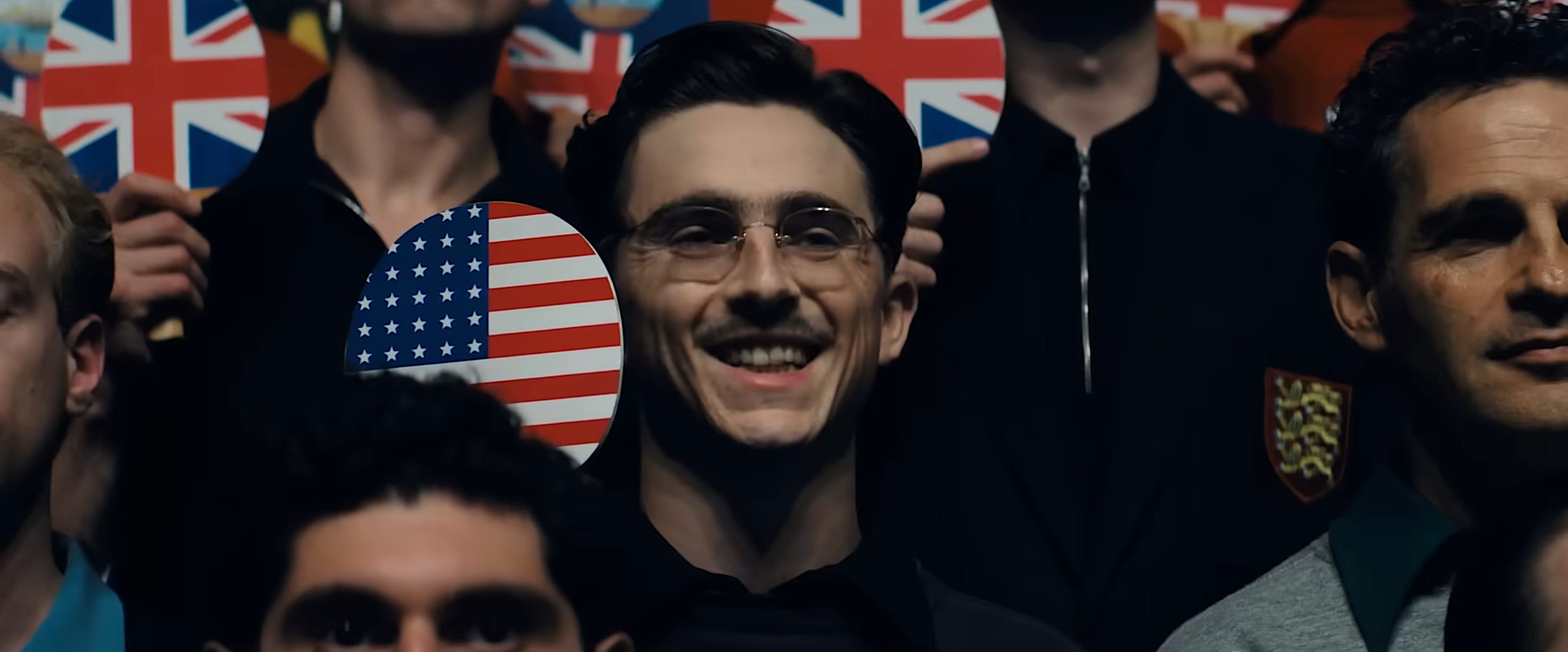
The energy is raised from the start and kept aloft throughout the adventure of a young man learning from his own hubris, similar to Safdie’s last release directorial effort (with his brother Benny), Uncut Gems, but played out in a more lived-in and thoughtful tone. I’m not being deliberately vague in this description, but the emotional impression is always stronger than the narrative one with either Safdie brother, masters of atmosphere and rhythm who do also incorporate a compelling if capricious narrative into their love of vibes. Timothée Chalamet is outstanding as the ambitious title character, who dwells on the Lower East Side in the early 1950s and sees his skills at the ping-pong table as his ticket to the big time. He represents America at the British Open in London, beating Hungarian champion Bela Kletzki (played by poet and Son of Saul star Géza Röhrig) but loses to Japanese champion Koto Endo (Koto Kawaguchi), taking the loss as encouragement to do even better next time and spreading his obnoxious confidence around to everyone he meets while overseas. The next tournament is scheduled for Tokyo and Marty has to raise the capital to get himself there, absolutely confident that he will win this time, but to do so he places himself into a number of hustle schemes that spiral into dangerous adventures that threaten not only his plan but his life.
The rapid heartbeat of Marty’s goal gives this film its propulsion and Chalamet, as talented a young actor as this generation has ever seen, is consistently in command of the project throughout, aided by a supporting cast that is uniform in quality. Gwyneth Paltrow is perfectly cast as the movie star that Marty gets involved with for personal and professional reasons, gliding into a room with an understated ease and generous humour that is the perfect counterpoint to Marty’s manic twitchiness. Abel Ferrara has a potent appearance as a stranger Marty meets in this most outrageous of ways (a sequence that I still can’t believe happened) and with whom he plays a deadly game of blackmail to achieve his dreams. Smaller but still exceptional contributions are made by Fran Drescher, Sandra Bernhard, a hilariously obtuse Kevin O’Leary, newcomer Odessa A’zion, and real-life table tennis champion Kawaguchi as Marty’s unbeatable nemesis.
Everything works and, while I’m watching this exciting drama, I feel like I’ve never seen anything better, but then it ends and I’m left with nothing to hold on to as I exit the theatre: its message, and I’m doing my best to avoid spoilers, is that fame is hollow and the idea that your youthful energy can get you anything you want is a lie, and ultimately, what matters is family. After a lot of dangerous cynicism for two hours, it’s a trite conclusion that feels like the cop-out of a director who either didn’t know how to end things or was forced by studio executives to put a nice bow on it; with a little less carpet-munching in the park, this is ultimately a movie that could have been made in 1946, and that works against its anxious plea to rewrite the book on modern cinema. Despite how long those last two sentences were, though, it is a really good movie, and if it cleans up during this awards season I won’t have any complaints about it.
Is This Thing On?
Bradley Cooper, 2025
Rating: BBBB
Cast: Will Arnett, Laura Dern, Andra Day, Bradley Cooper, Amy Sedaris, Sean Hayes, Christine Ebersole, Ciarán Hinds, Scott Icenogle, Chloe Radcliffe, Jordan Jensen, Peyton Manning, Reggie Conquest, James Tom, Gabe Fazio, Blake Kane, Calvin Knegten
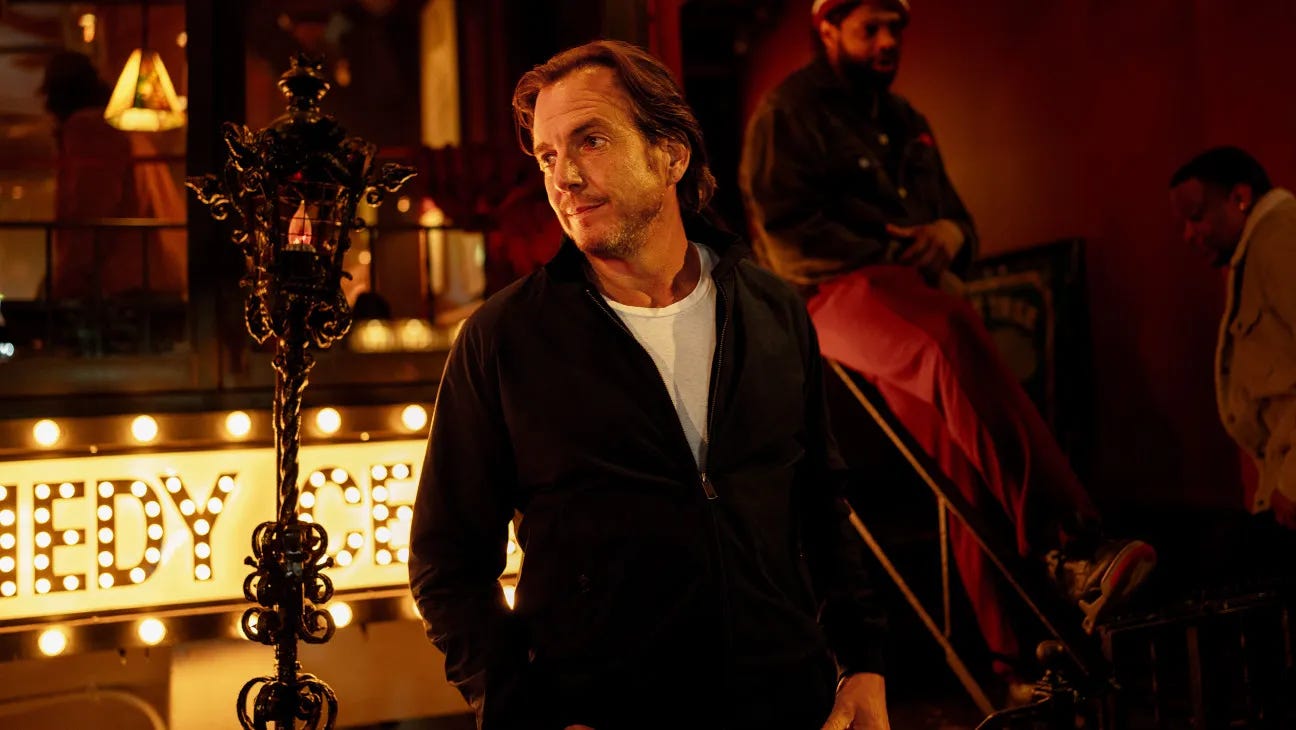
A couple have made the decision to divorce and are doing their best to separate in the most equitable way possible, hoping to avoid any harm to their two sons. Alex (Will Arnett) and Tess (Laura Dern) have no doubt that their decision is the correct one for their relationship, but in their desire to be harmonious about it they are also sublimating the need to deal with a breakdown in communication that has let old arguments grow stale while losing touch with their former selves (in Tess’s case, the career as a basketball star that she left behind). On the evening that they leave a friends’ party in Manhattan, Alex drops Tess off at her train to go back to the suburbs and then heads to his newly minted, mostly empty bachelor pad, along the way stopping at a bar where he is told he needs to pay fifteen dollars cover to come in and have a drink. Having no cash on him, Alex learns that he doesn’t have to pay the cover if he “puts his name down” and, being tipsy and not knowing what that means, accidentally signs himself up to perform at an open mic night at the Comedy Cellar. Alex takes the stage, and we know that this is the scene that will make or break this movie: because this another in the line of great works by the always perceptive Cooper, Alex’s first time on stage isn’t an embarrassing debacle in front of a vicious audience but, instead, something of an accidental miracle. It’s believable that what Alex delivers on the fly, and which Arnett does with exceptional ease, would come spontaneously from him and it’s also wholly acceptable that the audience would find it amusing, and it relaxes us into knowing that we are going to enjoy a smart and very satisfying film.
Alex is enervated and inspired by the experience and comes back for more, honing his material with further audiences while trying to keep up with shared custody and dealing with the varying responses to his divorce from his and Tess’s group of friends. Their friend Christine, played by Andra Day, is taking out her own marital issues with a seldom-employed actor, played by Cooper, on Alex by treating him like the villain in the scenario and it’s affecting the friend group’s upcoming plans for a holiday getaway. Even more explosive, however, is what happens when Tess accidentally shows up at the Comedy Cellar after a dinner date and catches Alex’s tight five about their marriage, but every time you expect this movie to disappoint you by taking a predictable turn it doesn’t, and somehow it manages to capture the pain and confusion of a breakup and the emotional ripples that follow it without ever resorting to cheap melodrama. The characters in this movie always behave like grownups, even when they’re hurting each other, and Cooper has a great deal of respect for the big and small challenges of navigating the trauma of divorce, keeping a normal life going after it and, in this case, adding in the almost magical quality of a new pursuit in something as daring and vulnerable as stand-up comedy. Arnett, who has rarely been the lead in a major film before this, makes you wonder why it doesn’t happen all the time, and Dern gets the opportunity to explore more sides of her intense persona than she has in a very long time.
The Testament of Ann Lee
Mona Fastvold, 2025
Rating: BBBB
Cast: Amanda Seyfried, Esmee Hewett, Millie Rose Crossley, Lewis Pullman, Benjamin Bagota and Harry Conway, Thomasin McKenzie, Stacy Martin, Christopher Abbott, Tim Blake Nelson, Scott Handy, Matthew Beard, Viola Prettejohn, Jamie Bogyo, David Cale
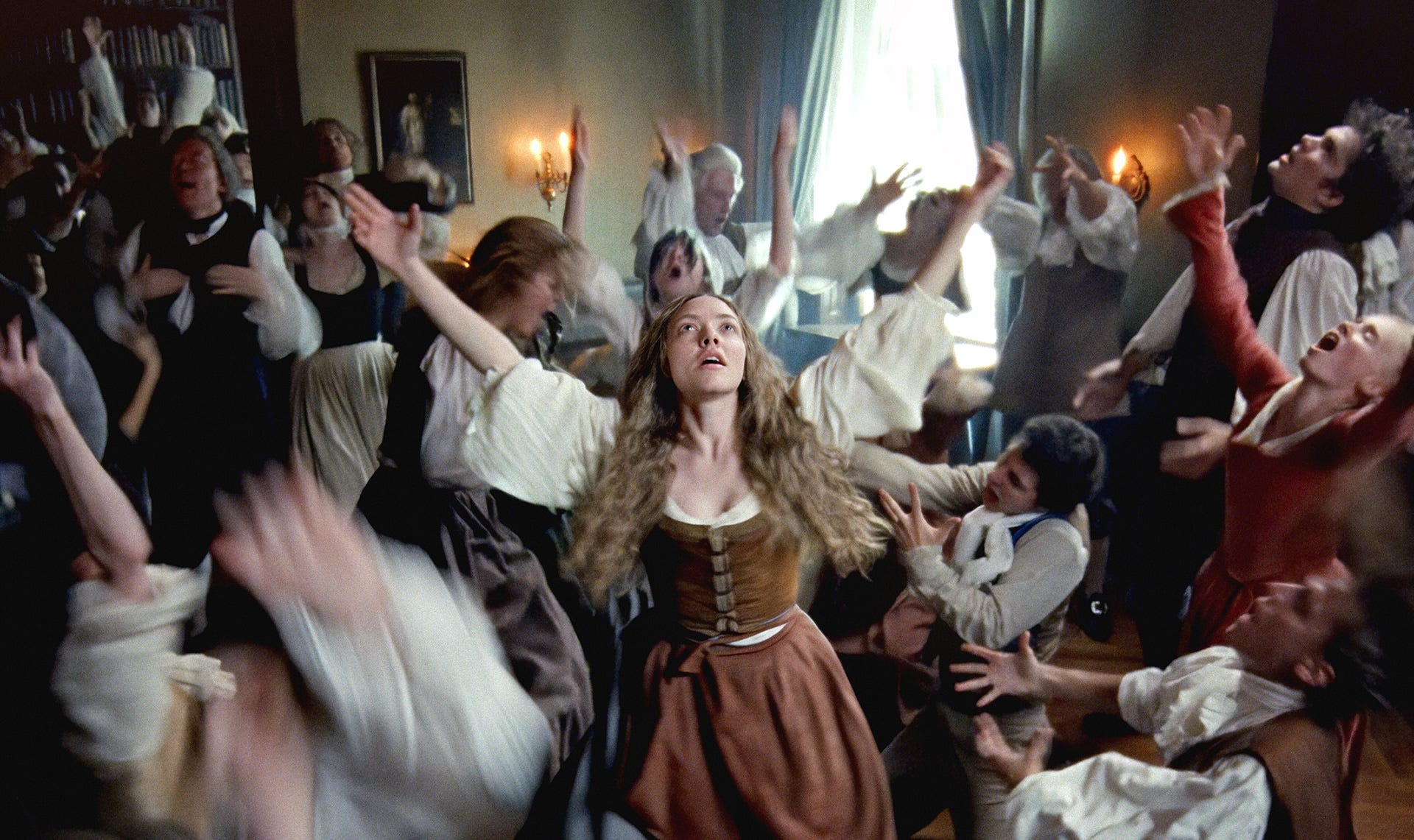
The filmmaking team of Fastvold and Brady Corbet follow their successful collaboration on The Brutalist with another examination of one of the curious underpinnings of America’s social and religious framework, with Fastvold returning to the director’s chair for the first time in five years. Born in early eighteenth-century Manchester, Ann Lee witnesses her mother and father enacting the beast with two backs as a small child and develops a horror for human carnal frailty that she solidifies into a strong stance against sexual activity as an adult. Breaking this resolve (and adding in some kinky sadomasochism) for the sake of a husband (Christopher Abbott) with whom she falls in love, the now grown Ann (played by a riveting Amanda Seyfried) gives birth to four children that she loses in quick succession and her grief turns, as is not uncommon, to religious fervour. She is inspired to take up with a sect of worshipers run by James and Jane Wardley (Scott Handy, Stacy Martin), initially called the Shaking Quakers, who express their devotion to God through movement and singing at a time when Quakers are dampening any overt physical expression in their worship practices.
Ann eventually becomes an inspiring leader, taking on their communion with God through sound and movement and adding to it her insistence that only through sexual abstinence can one truly follow the Lord in all his ways. As a result, the Shakers quickly become a target for government persecution (and embarrassment) and they decide to make their way across the water, having no idea how they will establish themselves in the New World but guided by Ann’s belief in the visions she sees as God’s plans for them.
Arriving on American shores with no money or support, Ann leads the Shakers up the river from New York to Niskayuna where they establish a utopia that is threatened by more violence from outside their community and anger within her home; her husband Abraham does his best with the whole abstinence thing, but eventually his frustration, and what he sees as her refusal to admit her vulnerability and sorrow, work against his loyalty to her.
Parts Benedetta, Friendly Persuasion and Harriet with the flavour of expressionist history that this team do so well, this hybrid of styles and genres is a fascinating experiment that for the most part works, revealing religious fanaticism as a method by which people deny their fears, and describing puritan practices that go against human nature as part of the country’s architecture without being condescending in describing either. Charisma and conviction rule over substance and logic here, a factor in many a personality cult over the centuries, though in Lee’s case she is portrayed more as willfully blind to facts and not corrupt or deliberately misleading. The highly stylized choreography and singing, with music by Oscar winner Daniel Blumberg (who appears as an actor here as well) is more of a challenge, it’s haunting and strange but also feels just a touch too modern, as if someone has applied Ann’s story to a pastiche Broadway musical based on the songs of Evanescence. Perhaps we can’t achieve the quality of faith that our protagonist does because we can’t abstain from the worldliness that she eschews so consistently, but watching her tale is a wild ride and Seyfried’s ability to hold it together is a thrill to behold.

Song Sung Blue
Craig Brewer, 2025
Rating: BBB.5
Cast: Hugh Jackman, Kate Hudson, Michael Imperioli, Ella Anderson, Mustafa Shakir, Fisher Stevens, Jim Belushi, King Princess, Hudson Hensley, John Beckwith, Jackie Cox, Cecelia Riddett, Sean Allan Krill, Beth Malone, Jayson Warner Smith, Erika Slezak
Brewer asked director Greg Kohs for the rights to his 2008 documentary of the same name immediately after watching it, knowing that its tale of triumph over adversity would make a great musical feature and another opportunity to sell old music in a new package. Hugh Jackman is terrific as Mike Sardina, an impersonator of popular singers who supplements his living as a mechanic by singing at county fairs and amusement parks, one of which introduces him to a Patsy Cline impersonator named Claire Stingl (Kate Hudson). Sardina wants to do more than just put on wigs and sing Don Ho songs, and with Claire as his inspiration, he comes up with an act in which they interpret Neil Diamond’s oeuvre using his performance style, but creating a show that is also unique to their personalities. Mike and Claire fall in love and successfully blend their families, but their local success (including opening for Pearl Jam) is threatened by an accident that, were this not based on a true story, would be laughed off the screen for how incredibly, ridiculously horrific it is, adding to their already high pile of complications including financial instability and Sardina’s poor health.
The rock and roll biopic is once again subjected to a screenplay that follows the all-too-familiar schedule: obscurity, breakthrough, failure and comeback, but this film is given blood and veins by a handful of remarkably enjoyable musical numbers and a swathe of warm performances. As Sardina, Jackman has never been more touchingly vulnerable and employs his well-established charisma to transmit the character’s concerns for his family and his devotion to his wife, saving a little for his own insecurities as a guy who never really made it the way he wanted to. Hudson fares even better, infectiously loveable and given more of a chance to show off her talents than any role in a very long time, never overdoing the midwestern accent for Fargo effect and holding the emotional centre of the film steady. It’s a film so honest and charming that you’d have to be a real miser not to enjoy it, particularly given how great the live numbers look and sound.

Orwell: 2+2=5
Raoul Peck, 2025
Rating: BBBBB
Those who cannot remember the past are condemned to repeat it, wrote George Santayana, and the fact that George Orwell accurately predicted the fascist regimes that would follow his death by describing the ones he witnessed in his life is driven home with devastating assurance in this superb documentary. In 1946, Orwell (born Eric Arthur Blair), who had long suffered ill health from tuberculosis, headed to the island of Jura in the Scottish Hebrides, where he eventually wrote his final and most famous work. The 1949 publication of 1984, released a year before his death at the age of 46, told a tale of an unforgiving totalitarian government that used positive slogans and comforting propaganda to justify complete control over citizens’ lives. “Freedom Is Slavery” and “War Is Peace” are among those that pop up in the narrative, as do terms that would quickly enter common usage in pop culture dialogue after the book’s publication, such as referring to the government as “Big Brother” (a term of paranoia used by both pro- and ant-fascists today). Orwell had just survived the second World War and the horrors of Nazi Germany were being revealed to all, but his observations were also rooted in his childhood in colonial India and his serving with British troops stationed in Burma.
What Peck has brilliantly assembled is a collection of images taken from news footage as well as cinema and television (including three different filmed adaptations of 1984) to describe the continuity between Orwell’s writings and the darkest events of the last hundred years, including Germany, Russia’s invasion of Ukraine, Myanmar and the war in Gaza. The clarity with which Orwell writes and the very easy manner in which it is applied to later political situations is frightening, his published writing as well as his diary entries (which are read over the soundtrack by Damian Lewis) giving a direct explanation for where fascism comes from home and the methods it uses to succeed with the masses. The outsized power not just of government rulers but of corporate leaders and the capitulation of the media to both are used to explore the reason why people’s fears are so easy to take advantage of, and always have been, and Peck finds a great guide in the late, great writer through which to find answers: “If absolute truth isn’t attainable,” we learn, “a big lie is no worse than a little one.” The world of journalism, which is meant to question power and protect people from its outsized reach, is frequently the manner in which people lose their rights to dictators, while access to class mobility is the carrot dangled over people’s heads as incentive to play along with their overlords (Orwell’s family were members of what he called the “lower upper middle class,” a kind of cash-poor gentility that could live aristocratic lives by setting up shop in colonized lands and participating in the oppression of people in faraway places).
The slogans from 1984 are chapter headings through which Peck assembles his footage (sometimes leaning a bit too heavily on the films of Ken Loach, ignoring the fact that they are often far more optimistic than Orwell ever was), and, aside from the message being imparted here (which makes for the most upsetting film of the year), this film is a marvel of collage. The assemblage of popular culture fits rights alongside deeply disturbing footage of real atrocities captured by news cameras and gives us a powerful look at the big picture without ever feeling removed or distant from the matter. Wars past and present, the events of January 6 (”The very concept of objective truth is fading out of this world,” Orwell wrote) and concerns over the present-day tech industry, the least regulated in the world, are all part of this amazing experience that also has its own bits of optimism at the end, though not enough to dampen its hard-hitting impact.
Father Mother Sister Brother
Jim Jarmusch, 2025
Rating: BB.5
Cast: Tom Waits, Adam Driver, Mayim Bialik, Charlotte Rampling, Cate Blanchett, Vicky Krieps, Sarah Greene, Indya Moore, Luka Sabbat, Françoise Lebrun
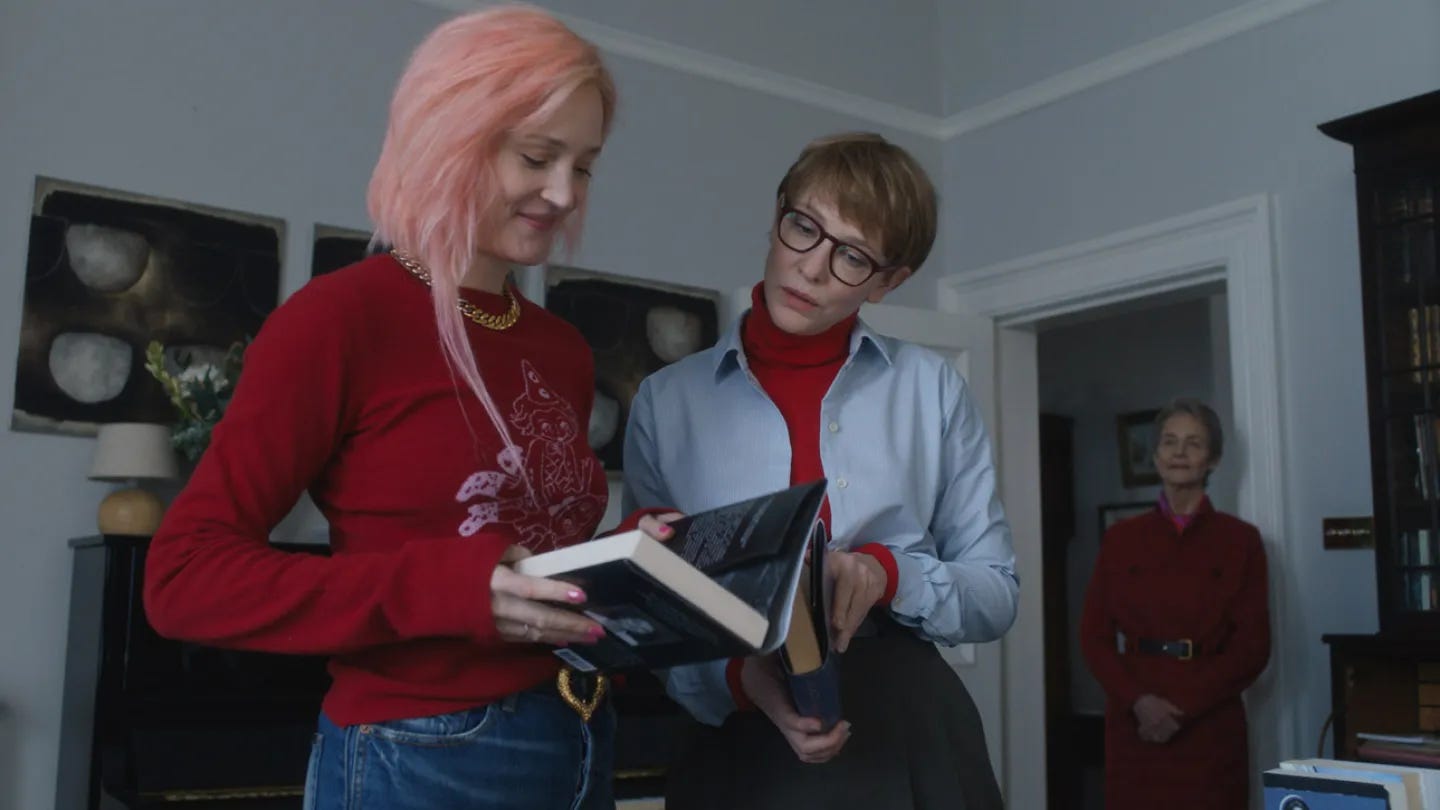
Three stories in three different cities are united by common elements that illustrate the experience of trying to connect with family members as a universal one. In New Jersey, a brother and sister (Adam Driver, Mayim Bialik) head to the remote country home of their estranged father (Tom Waits) for a visit and find themselves unable to make up for the distance already separating them, sitting down for a quick visit before rushing away. In Dublin, a successful author (Charlotte Rampling) hosts her two daughters, one a dutiful and reliable office worker (Cate Blanchett) and the other a capricious free spirit (Vicky Krieps), but their visit is just as tentative and unsatisfying (and a line about Krieps having spent some time in Brussels to justify her accent really doesn’t fly). We then go to Paris where two siblings (Indya Moore, Luka Sabbat) enter the apartment once inhabited by their now-deceased parents, where they find closure by revisiting memories, facing truths of the past and holding on to each other in order to let go of the things weighing them down.
Each segment repeats motifs to unify the the overall piece, such as the sight of skateboarders gliding through the streets in slow motion, the expression “Bob’s your uncle” in various forms, conversations about drinking water and the appearance of a Rolex watch. Jarmusch often gets at something profound through very simple interactions and plot devices, but aside from the clear and confident performances he elicits from a uniformly excellent cast here, there isn’t much to be gleaned from this meagrely rewarding film.
Sentimental Value
Affeksjonsverdi
Joachim Trier, 2025
Rating: BBBB
Cast: Renate Reinsve, Stellan Skarsgård, Inga Ibsdotter Lilleaas, Elle Fanning, Anders Danielsen Lie, Jesper Christensen, Lena Endre, Cory Michael Smith, Catherine Cohen, Andreas Stoltenberg Granerud, Øyvind Hesjedal Loven, Lars Väringer, Ida Marianne Vassbotn Klasson
Family is a rich tapestry of overlapping narratives, the layers of which can be examined by looking at a static geographical place that has contained multiple generations, a house in Oslo in the case of this film, or the farm at the heart of Mascha Schilinski’s Sound of Falling. Trier risks pushing me past my patience by using that overly abused film trope, narration, to introduce us to his characters, but it turns out he uses it well, as the voice describing the background and history of the family around which this wonderful character piece arranges itself is not there to provide information that should be transmitted through drama; rathre, it contextualizes the very nature of family narratives themselves, which Trier then plays with through metatextual uses of theatre and filmmaking.
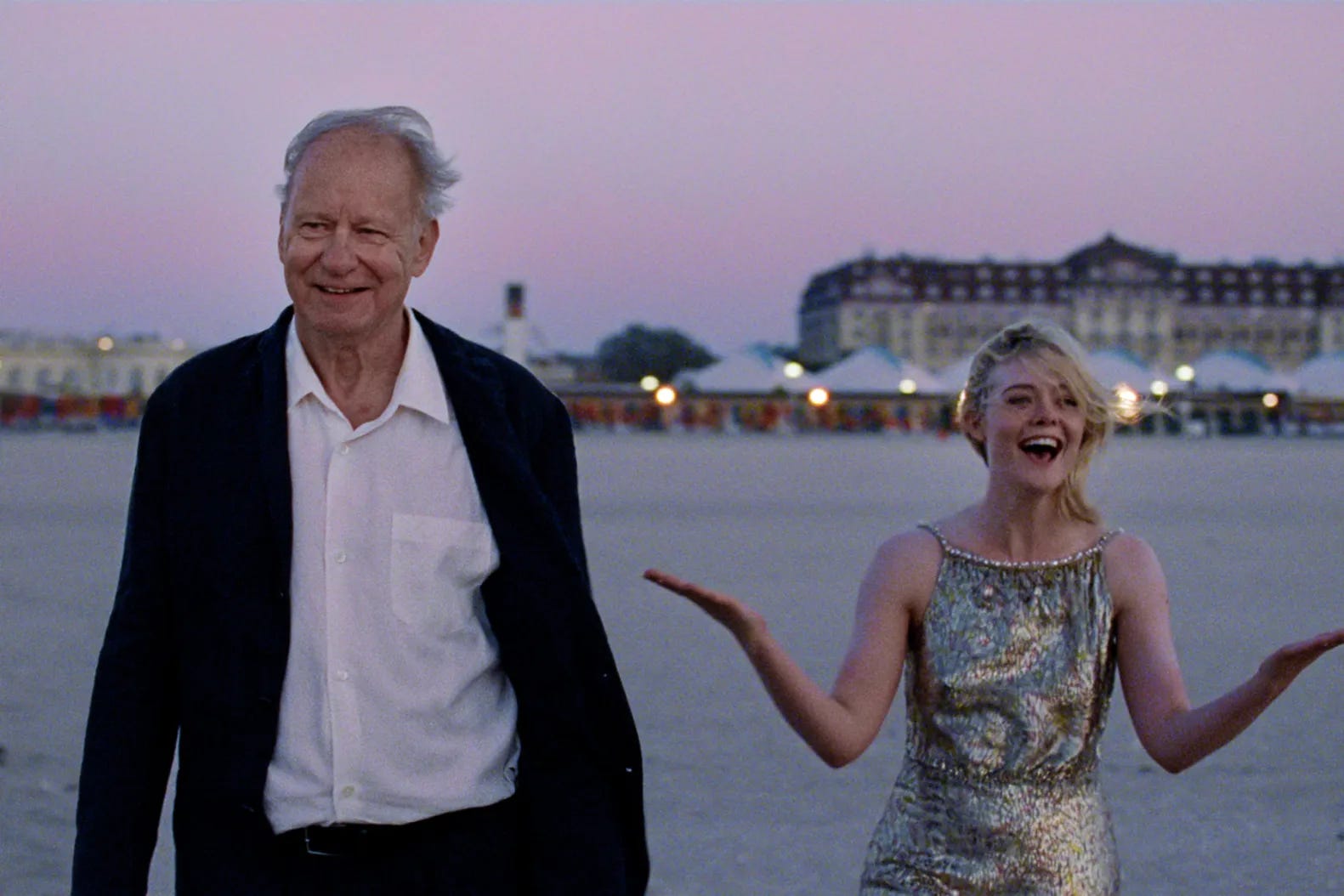
Renate Reinsve is, of course, excellent as Nora, an actress struggling with her emotional equilibrium and ready to bolt from the theatre on the opening night of a play (I can’t help assuming it’s a production of A Doll’s House, because it’s Norway and because of her name), and carrying on an affair with a married co-star (played by Trier mainstay Anders Danielsen Lie) whose appeal to her is precisely the fact that their relationship is hopeless. Nora’s mother passes away, and the funeral brings home her estranged Swedish father Gustav (Stellan Skarsgård, his inscrutable charms put to better use than ever before) with whom she has unfinished emotional business. Nora’s sister Agnes, played by a powerfully subtle Inga Ibsdotter Lilleaas, isn’t as frustrated by memories of a difficult childhood with their therapist mother, who raised them alone after her father moved back to Sweden, but Nora is resolute in her anger. Gustav follows the funeral with an offer of a role to Nora, telling her that he is directing a film for the first time in fifteen years and has written the lead role with her in mind. She immediately turns him down, so he heads to the Deauville Film Festival where he meets a famous American actress named Rachel Kemp (played by a luminous Elle Fanning) who gives him the idea to resurrect the project as an English-language production that will have a much easier time raising a budget with a name attached.
The process of getting this up and running, including bringing Rachel to the family house that he plans to shoot the movie in, brings up memories of the past, and projects us further back into the previous generations that occupied the house (and makes a charming reference to Woody Allen’s masterful, Bergmanesque drama Another Woman as well), while Nora is forced to examine her own issues that are holding her back from being happy in her life and in her career. Trier puts his characters into high stakes moments of great drama but never manipulates situations for grand indulgence, the emotional climax for Nora is not a huge come-to-Jesus moment but a gradual softening of her anger as she gives way to the inevitability of clarity that comes with communication and experience.
It’s a lovely and tasteful film that doesn’t feel safe or cold, blessed as it is with such sensitive performances that make you forget that none of it is rewriting the book on sincere family drama. The added details of multiple generations, while minimally included, make it feel thoughtful, it’s Trier’s most affecting movie since his remake of The Fire Within.