
The Films of Federico Fellini: Part 2
There Is No End, There Is No Beginning (1960-1976)
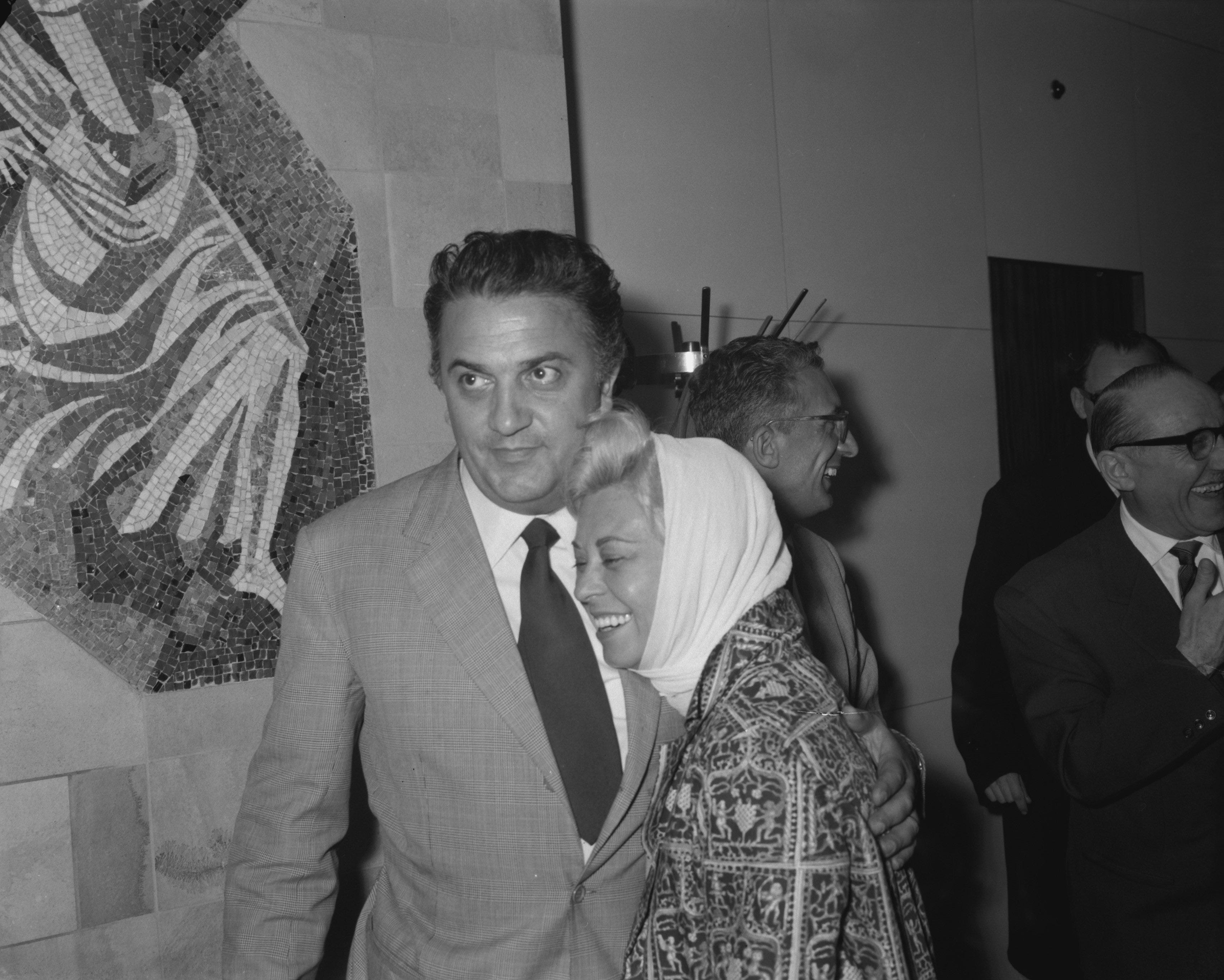
No one was prepared for the incredible success, notoriety and controversy of La Dolce Vita, which began its world tour at the 1960 Cannes Film Festival, where it won the Palme D’Or, and ended up breaking box office records for non-English films when it finally came to America in the spring of 1961. Fellini was condemned by the church and lauded by critics as one of the all-time greats, and the attention and adulation crushed him to the point of almost killing his ability to ever make another film.
Ever one to find creativity even in this mode, however, he followed it with a less contentious but even more successful film, 8 1/2, about a director who doesn’t know how to follow his big hit and feels his soul evaporating into meaninglessness. Fellini would be a household name for the rest of his life, his most popular years marked by films that established a distinctively lush style, which for his detractors came at the expense of substance (for his fans, the aesthetics are the substance). The themes of films in this period would remain more or less in place, often about artists, often concerned with the need to find meaning and the fear of mortality that accompanied that need. In most cases, his films took on a circular structure, built around small narrative arcs that reinforced one of his most famous quotes: “There is no end. There is no beginning. There is only the passion of life.”
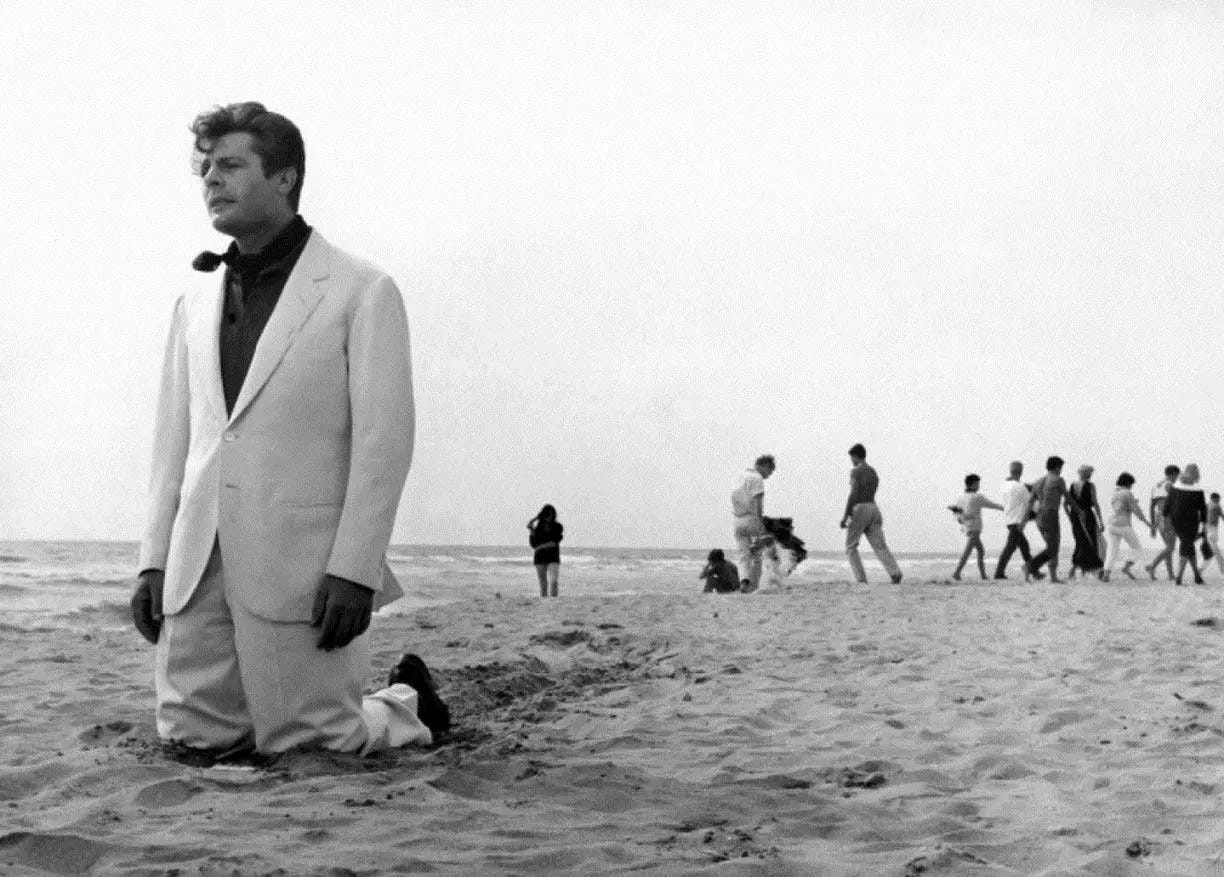
La Dolce Vita (1960)
Rating: BBBBB
Cast: Marcello Mastroianni, Anita Ekberg, Anouk Aimée, Yvonne Furneaux, Lex Barker, Magali Noël, Alain Cuny, Nadia Gray, Jacques Sernas, Laura Betti, Walter Santesso, Valeria Ciangottini, Riccardo Garrone, Annibale Ninchi, Ida Galli, Audrey McDonald, Alain Dijon, Enzo Cerusico, Giò Stajano, Giulio Questi, Sondra Lee, Dominot, Ferdinand Guillaume, Oretta Fiume, Harriet White Medin, John Francis Lane, Umberto Orsini, Archie Savage, Nico, Adriano Celentano, Iris Tree, Winie Vagliani, Desmond O’Grady
The definitive Fellini masterpiece and possibly one of the best films to really capture the runaway creativity that dominated sixties cinema. Marcello Mastroianni shot to international stardom as a tabloid reporter who travels through the odyssey that is Rome and its celebrities. He hangs out with his rich friend (Anouk Aimee), befriends a visiting movie star (Anita Ekberg, whose fountain-jumping scene is the most famous sequence of the film), investigates a religious phenomenon and attends a few wild parties. Each episode brings Mastroianni further away from the substance of the pursuit of truth and towards the shallow end of popularity, a more passionate counterpart to the equally critical investigation of meaningless in Antonioni’s L’Avventura. Fascinating for three solid hours, chock full of gorgeous images and pure movie magic, the film also contributed the word “paparazzi” to the English language (it’s the photographer’s name in the film) and caused a huge controversy when first released (the Catholic Church damned Fellini and his film so vehemently that even his mother was ashamed).
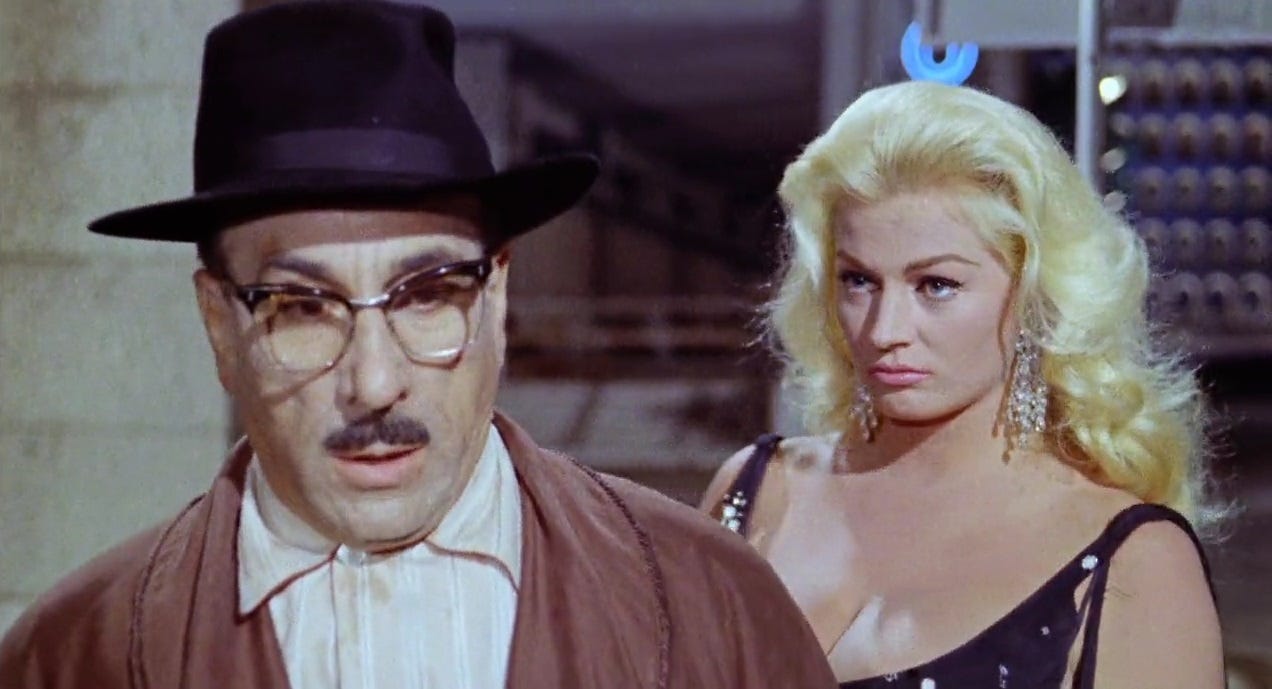
Boccaccio ‘70 (1962)
Mario Monicelli, Federico Fellini, Luchino Visconti, Vittorio De Sica
Rating: BBB.5
Cast: Marisa Solinas, Germano Giglioli, Peppino De Filippo, Anita Ekberg, Romy Schneider, Tomas Milian, Romolo Valli, Sophia Loren
Four movies for the price of one, though at three and a half hours you certainly feel like you’ve had to work for it. Four situations are constructed around erotic folly in the spirit of the titular fourteenth century writer, trying to recapture and expand on the success of Yesterday, Today And Tomorrow but this time with different directors and casts.
Mario Monicelli opens with a sweet tale of a newly married couple who are counting lire to move out of her parents’ house and have the kind of privacy a new couple deserves, but the results aren’t exactly fulfilling.
Federico Fellini follows with the best of the bunch, about a morally indignant Roman citizen who objects to the sexy poster of Anita Ekberg selling milk in an ad outside his window. His obsession eventually brings her to life in a sequence full of energy and delight.
Then we go sober with Luchino Visconti’s classy look at an aristocratic couple who are in the papers when he (Tomas Milian) is photographed by dallying with a sexy mistress. His wife (Romy Schneider) doesn’t react with the desire to divorce but with the announcement that she intends to go back to work and be her own woman.
The concluding chapter, and likely the biggest box office draw, is Vittorio De Sica’s short about Sophia Loren working a carnival booth and selling herself in a lottery to help pay off her taxes. The insanity she causes among the men around her makes for a much lighter and funnier tale than you’d expect, and watching her usual dominant personality resist being pushed around is a pleasure to behold.
All four tales are told with a lightness and charm, sexy without being dirty, in each case displaying women who fight against being exploited or dominated by men and, in all cases, are not exactly fulfilled by their success. Monicelli’s film is restored to the current version, originally cut for theatrical release because it is the only one without above the line stars (Carlo Ponti offered to finance a full feature version for him to make up for it). Without its inclusion, the running time is less burdensome, but either way these delightful shorts are, even at around forty-five minutes each, longer than necessary.
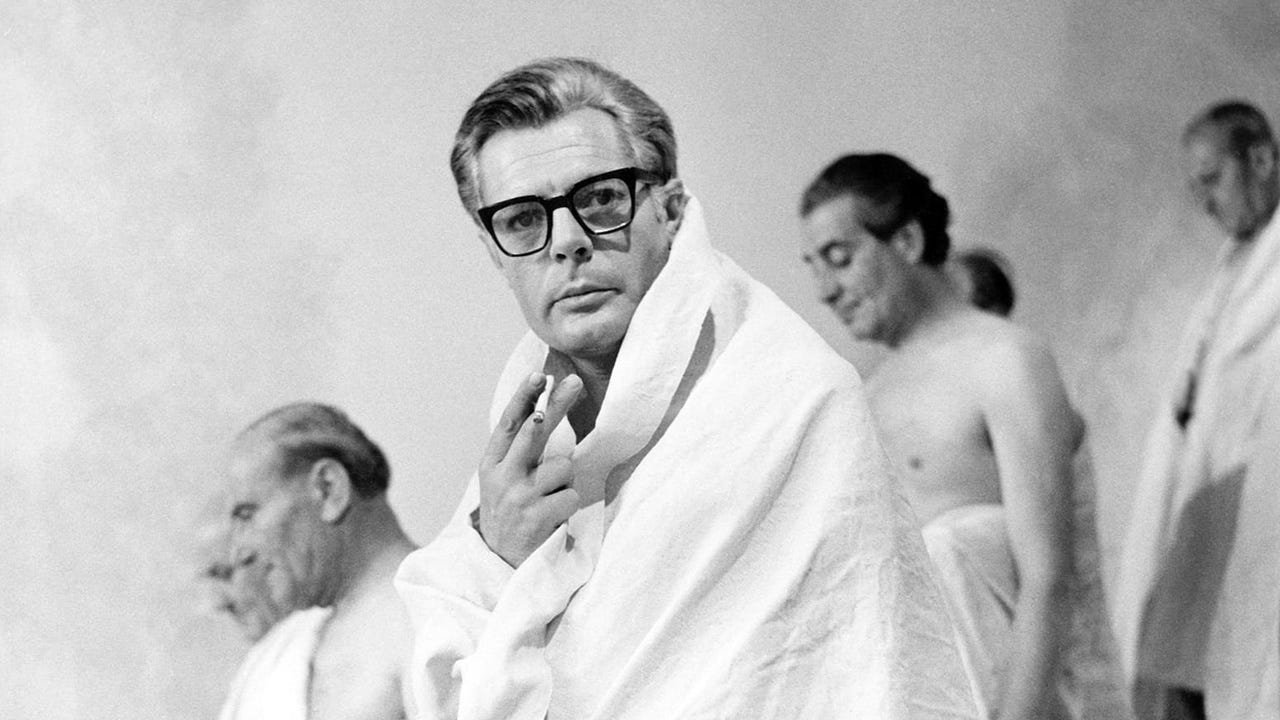
8 1/2 (1963)
Otto e mezzo
Rating: BBBBB
Cast: Marcello Mastroianni, Claudia Cardinale, Anouk Aimée, Sandra Milo, Rossella Falk, Barbara Steele, Madeleine Lebeau, Caterina Boratto, Eddra Gale, Guido Alberti, Mario Conocchia, Bruno Agostini, Cesarino Miceli Picardi, Jean Rougeul, Mario Pisu, Yvonne Casadei, Ian Dallas, Mino Doro, Nadia Sanders, Edy Vessel, Eugene Walter, Mary Indovino, Giuditta Rissone, Annibale Ninchi
The movie that made me love Fellini and plunged me into a passion for ’60s Italian cinema, the maestro’s semi-autobiographical rumination on the crippling fears that accompany artistic inspiration still retains its beauty and its anguish. Following the success of La Dolce Vita, Fellini found himself pressed to make another film but was unable to find the inspiration, so he made a film about a director (Mastroianni as the maestro’s alter ego) who has just made a hugely successful film and can’t find the inspiration to make another. The film he’s trying to make ends up being the film you’re watching (the costume designer is working on this film’s costume designs, etc), and through a series of personal confrontations, deliciously weird dream sequences and life-affirming revelations, we join a journey in search of the nature of artistry. Beautifully costumed by Piero Gherardi, who deservedly won his second Oscar for his work, the film is dazzling to all senses and full of many juicy moments for audiences to enjoy. It moves at a deliriously elegant pace and features excellent performances from the entire cast, especially Anouk Aimee as Mastroianni’s emotionally fatigued wife and Sandra Milo as his bubbly mistress. The biggest star has to be Fellini, of course, because for the entire two and a half hours you never forget that his artistic genius is behind the camera.
Juliet of the Spirits (1965)
Giulietta degli spiriti
Rating: BBBBB
Cast: Giulietta Masina, Alba Cancellieri, Sandra Milo, Mario Pisu, Valentina Cortese, Valeska Gert, José De Villalonga, Friedrich von Ledebur, Caterina Boratto, Lou Gilbert, Luisa Della Noce, Silvana Jachino, Milena Vukotic, Sylva Koscina, Elena Fondra, Dany París, Anne Francine, George Ardisson, Eugenio Mastropietro, Elisabetta Gray, Alberto Plebani, Yvonne Casadei, Mario Conocchia, Fred Williams, Federico Valli, Sabrina Di Sepio, Asoka Rubener, Sujata Rubener, Mary Arden, Jacques Herlin, Lea Lander, Carlo Pisacane, Marilù Tolo, Robert Wolders, Dakar
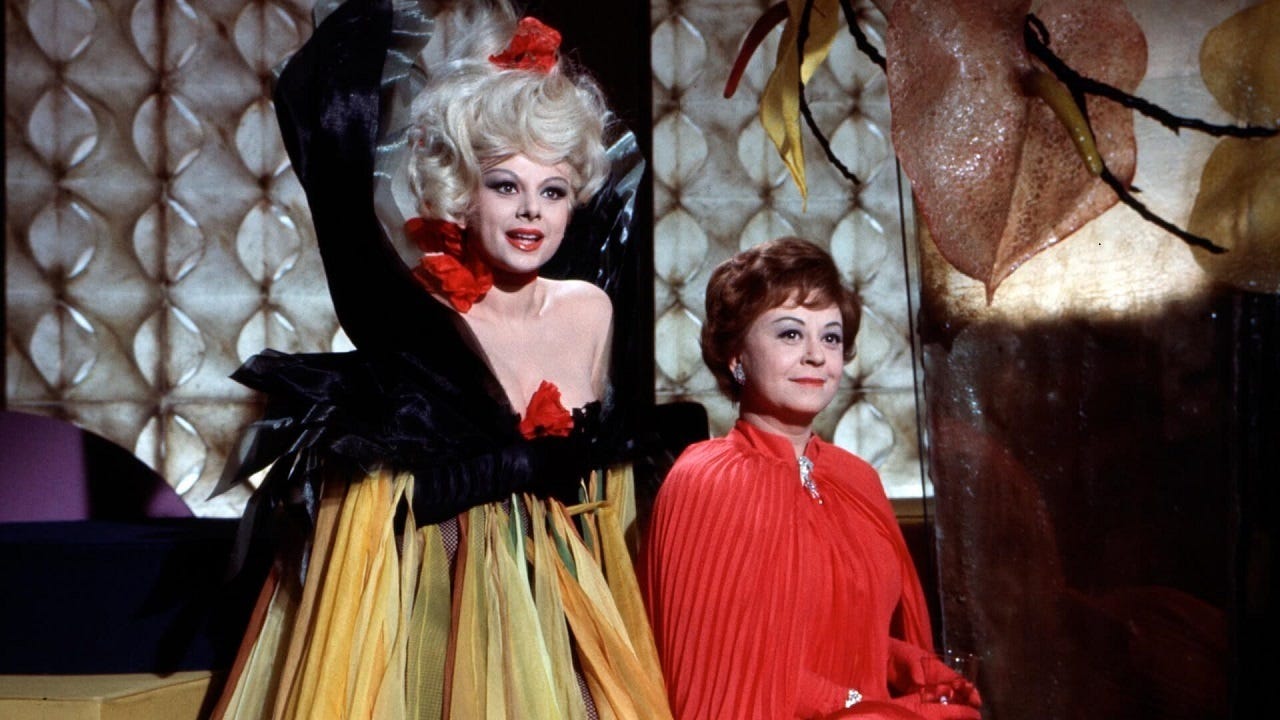
More magical wonder from Fellini, this time making his first feature film in colour (he had directed a short in Boccaccio ‘70 a few years earlier). Starring Giulietta Masina (the real Mrs. Fellini) as a fictionalized version of herself, Juliet can be considered a female companion piece to 8 1/2, which was about a filmmaker who was, among other things, stepping out on his wife. The perspective is now flipped and we focus on an the wife to a publicist who suspects that her very popular husband is cheating on her. A seance early in the film opens up her mind to a whole slew of spiritual possibilities that have been lying dormant in her for so long; they also give her the freedom to explore her own feelings while trying to figure out the truth behind her husband’s reticence to talk about the gap in their relationship.
Filmed with the usual florid camera moves and wry characters that populate all of Fellini’s films, this gem is eye popping in its splendour and honest in its depiction of a woman whose psyche is laid out flat for us to explore. Upon its initial release it was a huge bomb that nearly bankrupted the filmmaker, who didn’t make another grand feature again until Fellini Satyricon five years later.
Spirits of the Dead (1968)
Histoires extraordinaires
Louis Malle, Roger Vadim, Federico Fellini
Rating: BB
Cast: Jane Fonda, Peter Fonda, Serge Marquand, Philippe Lemaire, Carla Marlier, Georges Douking, James Robertson Justice, Françoise Prévost, Marie-Ange Aniès, Dennis Berry, Jackie Blanchot, Audoin de Bardot, Anny Duperey, Andréas Voutsinas, Alain Delon, Marco Stefanelli, Brigitte Bardot, Katia Christine, Renzo Palmer, Umberto D’Orsi, Daniele Vargas, Terence Stamp, Marina Yaru, Salvo Randone, Anne Tonietti, Monica Pardo
Three of the world’s most famous and celebrated directors get together to make a film based on Edgar Allan Poe stories. The first segment, Metzengerstein, is directed by Roger Vadim and stars Jane Fonda as a sadistic medieval aristocrat whose fascination, passion and hatred for another nobleman (an incestuously cast Peter Fonda) leads her to burn down his property and kill him in the process. Following his death, a black stallion shows up at her castle and she suspects it is his spirit returned for her companionship.
Louis Malle directs the second story, William Wilson, about a vain soldier (Alain Delon) who meets a man identical to him and longs to kill him out of pride, later confessing to a priest the sins of his life including his treatment of his beloved Giuseppina (Brigitte Bardot).
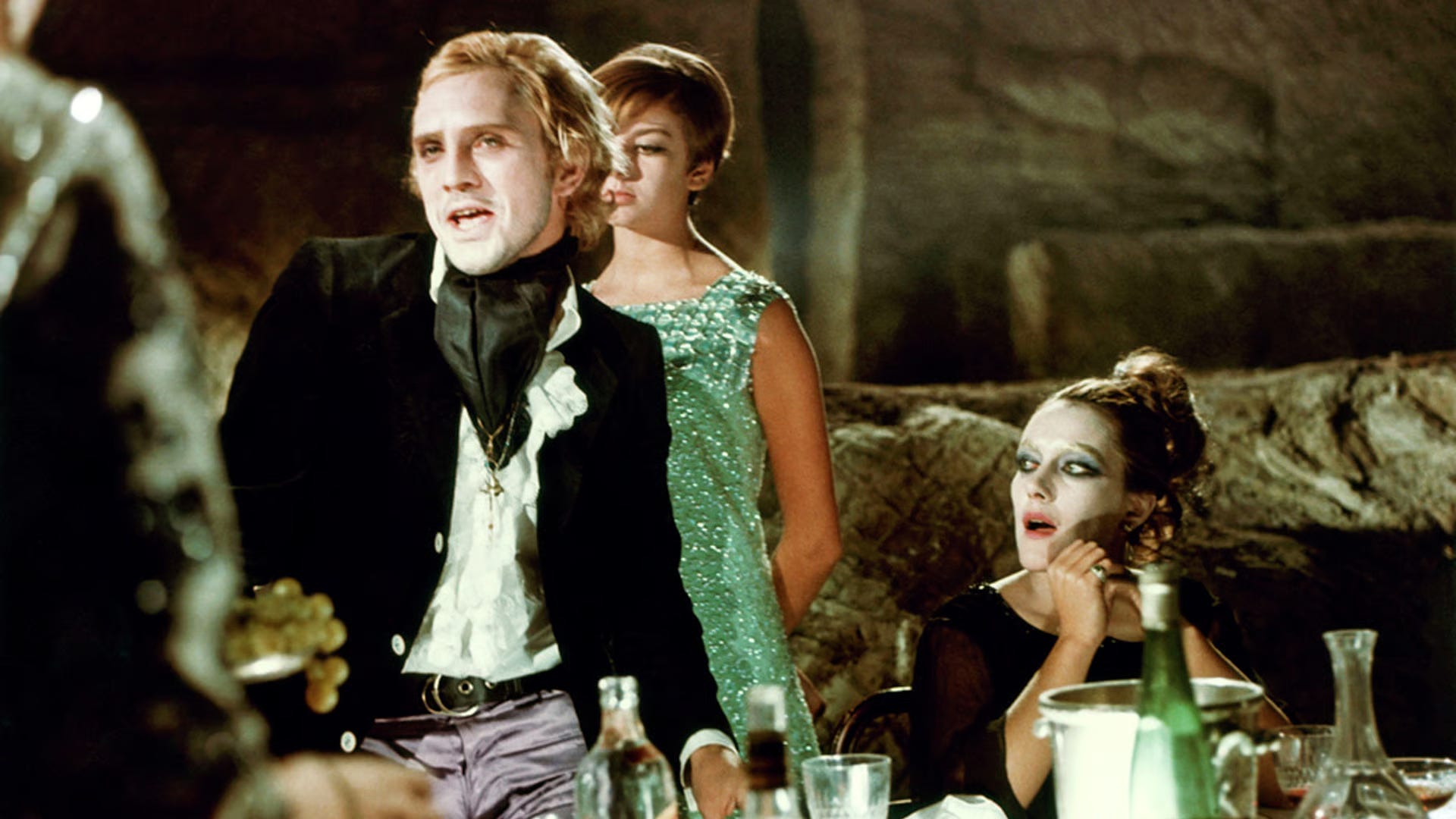
The third tale, directed by Fellini and based on Toby Dammit, is the best of the three, with Terence Stamp as a movie star who has just arrived in Rome to play Christ in a Biblical western, all the while haunted by visions of the devil as a little girl with a big yellow bouncing ball.
These days, it’s still Fellini’s contribution that plays the best, though it’s quite shabby compared to his best work.
Fellini Satyricon (1969)
Rating: BBBBB
Cast: Martin Potter, Hiram Keller, Max Born, Salvo Randone, Mario Romagnoli, Magali Noël, Capucine, Alain Cuny, Fanfulla, Donyale Luna, Danika La Loggia, Giuseppe Sanvitale, Eugenio Mastropietro, Lucia Bosè, Joseph Wheeler, Hylette Adolphe, Tanya Lopert, Gordon Mitchell, Luigi Montefiori, Marcella Di Folco, Elisa Mainardi, Pasquale Baldassarre, Carlo Giordana, Alvaro Vitali, Sibilla Sedat, Lorenzo Piani, Federico Boido, Samson Burke, Francesco Di Giacomo, Richard Simmons, Suleiman Ali Nashnush, Jessica Dublin, Carole André, Renato Zero
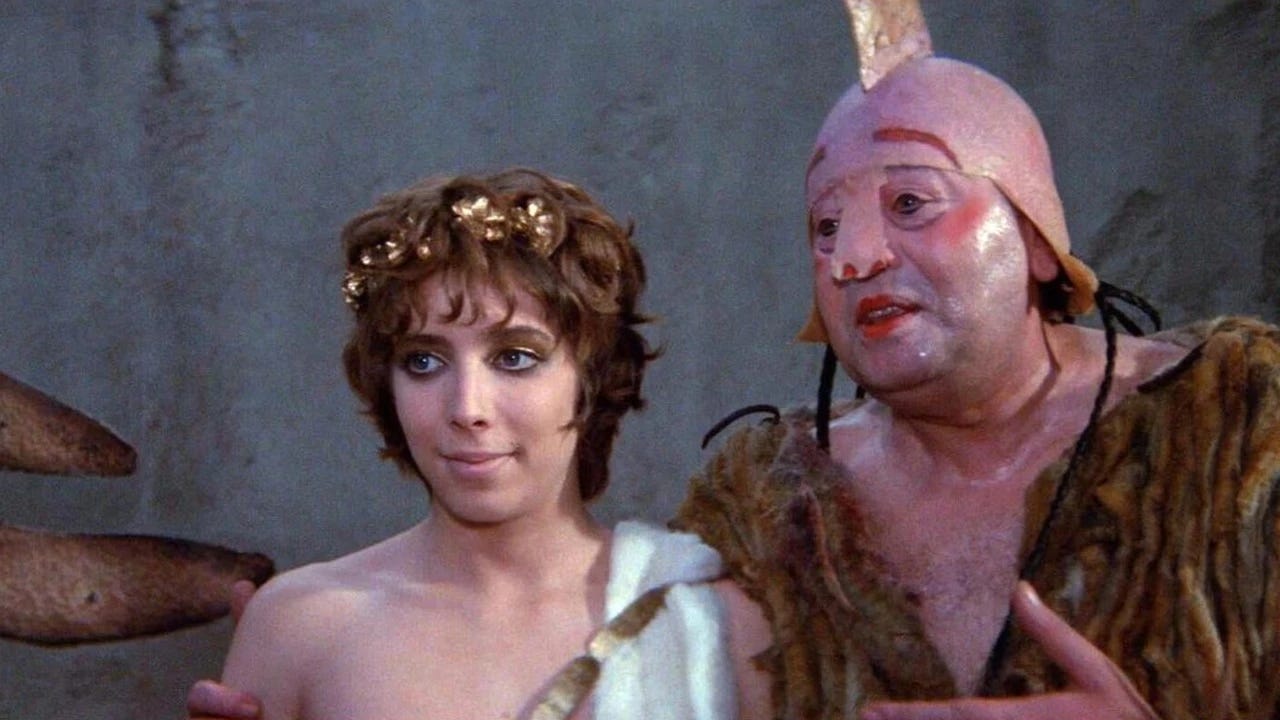
The remnants that have survived of the writings of Petronius form the basis of Fellini’s, a thrilling odyssey through a truly bizarre Ancient Rome, a world where the absence of Christianity makes it truly unrecognizable in terms of social values (Fellini described it as science-fiction projected into the past instead of the future). Martin Potter plays the main character Encolpius, who journeys the land looking for a little meaning in life after he is thwarted in love and finds himself surrounded by reckless hedonism. As in all Fellini’s films, the cyclical nature of the storytelling moves episodically, ending with the passion for continued living despite the questions that remain unanswered. Danilo Donati’s production and costume designs are eye-popping, and Fellini never ceases to amaze with his blocking and camera set-ups. Make sure you see the widescreen version, and if you really enjoy the film, read Eileen Lanouette Hughes’ excellent book On The Set of Fellini Satyricon for some insight into its making.
The Clowns (TV Movie, 1970)
Roma (1972)
Rating: BBB
Cast: Peter Gonzales, Stefano Mayore, Fiona Florence, Britta Barnes, Pia De Doses, Marne Maitland, Renato Giovannoli, Elisa Mainardi, Raout Paule, Galliano Sbarra, Paola Natale, Ginette Marcelle Bron, Mario Del Vago, Alfredo Adami
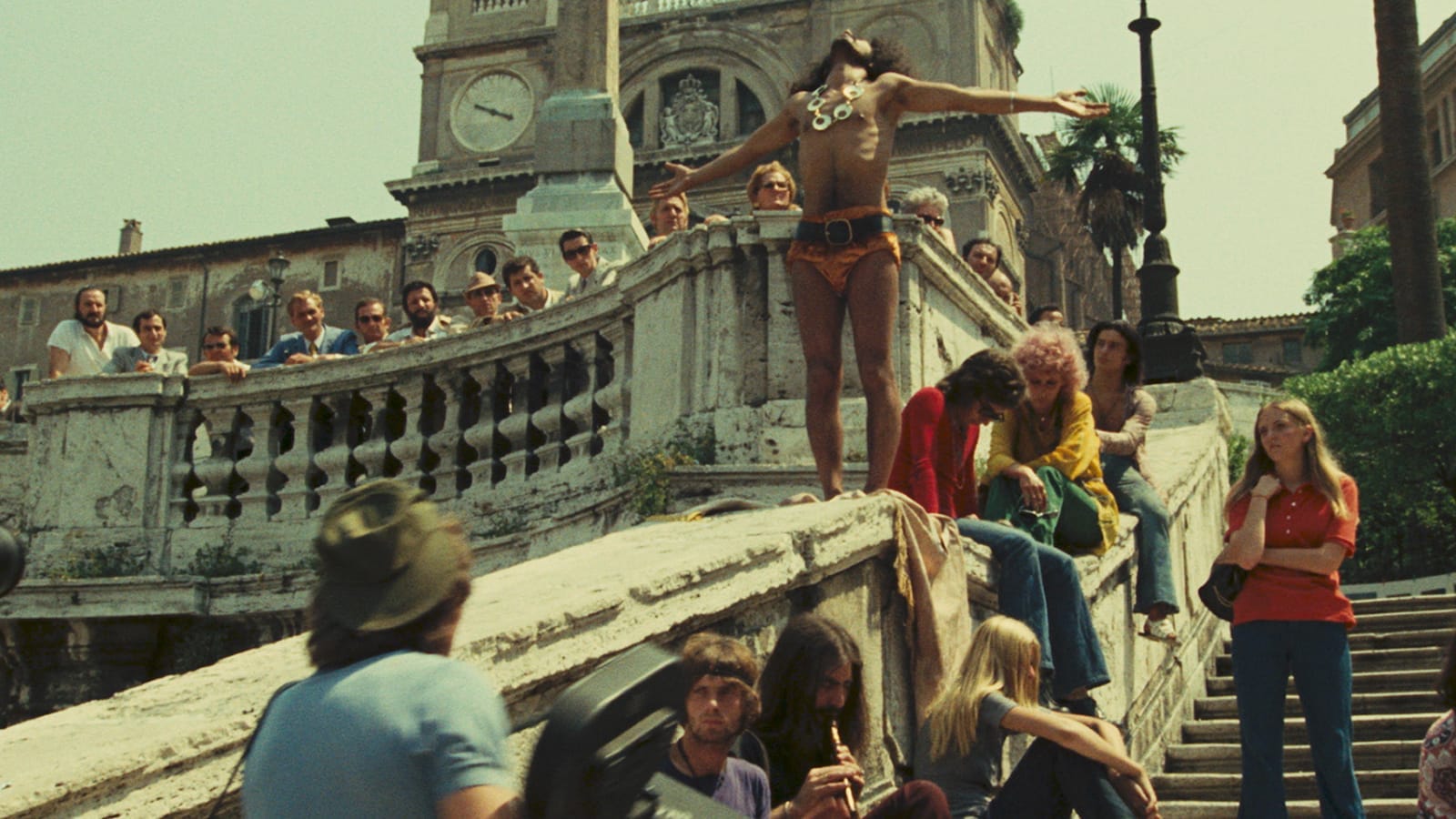
Fellini’s tribute to his adopted home is a plotless, sometimes metaphysical odyssey through the Eternal City. There are Papal fashion shows, trips through brothels, archaeological excavations and even glimpses of popular Italian movie stars (Anna Magnani and Marcello Mastroianni among them). It’s visually splendid, but some viewers will find it frustrating and eventually boring.
Amarcord (1973)
Rating: BBBBB
Cast: Pupella Maggio, Armando Brancia, Magali Noël, Ciccio Ingrassia, Nando Orfei, Bruno Zanin, Luigi Rossi, Josiane Tanzilli, Maria Antonietta Beluzzi, Giuseppe Ianigro, Stefano Proietti, Alvaro Vitali, Bruno Scagnetti, Fernando De Felice, Bruno Lenzi, Gianfranco Marrocco, Francesco Vona, Donatella Gambini
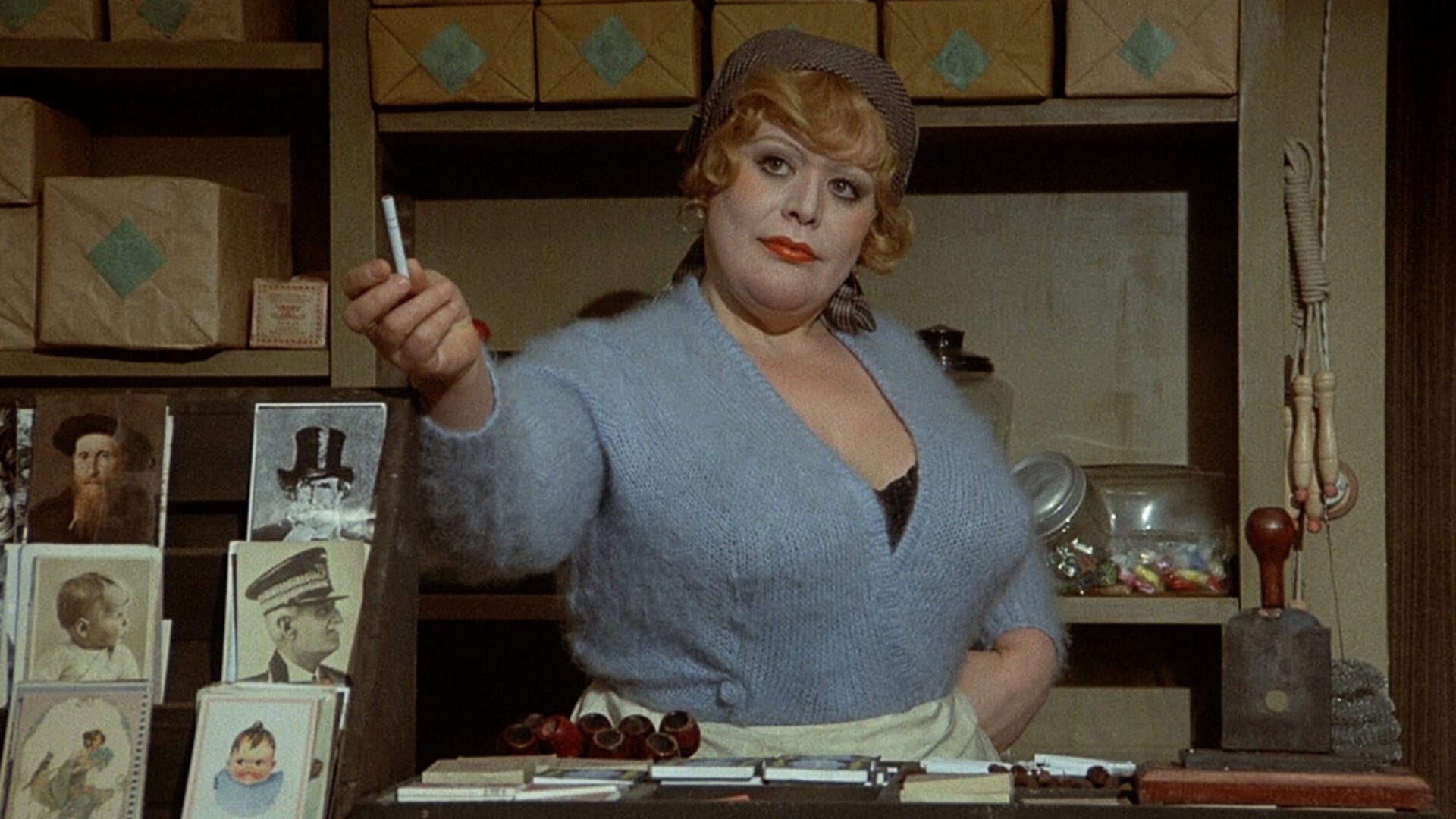
One of Fellini’s most beloved films and the beginning of the last period of his career, based on reminiscences of his own life growing up in Rimini and witnessing the rise of fascism. A young teenage boy discovers love and sex while living with his embittered mother and overworked father, his overly amorous grandfather lording over everything with his witty advice. There’s no singular plot, but like all of the maestro’s films is an episodic adventure with each sequence more colourful and fun as the story progresses to the beautiful, bittersweet ending. Giuseppe Rotunno’s cinematography is some of his loveliest and poetic ever, and Nino Rota’s musical score is, as usual, divine.
Fellini’s Casanova (1976)
Il Casanova di Federico Fellini
Rating: BB.5
Cast: Donald Sutherland, Tina Aumont, Cicely Browne, Carmen Scarpitta, Clara Algranti, Daniela Gatti, Margareth Clementi, Olimpia Carlisi, Silvana Fusacchia, Adele Angela Lojodice, Sandra Elaine Allen, Clarissa Mary Roll, Daniel Emilfork Berenstein, Dudley Sutton, John Karlsen, Reggie Nalder
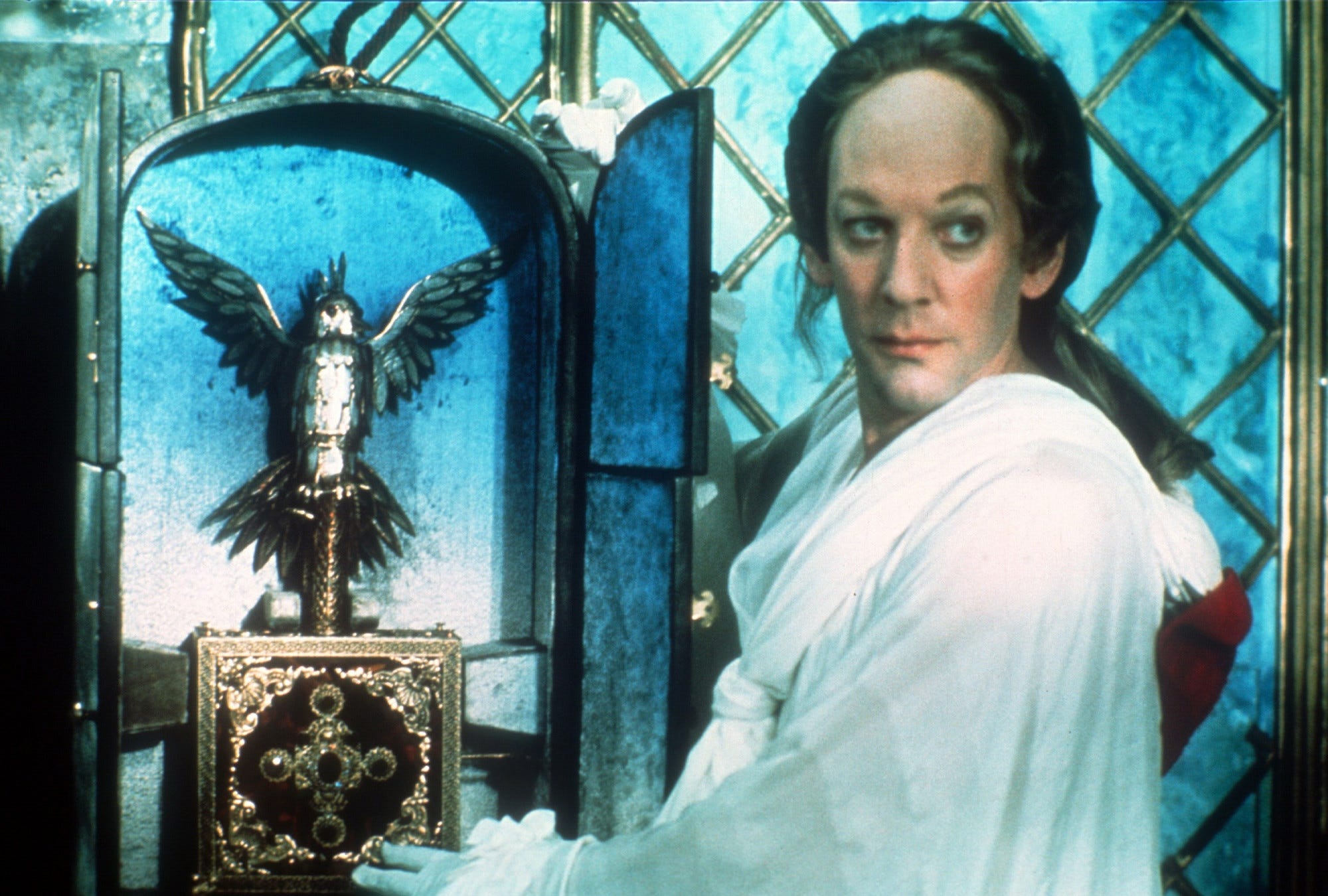
Even fans of Fellini’s films will have a tough time getting through this laborious biopic of the famous lover. Instead of playing into myth and directing a Harlequin romance-inspired tale of debauched sexual bawd, Fellini finds the more poetic and lamentable aspects of Giacomo Casanova’s life to exploit. Using a melancholy pace that every audience member feels without question, Fellini seeks to describe the man’s mundane life by purposely making a boring film: this is very impressive and daring, but doesn’t make it any more fun to sit through. It benefits from beautiful period detail (especially Danilo Donati’s Oscar-winning costumes) and a fantastic performance in the lead by Donald Sutherland (whom Fellini chose because he said he had the big, bulging eyes of a rampant masturbator). The screenplay, based on Casanova’s own writings, is thought-provoking and intelligent, but the overall experience will appeal to only a select group of film lovers.