
The Oscars of 1976: Part 1
The Winners
No sweep this year, and the awards were handed out quite generously to numerous films thanks to the biggest winners only getting four prizes. Pakula’s masterpiece, the Watergate thriller All The President’s Men and Lumet’s Network, were the most celebrated movies of the year but were bitter pills to swallow in their exposure of the corruptions in government and corporate-run news media, so the Academy decided that a sweet tale of an underdog would be the one to give the Best Picture Oscar. The film launched the eternal stardom of Sylvester Stallone and birthed umpteen sequels and even a second franchise in recent years. Meanwhile, the corruption of government and corporate-run news media has since been done away with and has gone away forever (ha ha, aren’t I funny).
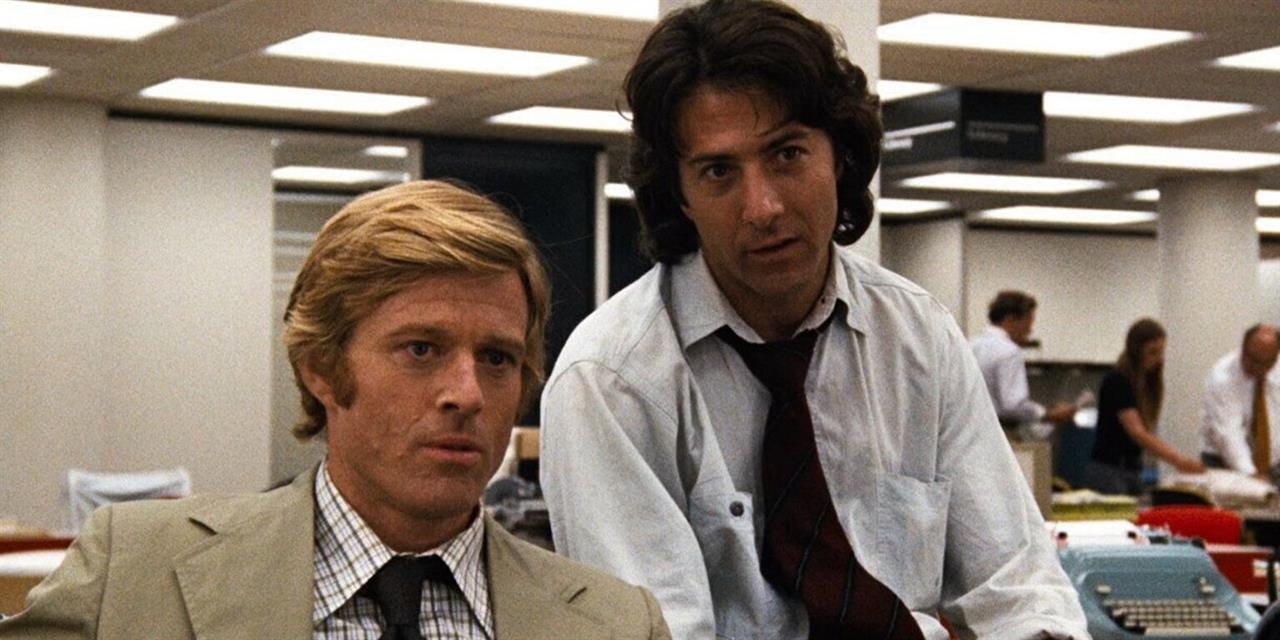
All The President’s Men
Alan J. Pakula, 1976
Rating: BBBBB
Cast: Dustin Hoffman, Robert Redford, Jack Warden, Martin Balsam, Hal Holbrook, Jason Robards, Jane Alexander, Stephen Collins, Ned Beatty, Meredith Baxter, Penny Fuller, Penny Peyser, Lindsay Crouse, Robert Walden, F. Murray Abraham, David Arkin, Richard Herd, Henry Calvert, Dominic Chianese, Ron Hale, Nate Esformes, Nicolas Coster, Joshua Shelley, Ralph Williams, Gene Lindsey, Polly Holliday, Carol Trost, James Karen, Basil Hoffman, Stanley Bennett Clay, John McMartin, John Devlin, Paul Lambert, Richard Venture, John Furlong, Valerie Curtin, Jess Osuna, Allyn Ann McLerie, Christopher Murray, Frank Wills
Robert Redford and Dustin Hoffman are perfectly cast as Bob Woodward and Carl Bernstein, the two reporters for the Washington Post who are assigned to the break-in of Democratic headquarters at the Watergate hotel in preparation for the 1972 election. The two men start out having a hard time working together, Bernstein is aggressive and passionate, Woodward is cool and collected, but when a member of the Republican re-election committee is implicated in the break-in, they find their styles working more and more symbiotically as they go after possible witnesses to find out more about what is really going on. Meanwhile, back at the Post headquarters, editor Ben Bradlee (a marvelous Jason Robards) wants to give them room to move but is anxious that they not ruffle the wrong feathers without enough proof.
Even someone with strong knowledge of the scandal (one which led to President Richard Nixon’s resignation from the White House) will find this a gripping, edge-of-your-seat thriller with intelligence and suspense to spare, in which Jane Alexander is a standout as a reluctant witness who provides a key turning point in the reporters’ case. The production design team painstakingly recreated the Post’s newsroom to accurate scale down to the very last typewriter, most likely the reason for its winning an Oscar for Art Direction, and years later the dynamic duo who inspired the story were hilariously spoofed in the fun comedy Dick starring Kirsten Dunst and Michelle Williams.
Winner: Best Supporting Actor (Jason Robards), Best Art Direction, Best Sound, Best Writing (Screenplay--based on material from another medium); Nominations: Best Picture, Best Supporting Actress (Jane Alexander), Best Directing (Alan J. Pakula), Best Film Editing
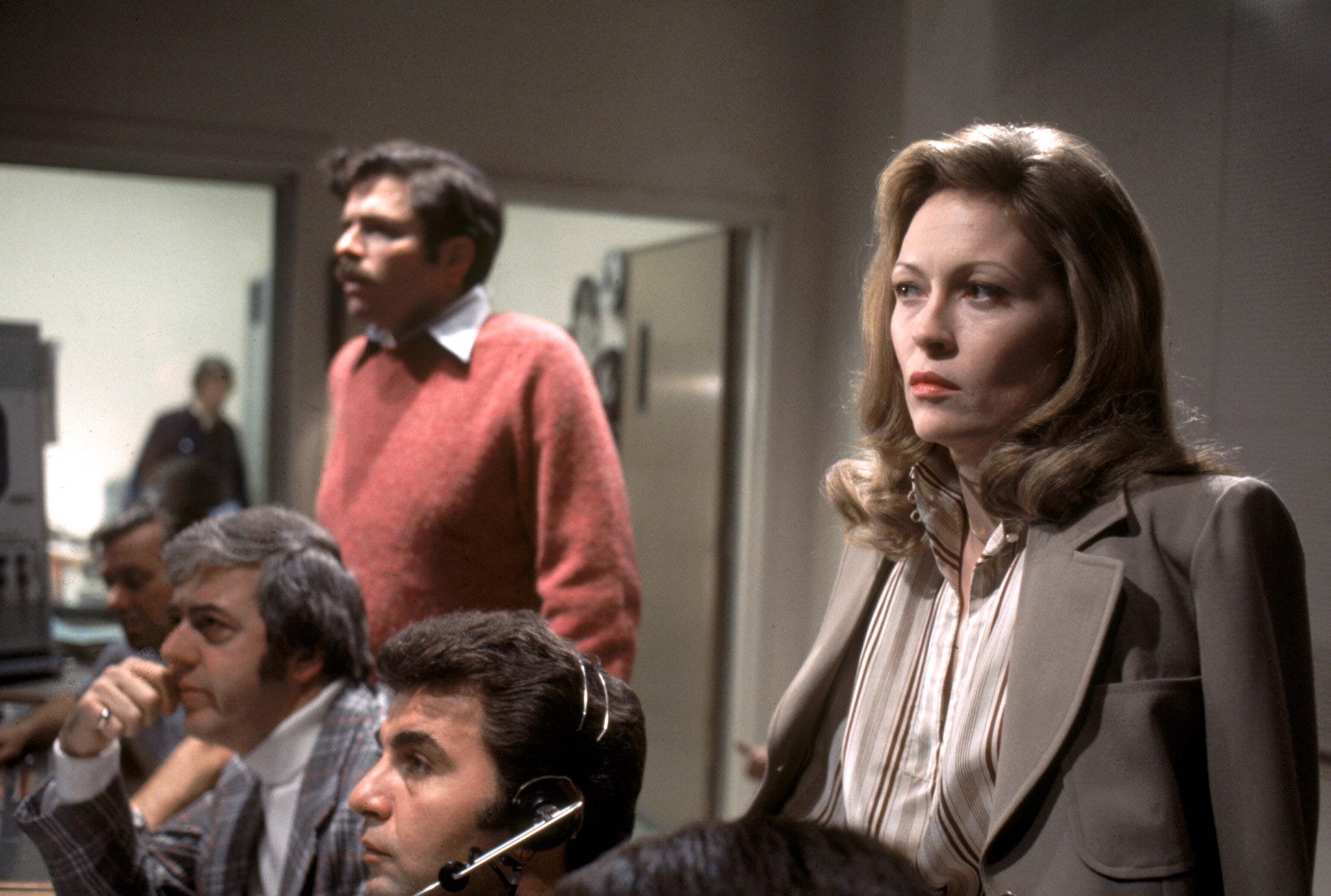
Network
Sidney Lumet, 1976
Rating: BBBBB
Cast: Faye Dunaway, William Holden, Peter Finch, Robert Duvall, Wesley Addy, Ned Beatty, Jordan Charney, Conchata Ferrell, Darryl Hickman, Roy Poole, William Prince, Beatrice Straight, Marlene Warfield, Arthur Burghardt, Kathy Cronkite, Ed Crowley, Bill Burrows, Stanley Grover, Cindy Grover, Lane Smith, Ken Kercheval, Kenneth Kimmins, Zane Lasky, Michael Lombard, Sasha von Scherler
Riveting look at television news media, starring Peter Finch as an anchorman whose waning ratings prompt his bosses to fire him. His reaction is to have a complete meltdown and go mad in public, with his televised ranting becoming so newsworthy that his network decides to exploit him for all the ratings he’s worth. Faye Dunaway is terrific as a heartless TV exec for whom the bottom line is getting more advertising dollars no matter what the cost, and Paddy Chayefsky’s screenplay brilliantly charts the development of television into a corporate commodity without a conscience. Lumet gives it his usual hard hitting direction, and the fantastic cast is rounded out by strong performances from William Holden, Ned Beatty and Beatrice Straight, setting a record for the shortest Oscar-winning performance in history. The scary part is how funny it is for its time, and how much it is no longer a satire.
Winner: Best Actor (Peter Finch), Best Actress (Faye Dunaway), Best Supporting Actress (Beatrice Straight), Best Writing (Screenplay Written Directly for the Screen--based on factual material or on story material not previously published or produced); Nominations: Best Picture, Best Actor (William Holden), Best Supporting Actor (Ned Beatty), Best Cinematography, Best Directing (Sidney Lumet), Best Film Editing
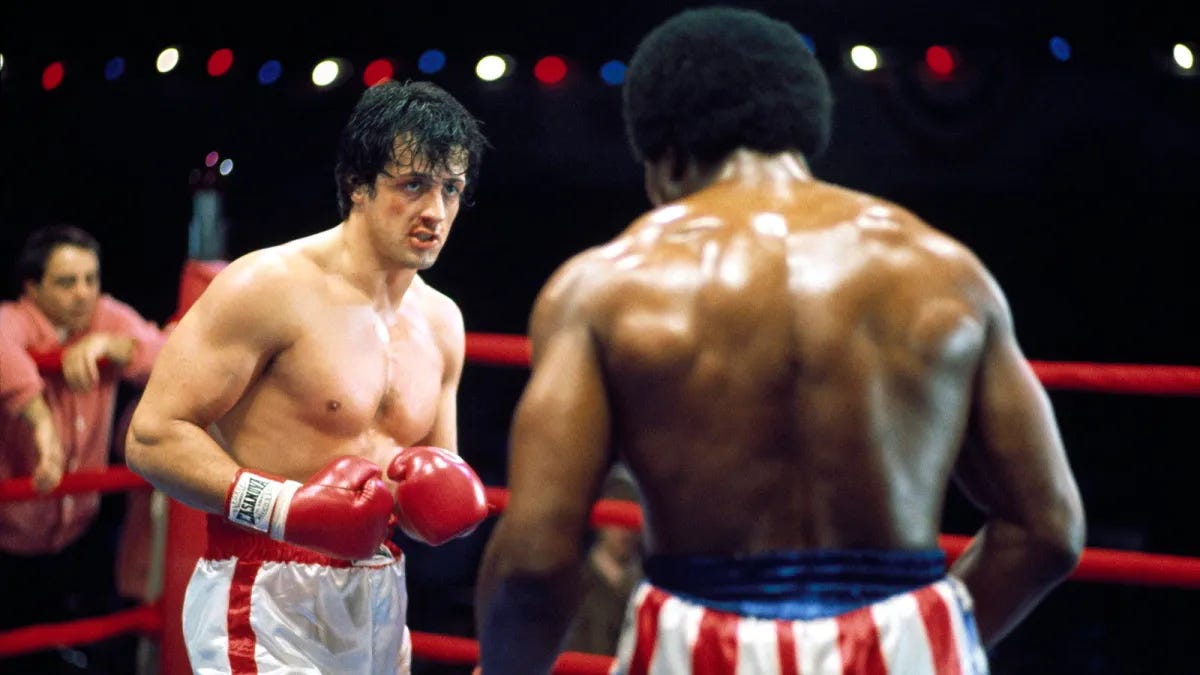
Rocky
John G. Avildsen, 1976
Rating: BBBB
Cast: Sylvester Stallone, Talia Shire, Burt Young, Carl Weathers, Burgess Meredith, Thayer David, Joe Spinell, Jimmy Gambina, Tony Burton, Pedro Lovell, Stan Shaw, Jodi Letizia, Frank Stallone, Joe Frazier
Sylvester Stallone wrote and stars in this subtle drama that took audiences by storm in the seventies and inspired a string of unremarkable sequels. He plays a Philadelphia loan shark’s runner who once had dreams of being a great boxer but now only hits the ropes every once in a while to keep his skills sharp. After falling in love with an introverted woman (Talia Shire), Rocky is inspired to make more of himself when a famous boxer (Carl Weathers) decides to give an unknown athlete the chance to compete with him for a title championship, and chooses him after spotting him working out in his gym; Rocky has no intention of conquering the world, all he wants is his chance to ‘go the distance’. Avildsen’s sense of realistic spontaneity is what makes this one zing, a truly familiar story told in a refreshingly new and honest way. Stallone is great in the lead, and Shire is adorably likable as the love interest, and there’s also terrific supporting work by Burt Young as Shire’s protectively loving brother and Burgess Meredith as Rocky’s trainer.
Winner: Best Picture, Best Directing (John G. Avildsen), Best Film Editing; Nominations: Best Actor (Sylvester Stallone), Best Supporting Actor (Burgess Meredith), Best Supporting Actor (Burt Young), Best Actress (Talia Shire), Best Music (Original Song) (”Gonna Fly Now”), Best Sound, Best Writing (Screenplay Written Directly for the Screen--based on factual material or on story material not previously published or produced)
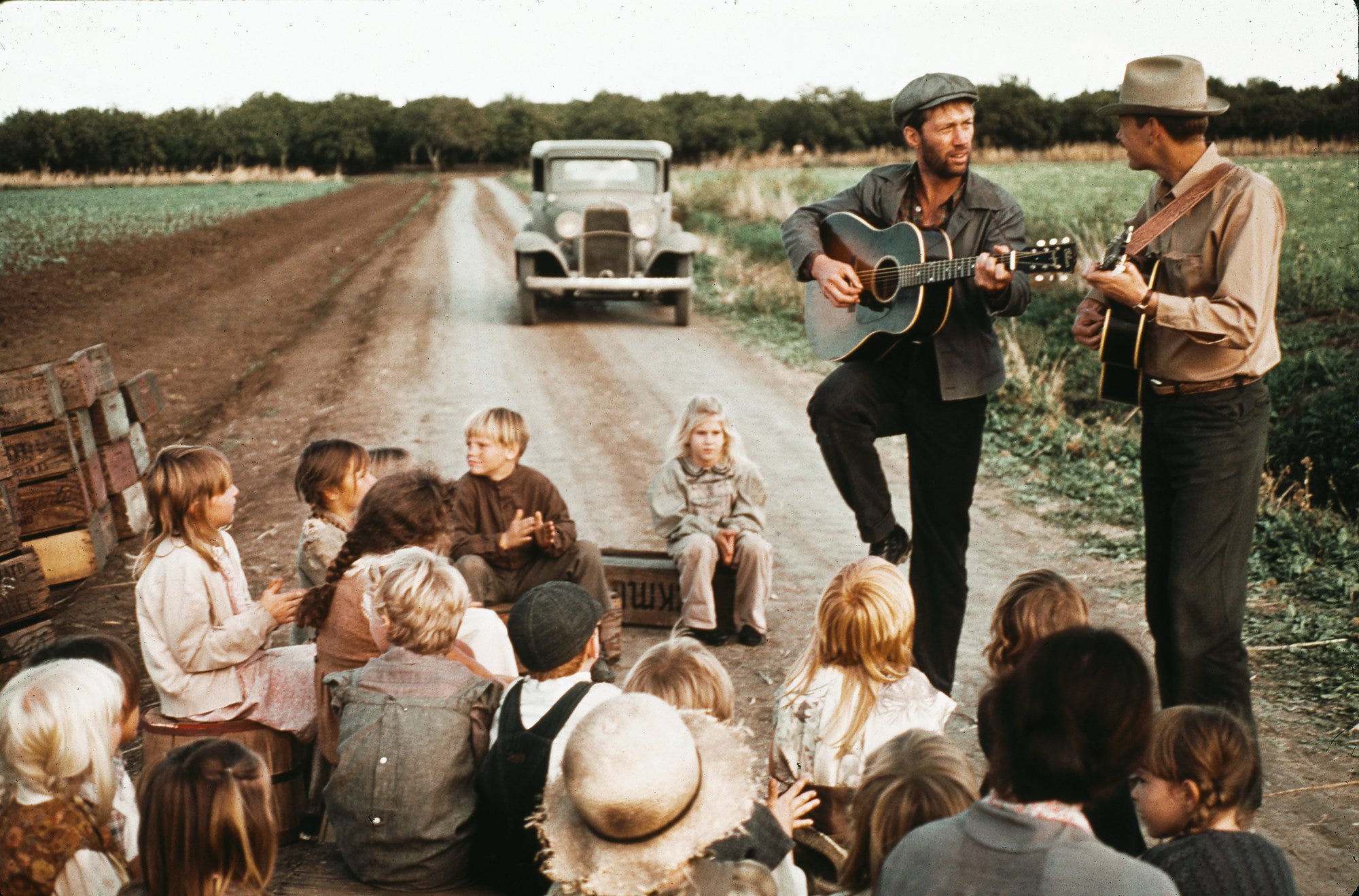
Bound For Glory
Hal Ashby, 1976
Rating: BBBB
Cast: David Carradine, Ronny Cox, Melinda Dillon, Gail Strickland, Randy Quaid, John Lehne, Ji-Tu Cumbuka, Elizabeth Macey, Susan Vaill, Wendy Schaal, Guthrie Thomas, Bernie Kopell, Mary Kay Place, M. Emmet Walsh, Brion James, James Hong
Ashby looks at the early years of folk musician Woody Guthrie, though by all accounts this is a heavily fictionalized adaptation of his autobiography. David Carradine ably plays the singer who aligned himself with the fight for land labourers in the American west, having traveled to California when his prospects for finding paying work in his own Oklahoma town proved impossible. His peripatetic experience starts with him riding the rails, composing songs on his guitar while befriending victims of the Depression who have come from the dust bowl looking for their own living. His talents eventually get him onto local radio stations where he makes enough money to bring his wife (Melinda Dillon) out to live with him in the house he buys. The radio bosses want him to stick to uplifting hits and are constantly frustrated by his insistence on singing songs about greedy capitalists and downtrodden folk being taken advantage of, while his wife wants them to enjoy the pleasures of his monetary success, but Guthrie feels the need to wander. Is it that he cannot reconcile his guilt over having survived the struggle that others still undergo, or is he just indulging himself to avoid the responsibility that comes with middle-class success?
Ashby’s film isn’t interested in trying to solve that ambivalence one way or the other, he plays it safe by capturing the downside of the American dream through one of its most observant artists while also employing the gorgeous, Oscar-winning cinematography by Haskell Wexler to fetishize it. He could be a little more sensitive to Dillon’s character, the idea that an artist is held back by a wife nagging him about actually starving to death is an unfair jab at someone whose struggle is as important as her husband’s. It’s a compelling and visually dazzling film whose weighty running time goes by quickly despite its very unhappy setting. Carradine performs a number of Guthrie’s best known hits, including “Deportee” and “Hard Travelin’”.
Winner: Best Cinematography; Best Music (Original Song Score and Its Adaptation or Adaptation Score); Nominations: Best Picture, Best Costume Design, Best Film Editing, Best Writing (Screenplay-Based on Material From Another Medium)
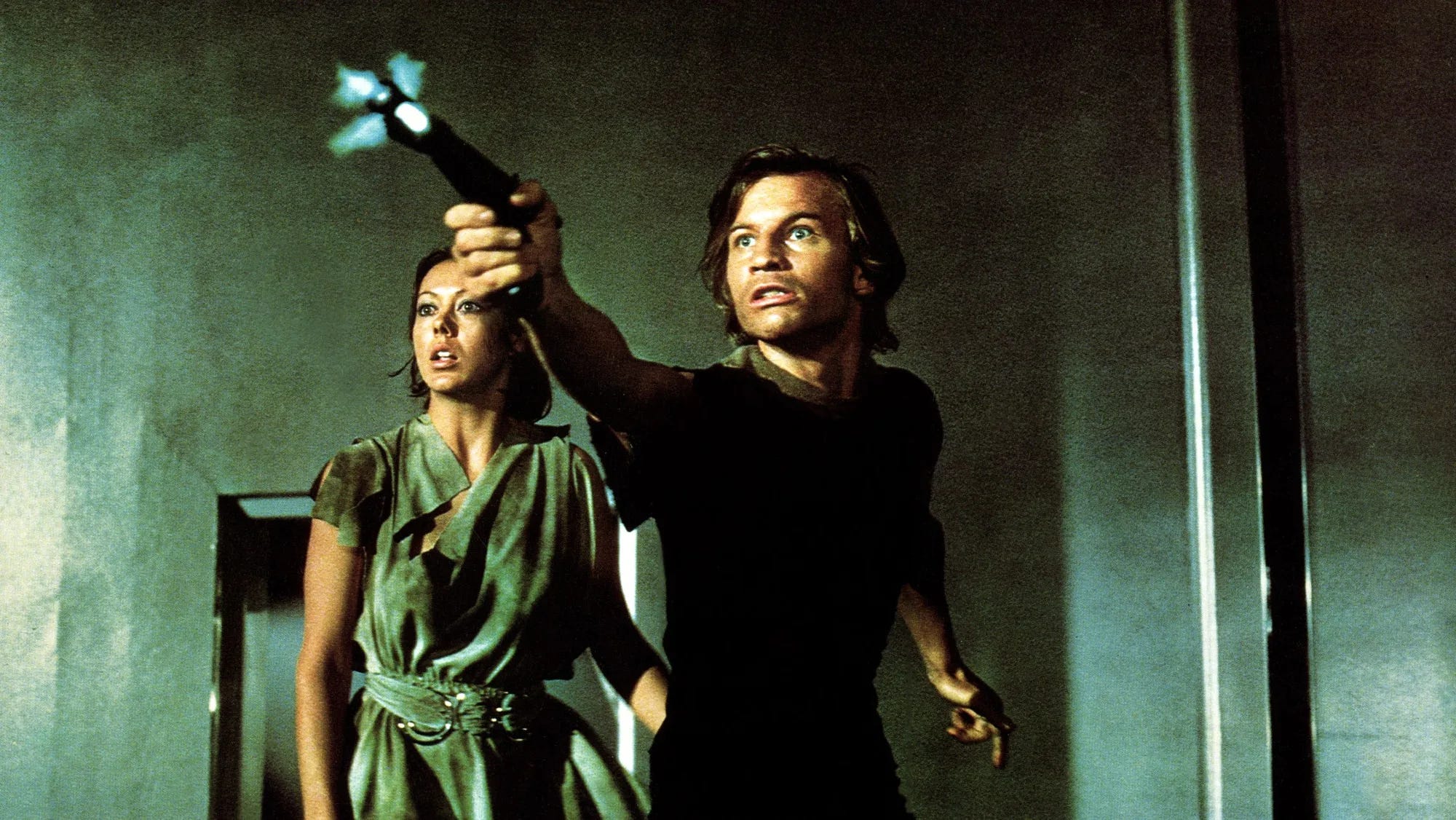
Logan’s Run
Michael Anderson, 1976
Rating: BBB
Cast: Michael York, Richard Jordan, Jenny Agutter, Roscoe Lee Browne, Farrah Fawcett-Majors, Michael Anderson Jr., Peter Ustinov
In a futuristic society, the pursuit of pleasure is the only human endeavour of value and youth is prized above everything else. People spend their lives living in a controlled, domed city that looks like a seventies shopping mall, where the age of thirty means going through a ritual of being “renewed”, with the understanding that they will return as infants. No controlled environment is without its rebellion, however, and there are those who make a run for it in an attempt to live past their age, hence the need for security of sorts. Among the guards is Michael York, who goes undercover as a runner to find the secret lair of a group of rebels. When he hooks up with truth-seeking Jenny Agutter, he ends up seeing the light and becoming a freedom fighter himself, the two of them going on a journey beyond their walled city and finding a paradise in the post-apocalyptic Earth where war and disease have not destroyed absolutely anything.
Despite clunky direction and a rather too obvious allegory in its plot, this one has aesthetic pleasures that have made it hold up as a cult classic over the years, particularly the dazzling art direction and cinematography. The editing could be tighter, but there’s a lot of hokey fun to be had from the way it lazes around its science-fiction universe without rushing to become an action-movie in its last third. Also features a very strange cameo appearance by Peter Ustinov and an early bit part by Farrah Fawcett (then -Majors).
Winner: Special Achievement Award (Visual Effects); Nominations: Best Art Direction, Best Cinematography
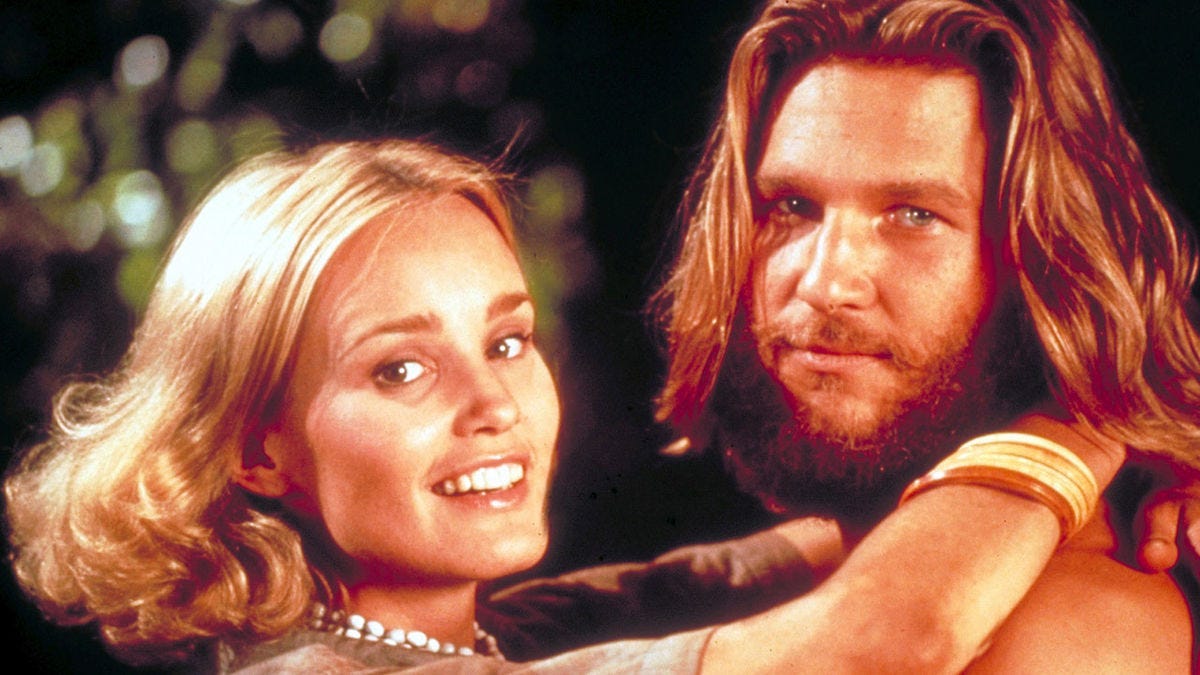
King Kong
John Guillermin, 1976
Rating: BB
Cast: Jeff Bridges, Charles Grodin, Jessica Lange, René Auberjonois, John Randolph, Ed Lauter, Jack O’Halloran, Julius Harris, Dennis Fimple, Jorge Moreno, Mario Gallo, Ira S. Rosenstein, Ray Buktenica, David Roya, John Lone, John Agar, Sid Conrad, Keny Long, Garry Walberg, George Whiteman, Wayne Heffley
A primatologist stows away on a vessel heading to a remote South Seas Island that the crew believes contains natural treasures to plunder but, when they arrive at their destination of “Skull Island”, they encounter a population of natives who have no sense of modernity, no oil and a REALLY big ape. The voyage is beautifully photographed and engaging, but once you find yourself watching what is obviously a man in a gorilla suit (actually Rick Baker) surrounded by fake miniature trees shot on a badly lit sound stage, it’s hard to stay involved, despite the good work that Jessica Lange (who had yet to prove all her strengths as an actor) is doing.
Winner: Special Achievement Award (Visual Effects); Nominations: Best Cinematography, Best Sound
Fellini’s Casanova
This film was reviewed on the Films of Federico Fellini, Part 2
Winner: Best Costume Design; Nomination: Best Writing (Screenplay--based on material from another medium)
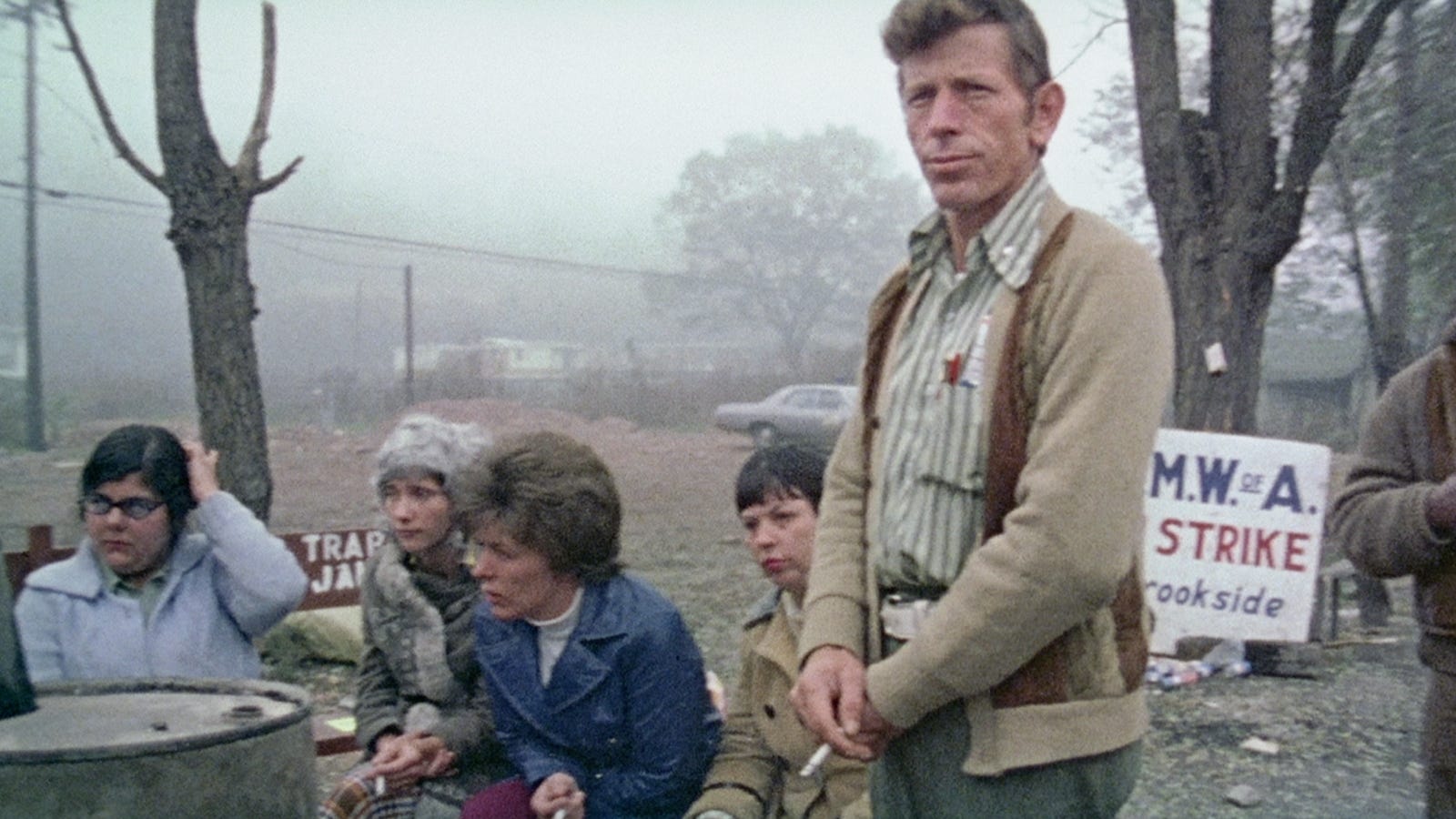
Harlan County USA
Barbara Kopple, 1976
Rating: BBBBB
Cast: Norman Yarborough, Houston Elmore, Phil Sparks, John Corcoran, John O’Leary, Donald Rasmussen, Dr. Hawley Wells Jr.Tom Williams, Harry Patrick, William E. Simon
Kopple and her crew live among the people of Harlan County, Kentucky after mine workers sign up to the United Mine Workers of America union and are immediately refused a contract by their employers, the Eastover Mining Company. Instead of allowing the media to represent them as rabble-rousing ingrates, Kopple uses her camera to give America a view into the unfairly destitute situations that these people live in thanks to poor working conditions and shameful wages, and allows many of them to tell their stories. Her attempts to reach members on the other side of the fight result in near-fatal injuries for her (a scene where Eastover men start shooting at her is pretty frightening, but this determined crew do not drop their cameras for a second as they are running for their lives). Excellent filmmaking, top marks for its skilled use of the art of documentary as well as its eye-opening political content. Kopple would return to the ceremony when she won a second Oscar for American Dream in 1991.
Winner: Best Documentary (Feature)
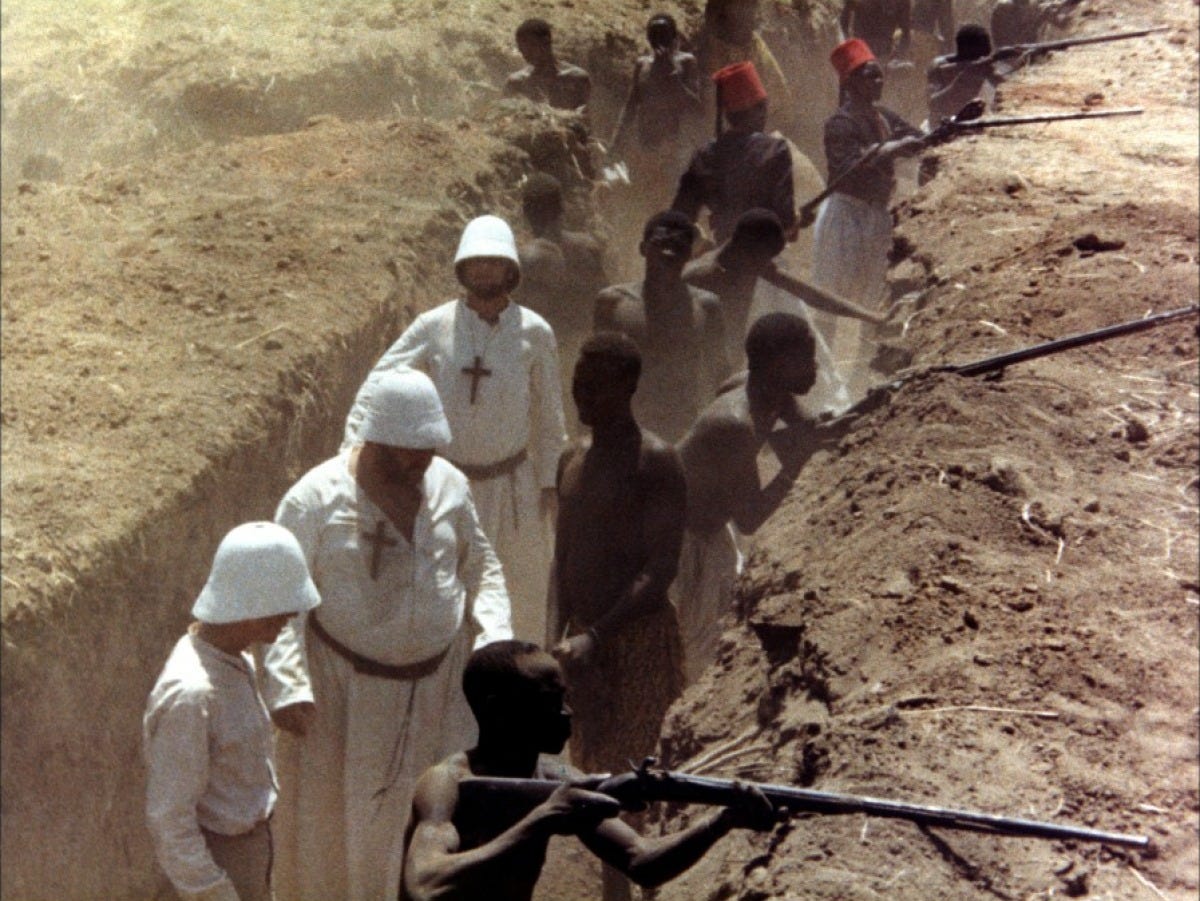
Black and White In Colour
La Victoire en chantant, Noirs et Blancs en couleur
Jean-Jacques Annaud, 1976
Rating: BBBB.5
Cast: Jean Carmet, Jacques Dufilho, Catherine Rouvel, Jacques Spiesser, Maurice Barrier, Peter Berling, Dora Doll, Dieter Schidor, Marc Zuber
This delightfully absurd comedy has French colonials in 1914 North Africa prove their patriotism by making war with their German neighbours: after all, they’re at war in Europe, so they initiate what is at first a fun battle of wits that escalates into full-scale conflict. Things get really serious when the French recruit Africans into their little army. Beautifully photographed and full of memorably deranged characters, this terrific film uses a microcosm as a humorous exercise on the nature and folly of colonialism, racism and war itself.
Winner: Best Foreign Language Film
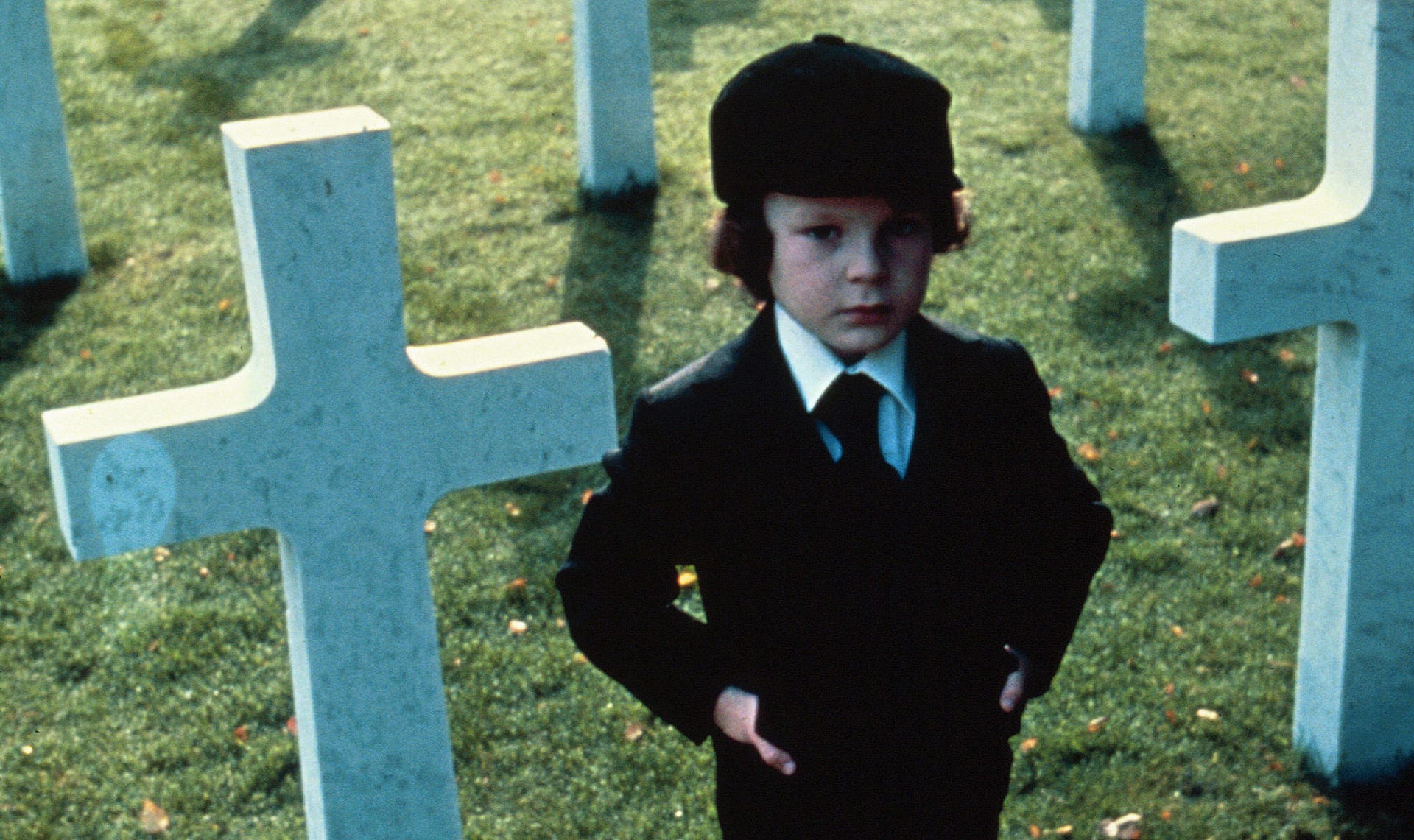
The Omen
Richard Donner, 1976
Rating: BB.5
Cast: Gregory Peck, Lee Remick, David Warner, Billie Whitelaw, Harvey Spencer Stephens, Patrick Troughton, Martin Benson, Leo McKern, Robert Rietti, John Stride, Anthony Nicholls, Holly Palance, Roy Boyd, Freda Dowie, Sheila Raynor, Bruce Boa, Don Fellows, Patrick McAlinney, Betty McDowall, Nicholas Campbell
Undercooked horror film that pales in comparison to the enjoyment of Rosemary’s Baby or The Exorcist but still has its moments. Gregory Peck plays an American diplomat living in Rome whose wife (Lee Remick) nearly dies giving birth to their stillborn son. When a priest offers him an orphan child born on the same night in the same hospital, Peck takes the child home without informing his wife of the switch.
Unfortunately, he has, oops, adopted the devil’s spawn, and pretty soon some very strange things begin happening all around them that signal the possibility of, what else, the end of the world. The film builds its plot a bit too slowly but the story is interesting much of the time, at least until the weak last third that tries for an Ira Levin-esque conclusion but is really just baiting a sequel.
Winner: Best Music (Original Score); Nomination: Best Music (Original Song) (”Ave Satani”)
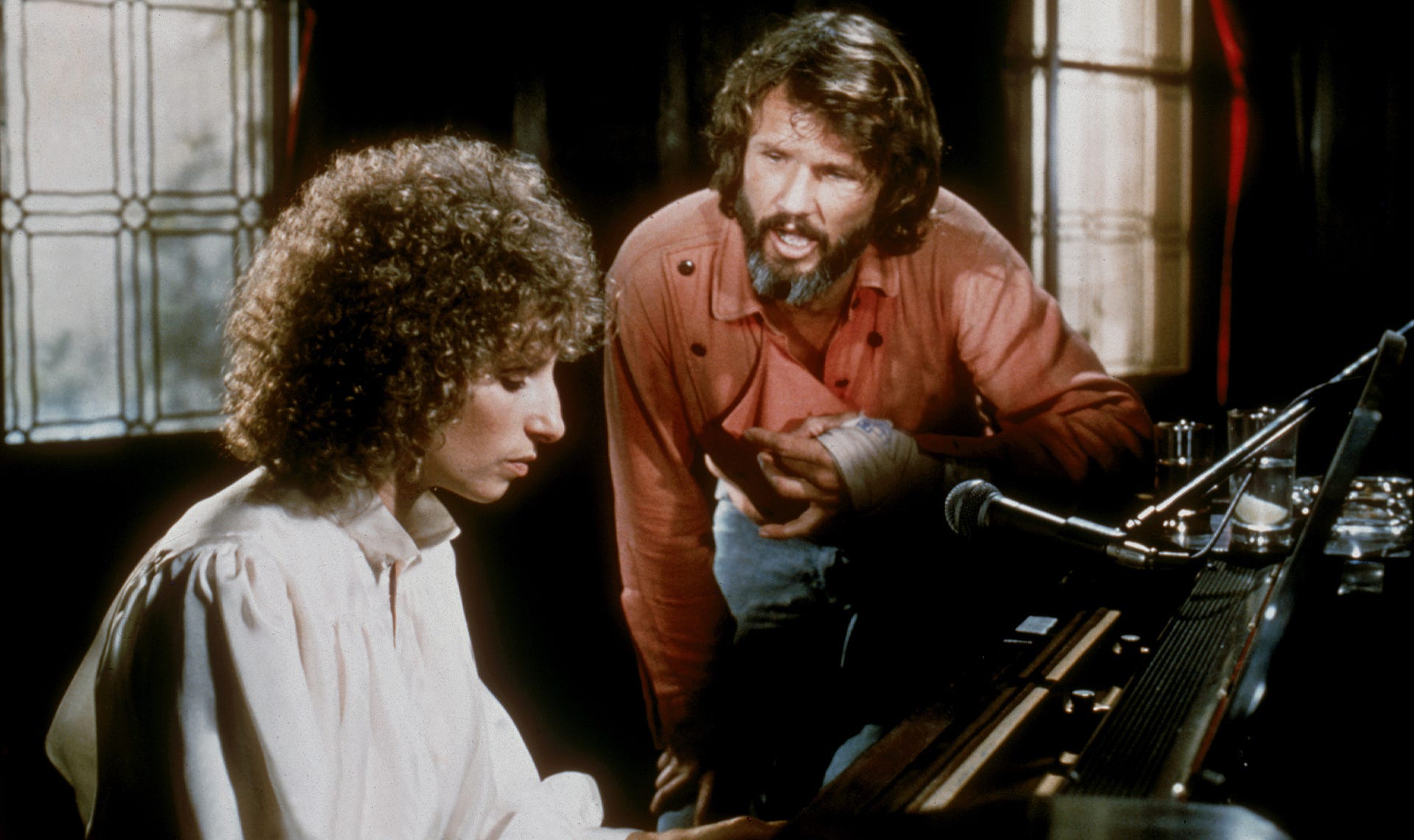
A Star Is Born
Frank Pierson, 1976
Rating: BB
Cast: Barbra Streisand, Kris Kristofferson, Paul Mazursky, Gary Busey, Oliver Clark, Venetta Fields, Clydie King, Marta Heflin, M.G. Kelly, Sally Kirkland, Joanne Linville, Uncle Rudy, Rita Coolidge, Tony Orlando
The fourth version of the popular rags-to-riches story, followed by the surprisingly less terrible Glitter with Mariah Carey, stars Barbra Streisand and her poodle perm as an aspiring singer (and her poodle perm) who befriend an established rock star (Kris Kristofferson) and fall in love with him. He aids them in climbing up the ladder of popularity, watching them skyrocket to stardom, while Streisand (and perm) try to prevent him from falling into the pit of despair and alcoholism. Streisand’s energy is exciting as usual, and she’s backed up by some terrific songs (especially ‘Lost Inside Of You’ and her Oscar-winning ‘Evergreen’), but she and her male co-star have no chemistry and the leaden screenplay feels like it goes on forever. Audiences of the time disagreed, however, and despite disastrous reviews this film ended up being one of the great star’s biggest hits.
Winner: Best Original Song (”Evergreen (Love Theme From A Star Is Born)”); Nominations: Best Cinematography, Best Music (Original Song Score and Its Adaptation or Adaptation Score), Best Sound
Number Our Days
Winner: Best Documentary (Short Subject)
Leisure
Winner: Best Short Film (Animated)
In The Region of Ice
Winner: Best Short Film (Live Action)