
The Oscars of 1976: Part 2
The Acting Nominees
A high number of non-English nominees in the acting categories is a familiar sight in more recent years, often attributed to the increase in international Academy members (and the technology that allows for access to films globally without worrying about local screenings or sending ballots by mail). In the seventies, it happened quite frequently in the female acting categories, and was considered indicative of the American business having very little to offer women. The industry was turning towards young male fandom thanks to other demographics staying home to watch TV and, despite the fact that American movies were achieving levels of cynical intelligence that we now look back at with nostalgia and wonder, one has to admit that the most celebrated movies in this vein (The Conversation, All The President’s Men, etc.) are very guy-heavy (and things wouldn’t get better, as the next decade would be overcome by teen sex comedies and boy-centric escapist Spielbergian fantasies). Women were more or less wiped off the screen in this decade, notice how many nominees in Supporting Actress in the seventies are little more than cameos (including this year, when one of them won).
It’s not all doom and gloom, however, as the Oscars of 1976 also had an unprecedented respect for genres, including nominees for horror movies (Carrie, Marathon Man and, depending on your viewpoint, Taxi Driver) and one last citation for the impossibly glamorous and talented Lee Grant.
And most important, history was made! A mere forty-nine years into the world’s most prestigious film award, a woman was nominated in the directing category for the first time ever, a feat that would not be repeated until 1993 (and an American woman wouldn’t get in there until Sofia Coppola ten years after that).

Carrie
Brian De Palma, 1976
Rating: BBBB
Cast: Sissy Spacek, Amy Irving, William Katt, Nancy Allen, John Travolta, Betty Buckley, P. J. Soles, Sydney Lassick, Stefan Gierasch, Priscilla Pointer, Piper Laurie, Edie McClurg
The first Stephen King novel adapted to the big screen has results that are still exciting today. De Palma does a terrific job of providing thrills, chills and even a few laughs with this ridiculously over-the-top horror story, centering around a misfit girl (Sissy Spacek) who is picked on mercilessly by her classmates. Her home life isn’t that much better, what with her religiously obsessed mother (Piper Laurie) keeping her locked away from the world and what she considers its wickedness, but Carrie has a few things up her sleeve to combat even the worst authority figure. She has discovered that her worst feelings of frustration can be channeled into telekinetic powers, and she uses these to combat the people who would do her harm. Her grand opportunity comes when she goes to her High School Prom and a group of nasty cheerleaders embarrass her without realizing what they’re going to get in return. It’s the best revenge story, with Spacek and Laurie giving memorable, larger-than-life performances and John Travolta and Amy Irving appearing in very early screen roles. Turn off the lights and stay up late, this one’s so much fun!
Nominations: Best Actress (Sissy Spacek), Best Supporting Actress (Piper Laurie)

Taxi Driver
Martin Scorsese, 1976
Rating: BBBBB
Cast: Robert De Niro, Jodie Foster, Cybill Shepherd, Harvey Keitel, Albert Brooks, Victor Argo, Leonard Harris, Peter Boyle, Harry Northup, Norman Matlock
Robert De Niro’s oft-imitated, never duplicated mirror monologue (“You talkin’ to me?”) has become an overplayed joke that has unfortunately undercut the power of this masterpiece, which took the Palme D’Or at Cannes before going on to be nominated for a handful of Oscars. He plays a New York City cab driver and Vietnam veteran whose loneliness and frustration with the world around him, a world he can observe but never really get to know, drives him to the dark side of sanity and into a realm of disturbing violence. He attempts to touch goodness by pursuing a relationship with a beautiful political campaign worker (Cybill Shepherd) while also befriending a child prostitute (a young but riveting Jodie Foster) who is being mistreated by her sleazy pimp. Eventually he acts out at the world of criminals and degenerates around him, and Paul Schrader’s seedy screenplay performs as an exquisite counterpoint to Scorsese’s elegant direction, a dirty exploration of New York City’s gritty underbelly filmed like a big-budget Hollywood musical.
De Niro handles the part brilliantly (just look at his face while Scorsese himself rants about his unfaithful wife in the back seat of the cab, it’s some of the best acting ever seen on screen), while Foster displays an early natural brilliance that would logically lead to the successful career she had ahead of her. Its impact on cinema is immense (including a real-life presidential assassination attempt by a fan obsessed with Foster’s character), and the film is, in my mind anyway, the director’s best.
Nominations: Best Picture, Best Actor (Robert De Niro), Best Supporting Actress (Jodie Foster), Best Music (Original Score)
Seven Beauties
This film is reviewed in The Films of Lina Wertmuller
Nominations: Best Actor (Giancarlo Giannini), Best Directing (Lina Wertmuller), Best Foreign Language Film (Italy), Best Writing (Screenplay Written Directly for the Screen--based on factual material or on story material not previously published or produced)
Marathon Man
John Schlesinger, 1976
Rating: BBBB
Cast: Dustin Hoffman, Jeff Palladini, Laurence Olivier, Roy Scheider, Scott Price, William Devane, Marthe Keller, Fritz Weaver, Richard Bright, Marc Lawrence, Allen Joseph, Tito Goya, Ben Dova, Lou Gilbert, Jacques Marin, James Wing Woo, Nicole Deslauriers, Annette Claudier, Raymond Serra, Billy Kearns, Madge Kennedy
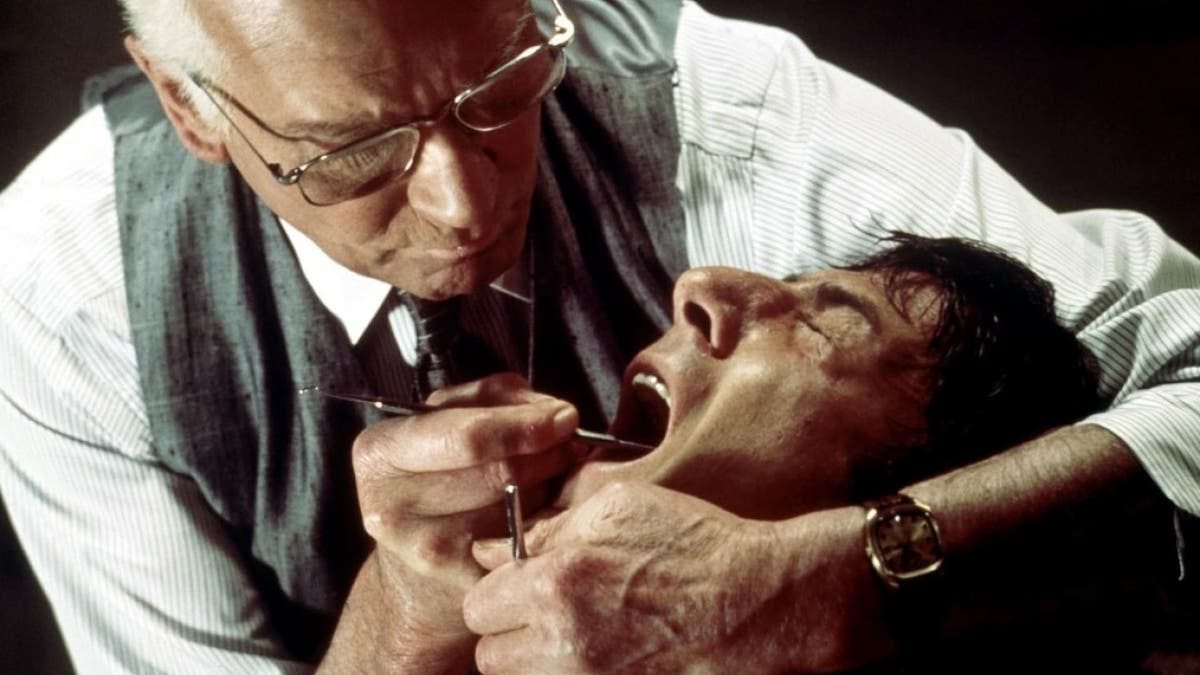
Schlesinger’s thriller is both gripping and ridiculous, a taut action thriller with a far-fetched plot that only makes it more enjoyable. Dustin Hoffman plays an obsessive runner who is living in the shadow of his father’s suicide. His government spy brother (Roy Scheider) is murdered, and Hoffman’s decision to find out the truth behind his death leads him down paths that he never could have predicted. It turns out that a Nazi war criminal (played to the hilt by Laurence Olivier) has come to the States to pick up a stash of diamonds and is getting rid of all the members of a covert government operation that are out to arrest him. Featuring one of the scariest scenes involving the art of dentistry ever put on film (one shudders just to think of it), this fun action flick will leave you quaking in your boots.
Nomination: Best Supporting Actor (Laurence Olivier)
Cousin, Cousine
Jean-Charles Tacchella, 1975
Rating: BBBB
Cast: Marie-Christine Barrault, Victor Lanoux, Marie-France Pisier, Guy Marchand, Ginette Garcin, Sybil Maas, Pierre Plessis, Catherine Verlor, Catherine Stermann
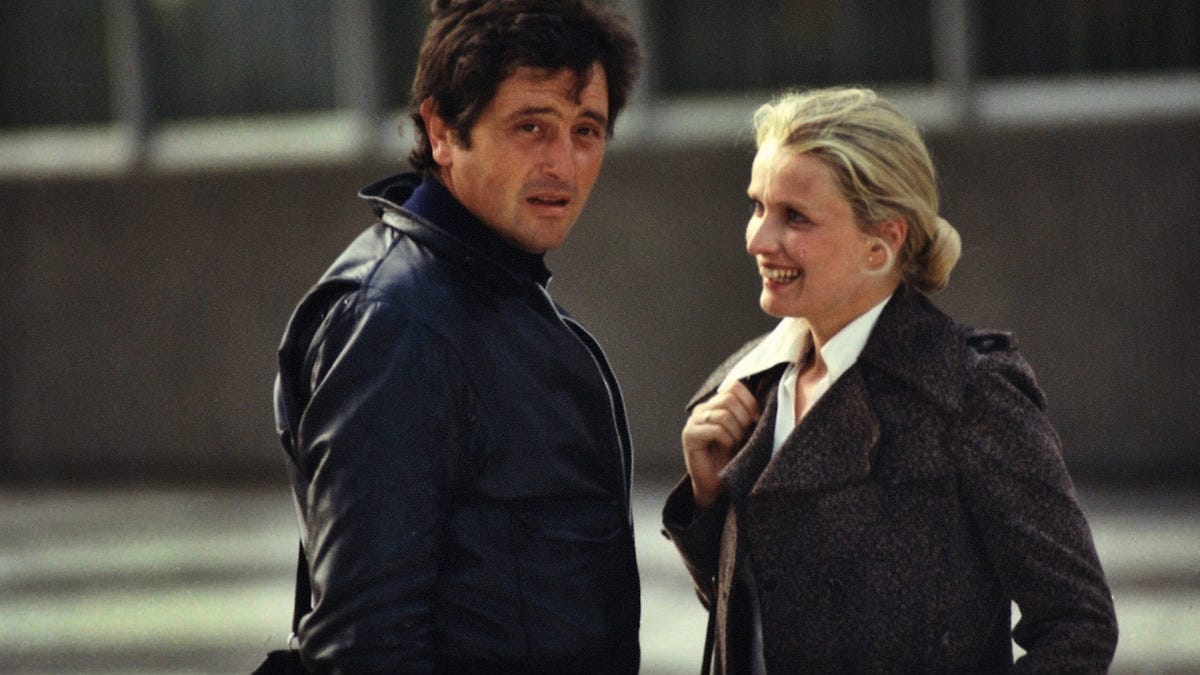
When they realize that their spouses cheated on each other at a wedding they both attended, a man and a woman, who are distantly related through marriage, decide to pretend to be having their own affair and then, just for laughs, actually have one. The witty script brings out the most appealing aspects of its cast while suggesting, outrightly and without any bitterness, that deception and provoking jealousy are key elements to keeping love alive.
Nominations: Best Actress (Marie-Christine Barrault), Best Foreign Language Film (France), Best Writing (Screenplay Written Directly for the Screen--based on factual material or on story material not previously published or produced)

Face To Face
Ansikte mot ansikte
Ingmar Bergman, 1976
Rating: BBB
Cast: Liv Ullmann, Erland Josephson, Aino Taube, Gunnar Björnstrand, Kristina Adolphson, Marianne Aminoff, Gösta Ekman, Helene Friberg, Ulf Johanson, Sven Lindberg, Jan Erik Lindqvist, Birger Malmsten, Sif Ruud, Göran Stangertz
Mildly successful drama probes the female psyche but features too many ridiculous flourishes to be taken too seriously. Liv Ullmann is excellent as an emotionally fragile psychiatrist whose sanity is slowly breaking down as she succumbs to the disturbing experiences that made up her troubled childhood. This also has an adverse effect on her marriage to a man who is himself a doctor, and we watch as she goes through her days and some rather odd encounters while trying to resist her mind’s descent into madness. It’s a lot graver than most Hollywood films ever dare to be, particularly on the subject of mental illness, and Ullmann’s acting can’t be faulted for a second, but it also plays into some pretty cliched views of female psychology (like a secret desire to be raped) that render it dated.
Nominations: Best Actress (Liv Ullmann), Best Directing (Ingmar Bergman)
Voyage of the Damned
Stuart Rosenberg, 1976
Rating: BBBB
Cast: Faye Dunaway, Max von Sydow, Oskar Werner, Malcolm McDowell, Orson Welles, James Mason, Lee Grant, Katharine Ross, Ben Gazzara, Luther Adler, Michael Constantine, Denholm Elliott, José Ferrer, Lynne Frederick, Helmut Griem, Julie Harris, Wendy Hiller, Paul Koslo, Nehemiah Persoff, Fernando Rey, Leonard Rossiter, Maria Schell, Victor Spinetti, Janet Suzman, Sam Wanamaker, Keith Barron, Ian Cullen, David Daker, Brian Gilbert, Constantine Gregory, Georgina Hale, Don Henderson, Bernard Hepton, Anthony Higgins, Donald Houston, Frederick Jaeger, David de Keyser, Della McDermott, Günter Meisner, Jonathan Pryce, Marika Rivera, Ina Skriver, Milo Sperber, Philip Stone, Adele Strong, Genevieve West
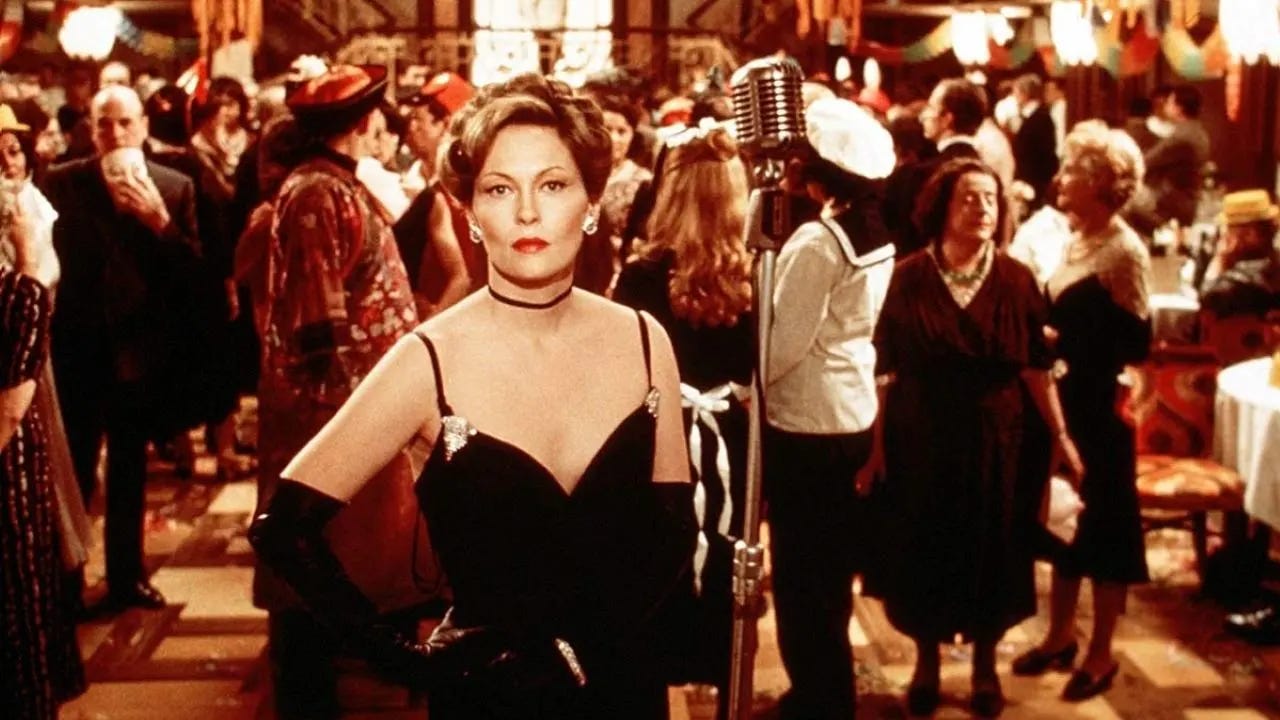
The all-star disaster movies that were popular in the seventies are combined with the respectability of historical epics for what is a far more successful combination of the two than you would predict. Faye Dunaway heads an enormous cast as one of a thousand Jewish passengers aboard a luxury cruiseliner in 1939 headed from Hamburg to Havana, with all those aboard believing that they will be accepted in Cuba as refugees after the anti-Semitic Nazi government has allowed them to leave as a gesture of goodwill. What no one aboard the ship knows is that Cuba has no intention of allowing them in, and that it’s all part of Germany’s much darker plan for its Jewish citizens in the coming years.
Steve Shagan and David Butler’s screenplay, adapted from the novel by Gordon Thomas and Max Morgan Witts, moves between the individual dramas of passengers, including Dunaway’s tense (if vague) relationship with her husband Oskar Werner, Lee Grant and Sam Wanamaker plunged in anxious paranoia, their daughter Lynne Frederick’s romance with the captain’s steward Malcolm McDowell, Jonathan Pryce and Paul Koslo as teachers escaping persecution, and the drama on the bridge with the moral but politically conflicted captain (Max Von Sydow) versus the party supervisor (Helmut Griem) who is there to make sure that everyone is towing the Nazi line. The story leaves the boat periodically to head to Havana, where various suited politicians and diplomats argue the possibility of letting the passengers into the country as anti-Semitism rises sharply in the western hemisphere and makes the idea of a ship of refugees unappealing everywhere; this makes for hard work for Ben Gazzara, playing a representative for the American Jewish Joint Distribution Committee, as he travels the world trying to find a safe haven for the ship’s passengers.
Dunaway’s role is far too inconsequential and she’s given top billing more because of her status than because of any particular reliance that the film has on her, the weight of it belongs more to Von Sydow overall, but the cut-glass perfection of her image and the moral resolve she brings to her scenes as a woman who cannot be caught unawares is a nice contrast to the other rich characterizations that the film provides, including Grant as a woman on the verge of madness and Wendy Hiller contributing fine work as an elderly woman accompanying her gravely ill husband.
Other cast members are shown to good effect as well, Julie Harris as a woman hoping to reunite with her children in Cuba, Maria Schell unaware that her daughter (Katharine Ross) has become a sex worker in Havana, and a very young Anthony Higgins who pays dearly for his questioning Griem’s bullying authority. Taking Ship of Fools and giving it the glamorous soap opera treatment should result in something far more disastrous, witness the boredom of The Hindenburg a year earlier, but putting romance novel plots against the backdrop of the destruction of Jewish life in Europe doesn’t cheapen the film as either history or drama, there’s something sweet and tragic about seeing these engaging characters madly trying to live all of life’s indulgences as they head to their doom.
Nominations: Best Supporting Actress (Lee Grant), Best Music (Original Score), Best Writing (Screenplay--based on material from another medium)