
The Films of Woody Allen: Part 2
For The Love of Anhedonia (1977-1980)
After a decade of very popular concept comedies that traded on sight gags, Allen took a left turn and experimented with a different form of expression, and it was so successful that he stuck with it for the rest of his career. Annie Hall was inspired, in part, by his friendship with Diane Keaton (whose real name was Diane Hall), which lasted until their death even though their romantic partnership had ended before they even made their first movie together. The film traded more on conversations than physical humour, witty observations of life that showed the characters trying to hide their vulnerability through wisecracks and cynical expression. He would make many more slices of life and some of them would be this good, but there’s a bittersweet pain beneath the jokes and a palpable sense of regret in Annie Hall that would rarely make its way into his work ever again (and by the time of Deconstructing Harry it would become a hard bitterness).
Annie Hall wasn’t more intellectual than Bananas just because it had more talking in it, and for the most part his preoccupations hadn’t changed: much like his previous, goofier works, Annie Hall and Manhattan are about men who aren’t able to keep up with the modern, liberated world, and it ruins their chances with the modern women who have no choice but to leave them behind. With Oscars and admiration being applied to his new style, however, his films were suddenly being marketed as arthouse fare, which for many of his fans reeked of pretentiousness and it inspired a portion of his audience to turn on him (which he responded to in Stardust Memories). Today, his preoccupation with masculine failure is simply no longer in style, and I sneakily suspect that this is far more responsible for his being culturally canceled than any good person’s concern for his family’s well-being.
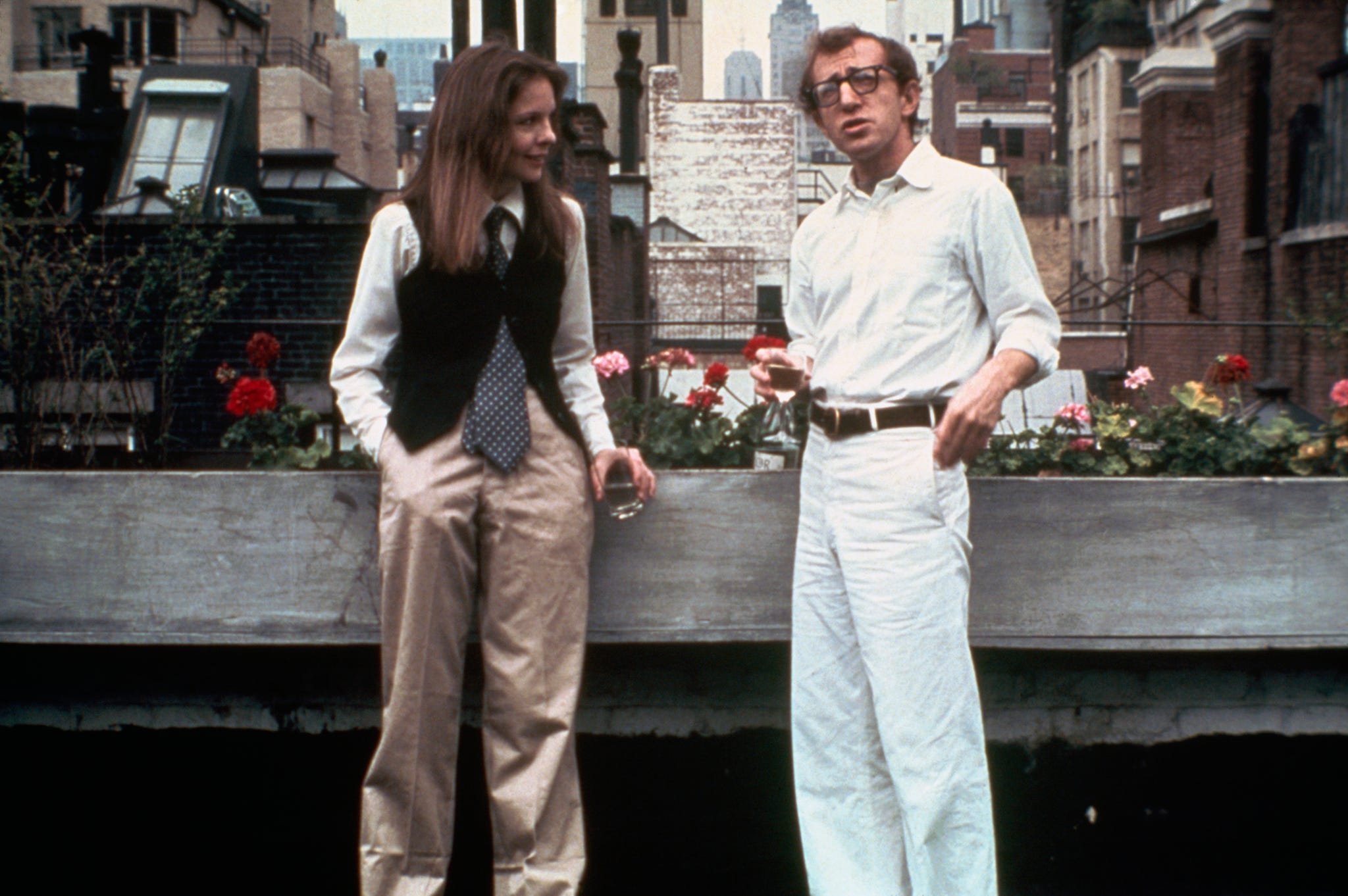
Annie Hall (1977)
Rating: BBBBB
Cast: Woody Allen, Diane Keaton, Tony Roberts, Carol Kane, Paul Simon, Shelley Duvall, Janet Margolin, Colleen Dewhurst, Christopher Walken, Donald Symington, Mordecai Lawner, Joan Newman, Marshall McLuhan, Tracey Walter
Allen takes a sharp turn away from slapstick and gives birth to comedy genius. Natural, observant dialogue and moments of romantic poignancy chart the relationship between an insecure television producer (Allen) and his flighty, free-spirited singer girlfriend (Diane Keaton). He begins by telling us that they broke up, and then in examining his childhood, his previous marriages and memories of him and his lovely lady together, is able to pinpoint his own flaws and shortcomings but no hard answers. At the core of it is the deeply moving experience of lost love, a soft centre that remains vibrant despite the numerous one-liners that still zing.
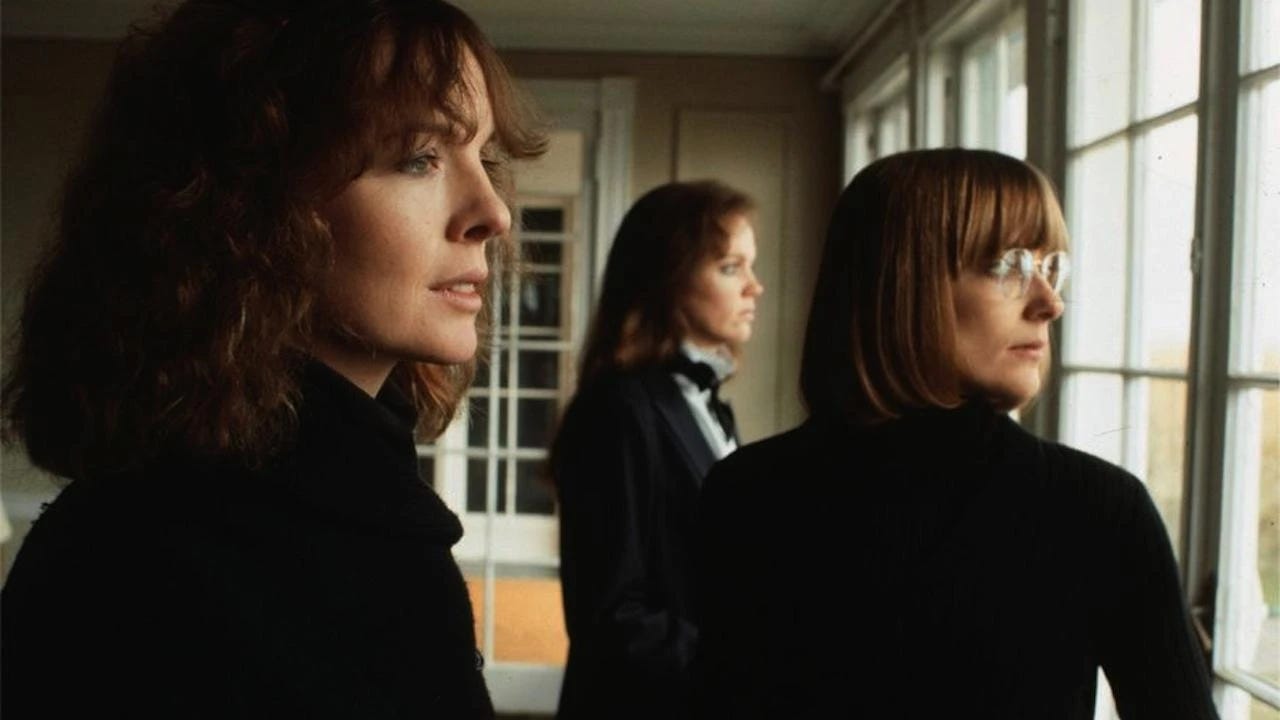
Interiors (1978)
Rating: BBBB
Cast: Kristin Griffith, Mary Beth Hurt, Richard Jordan, Diane Keaton, E. G. Marshall, Geraldine Page, Maureen Stapleton, Sam Waterston
This Ingmar Bergman-inspired drama is a complete reversal of style for Allen, effectively capturing the downward spiral of an upper class New York family. Geraldine Page is phenomenal as a woman who is doing her best to emotionally survive her husband (E.G. Marshall) leaving her. Her daughters (Diane Keaton, Mary Beth Hurt, Kristin Griffith) struggle with their own issues while trying to get to know their father’s new wife (Maureen Stapleton, one of the finest roles that the auteur ever created). Fantastic performances are compounded with gorgeous cinematography and Allen’s uncannily sharp sense of character.
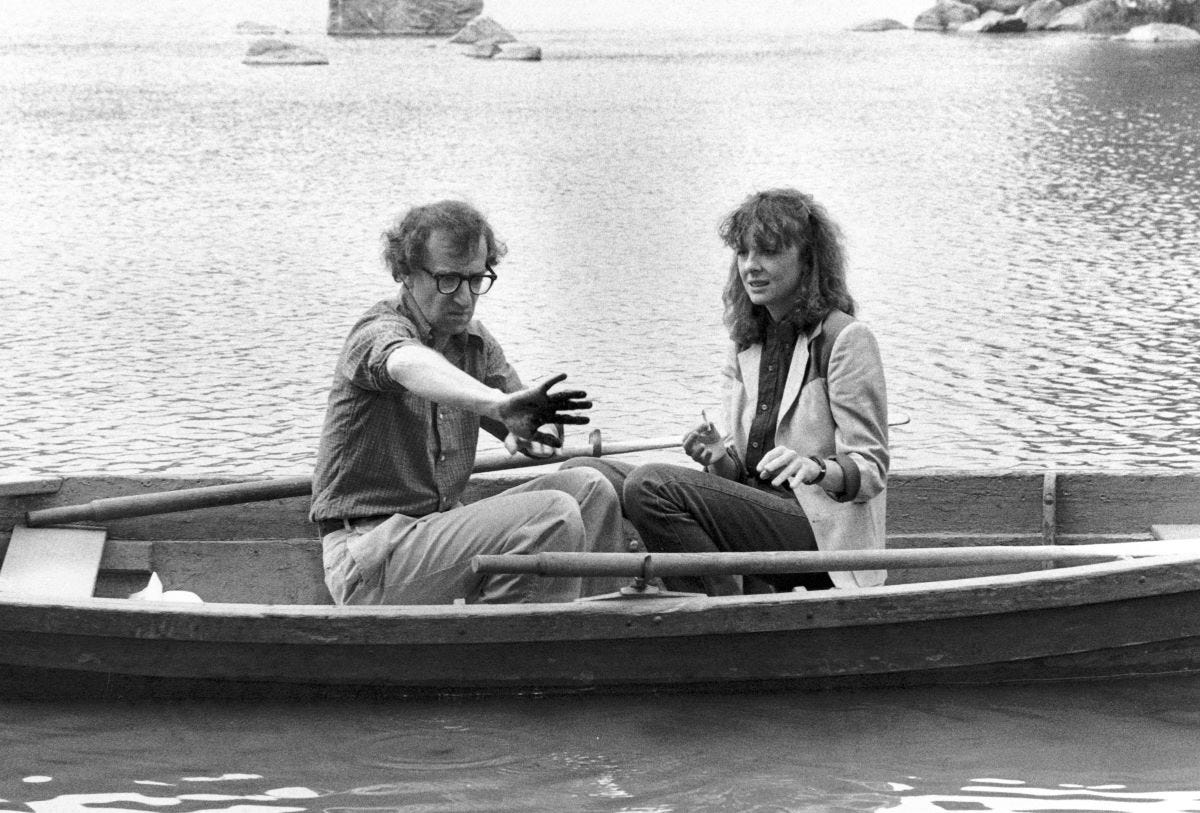
Manhattan (1979)
Rating: BBBBB
Cast: Woody Allen, Diane Keaton, Michael Murphy, Mariel Hemingway, Meryl Streep, Anne Byrne, Karen Ludwig, Michael O’Donoghue, Tisa Farrow, Wallace Shawn, Bella Abzug, Charles Levin, Karen Allen, David Rasche, Mark Linn-Baker, Frances Conroy, Ray Serra
At the time, this was Allen’s biggest hit, I believe the only one of his films to enter the top ten box office for the year. Today, it’s often cited as evidence in a criminal investigation being conducted by the public court of the internet, and the one movie people can think of when they say that “all” his films are about him dating teenagers (first of all, they’re not, secondly, the whole point of the relationship being dramatized here is to emphasize his character’s immaturity, and thirdly, if you want to believe something, just believe it, you don’t need to find proof in a director’s films as if you’re reading tea leaves).
The film itself is the director’s tribute to the Big Apple, to romance, to movies and to the love of love itself, a dreamy film concoction shot beautifully by Gordon Willis in a muted monochrome pallette. Woody plays a writer working on his first big novel whose affair with a precociously intelligent teenager named Tracy (Mariel Hemingway) is interrupted by a sexy, grown woman named Mary (Diane Keaton) who may just be the love of his life. To pursue Mary, he has to be willing to handle a partner as complicated as himself, though when Tracy starts showing signs of having already surpassed him in wisdom, it reveals the possibility that he has gaps in his own adulthood that he needs to address if he’s ever going to have a successful relationship with anybody. Meryl Streep makes her only appearance in the Allen oeuvre as his ex-wife who has left him for another woman, a situation as frustrating for him as all the men in Mary’s life that he is constantly running into. Allen actually regretted making this movie as soon as it was done, offering to buy it back from the studio and destroy it himself only to be surprised by its widespread (and continued) success. It’s the opposite of Annie Hall, much more melancholy and featuring both the stars in a subtler tone than their previous venture, and audiences tend to be split down the middle in terms of which of the two they like more (for me it depends on the year).
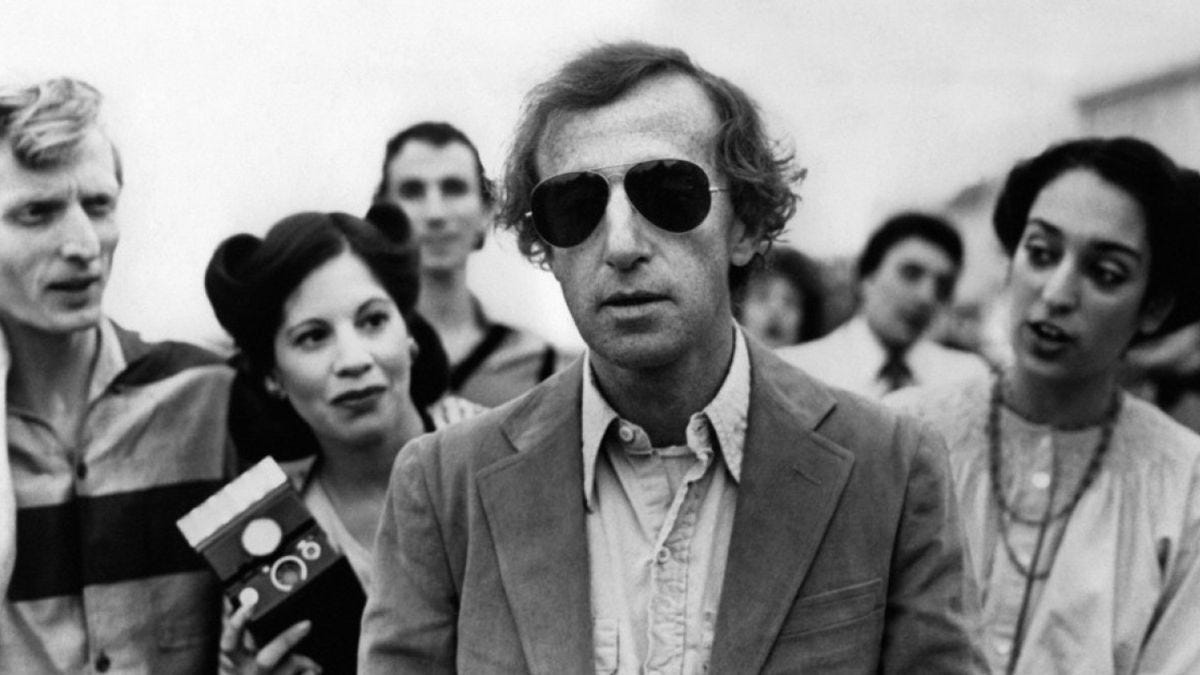
Stardust Memories (1980)
Rating: BB.5
Cast: Woody Allen, Charlotte Rampling, Jessica Harper, Marie-Christine Barrault, Tony Roberts, Daniel Stern, Amy Wright, Helen Hanft, John Rothman, Anne De Salvo, Leonardo Cimino, Sharon Stone, Jack Rollins, Judith Roberts, Candy Loving, Brent Spiner, Judith Crist, Irwin Keyes, Bonnie Hellman, James Otis, Largo Woodruff, Alice Spivak, Armin Shimerman
One of Allen’s less inspired works, this bitter film is the director’s response to the criticism he received for the post-Annie Hall change in his style. He plays a filmmaker who is trying to sort out his personal life during a film festival retrospective of his works that is attended by fans and critics alike. His ex-wife (Charlotte Rampling) has gone mad in a mental institution and his feelings about his beautiful current flame (a delightful Marie-Christine Barrault) are unresolved.
Modeled quite obviously on Fellini’s 8 1/2, the film is too shallow to make any of its fancy camerawork feel important, compounded by the acidic tone taken towards viewers of the character’s films (which the director has stated is pure fiction and not his own true feelings, though one has doubts; Woody also says he doesn’t care who watches his films and somehow still manages to know the box office tallies in every country around the world). The performances are strong, and it does feature the momentary debut (as ‘Girl On Train’) of one of Hollywood’s greatest movie stars, Sharon Stone.