
The 1993 Oscars: Part 1
The Winners
Whatever predictions had been made throughout the year 1993 were wiped out when Steven Spielberg’s career crowning achievement, Schindler’s List, was released in late December. From the weighty subject matter to the rapturous critical acclaim it seemed that Spielberg, having wanted the recognition of the Oscar statuette for almost twenty years at this point, had it well in the bag. A Best Picture nomination for a big-budget studio genre film like The Fugitive, however, was something that no one saw coming, and the evening of March 21, 1994 did have other genuinely charming surprises, such as Anna Paquin stealing the Best Supporting Actress prize right from under the predicted win for Winona Ryder, and Tom Hanks kicking his career into a new high gear with his win for Philadelphia. Reviews are out of 5.
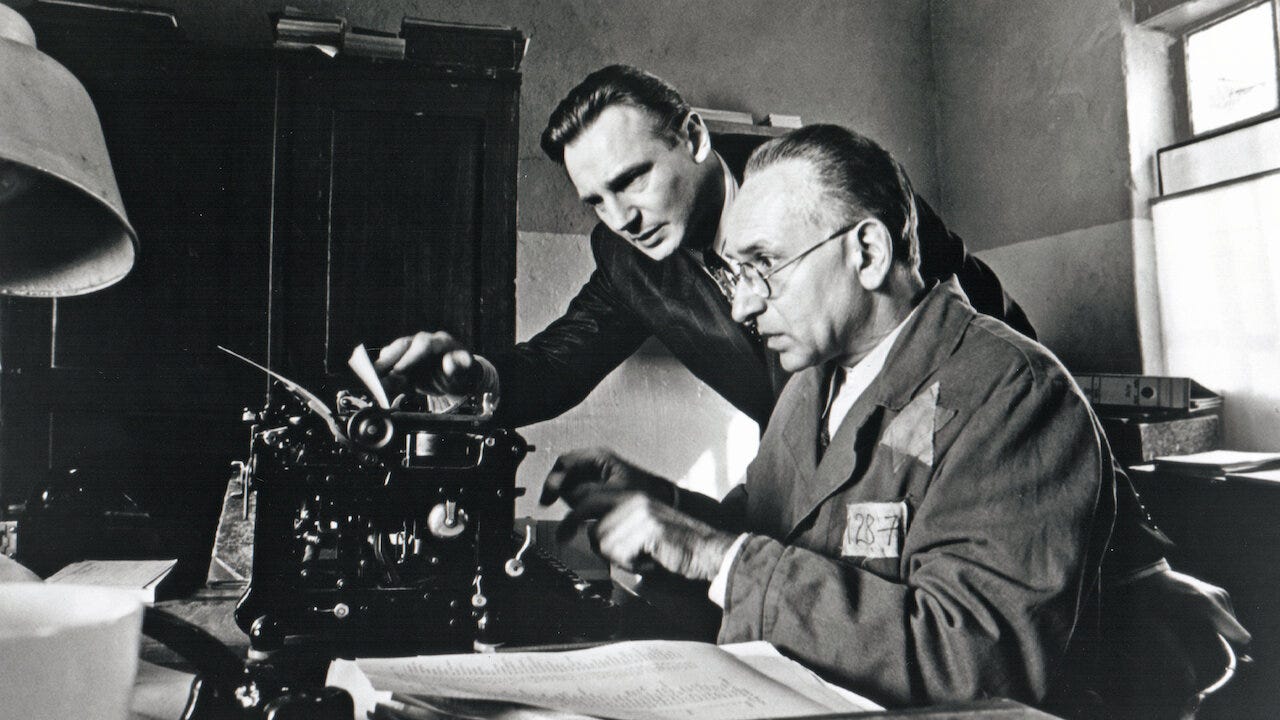
Schindler’s List
Steven Spielberg, 1993
Rating: BBBBB
Cast: Liam Neeson, Ben Kingsley, Ralph Fiennes, Caroline Goodall, Jonathan Sagall, Embeth Davidtz, Małgorzata Gebel, Mark Ivanir, Beatrice Macola, Andrzej Seweryn, Friedrich von Thun, Jerzy Nowak, Norbert Weisser, Michael Gordon, Aldona Grochal, Michael Schneider, Miri Fabian, Anna Mucha, Adi Nitzan, Piotr Polk, Bettina Kupfer, Grzegorz Kwas, Kamil Krawiec, Henryk Bista, Ezra Dagan, Rami Heuberger, Elina Löwensohn, Harry Nehring, Wojciech Klata, Paweł Deląg, August Schmölzer, Hans-Michael Rehberg, Daniel Del Ponte, Adam Siemion, Jochen Nickel, Ludger Pistor, Oliwia Dąbrowska
Martin Scorsese had originally meant to adapt Thomas Keneally’s historical novel Schindler’s Ark before Spielberg offered him a trade, giving him the remake of Cape Fear in order to take over directing what would turn out to be the most acclaimed film of his career. Long celebrated for the childlike, but never childish, sense of wonder in films like E.T. The Extra-terrestrial and Close Encounters of The Third Kind, the man who more or less defined the state of blockbuster success in the eighties brought a heretofore unknown intelligent remove to his game-changing record of the horrors of Nazi atrocities during the second World War (and he would go back to his usual manipulations with his far less impressive Amistad a few years later). Liam Neeson is excellent as an industrialist and Nazi party member who insists on forcing approximately twelve hundred Polish Jews to work in his factories which, it turns out, is his way of keeping them from being massacred in concentration camps. It is a decision made purely with profit in mind, but the passage of time sees his conscience weighing on him and encouraging more effort to keep his workers employed. This higher calling, Spielberg tells us, isn’t less valuable for having not been his pursuit in the first place, and doesn’t make him any less deserving of being named Righteous Among the Nations by Yad Vashem after his death. Skillfully shot and edited, the pace never lags for a moment throughout its three hour running time, a masterpiece thought-provoking insight.
Winner: Best Picture; Best Art Direction; Best Cinematography; Best Directing (Spielberg); Best Film Editing; Best Music (Original Score); Best Writing (Screenplay Based on Material Previously Produced or Published); Nominations: Best Actor (Liam Neeson); Best Supporting Actor (Ralph Fiennes); Best Costume Design; Best Makeup; Best Sound
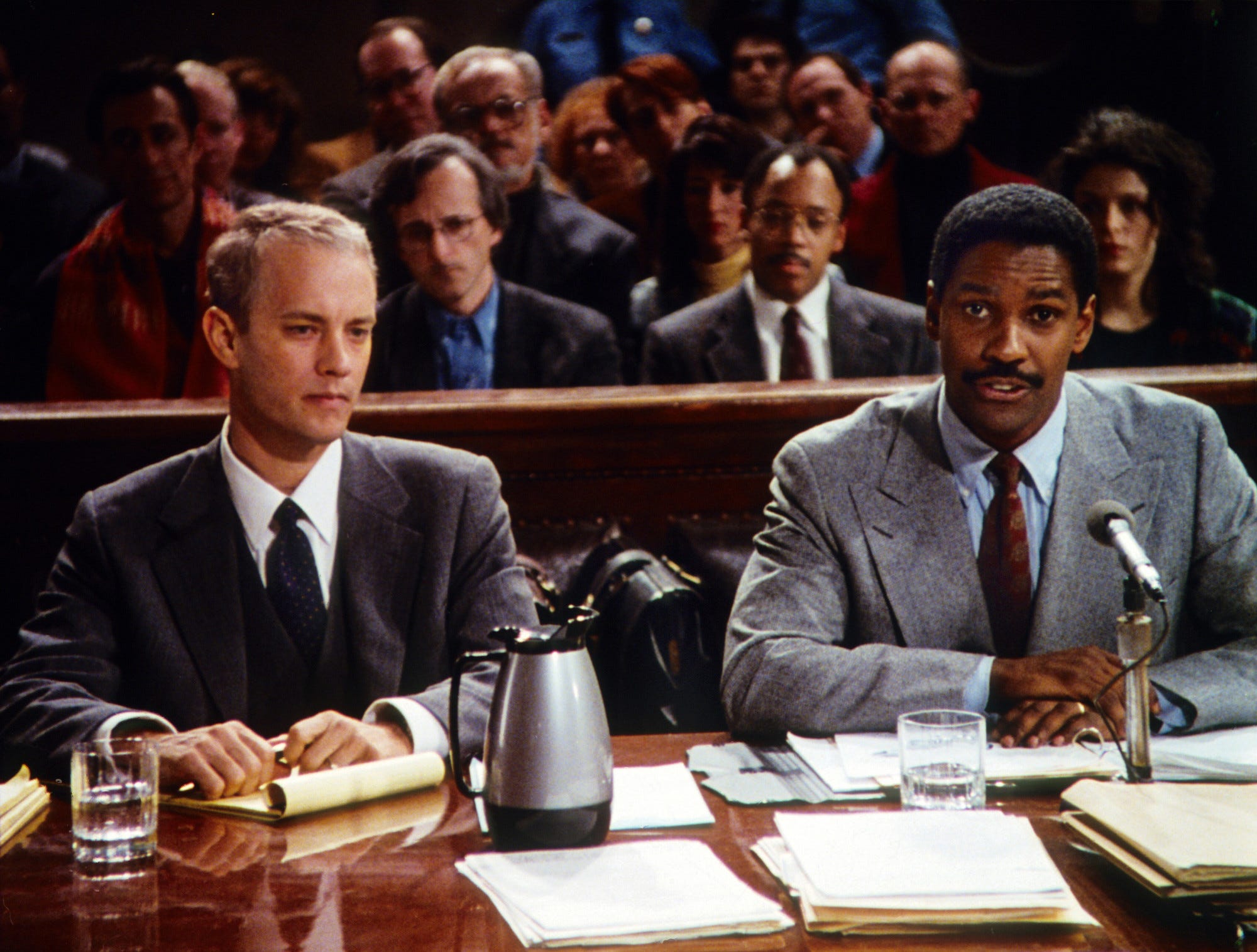
Philadelphia
Jonathan Demme, 1993
Rating: BBB.5
Cast: Tom Hanks, Denzel Washington, Jason Robards, Mary Steenburgen, Antonio Banderas, Joanne Woodward, Robert W. Castle, Ann Dowd, Adam LeFevre, John Bedford Lloyd, Dan Olmstead, Lisa Summerour, Charles Napier, Roberta Maxwell, Roger Corman, David Drake, Harry Northup, Bill Rowe, Chandra Wilson, Daniel von Bargen, Karen Finley, Robert Ridgely, Bradley Whitford, Ron Vawter, Anna Deavere Smith, Obba Babatundé, Charles Glenn, Tracey Walter, Andre B. Blake, Daniel Chapman, Peter Jacobs, Paul Lazar, Robert Ridgely, Warren Miller, Joey Perillo, Lauren Roselli, Lisa Talerico, Kathryn Witt, Julius Erving, Kenneth I. Starr, Quentin Crisp
A big-budget Hollywood film finally tackles the issue of AIDS for the first time and, terrified of the mainstream audience it is trying to seduce, never lets gay men do more than hug. Tom Hanks is excellent in an image-breaking role as a lawyer who is let go from his firm when it comes out that he is dying of AIDS. He refuses to take the discrimination lying down, opting instead to hire a homophobic lawyer (Denzel Washington) and take his employers to court, starting with its extremely old-fashioned boss (Jason Robards). Antonio Banderas stars as Hanks’ boyfriend, while Mary Steenburgen shines as the defense attorney who has to fight for a team that she doesn’t quite believe in. Demme, inspired to make the film because of how hurt he felt by the gay community’s criticism of The Silence of the Lambs, doesn’t follow it up with as scintillating a drama thanks to a desire to avoid offending anyone’s sensibilities. It plays as very quaint now, but it also got people who’d never even heard of Longtime Companion into movie theatres and, I really mean this sincerely, that is not something to turn your nose up at. Just don’t be surprised if that famous scene of him narrating an opera aria feels a bit corny now. Hanks’ win overwhelmed him and he gave so passionate an acceptance speech at the Oscars that it inspired Paul Rudnick to write the hit comedy In & Out.
Winner: Best Actor (Tom Hanks); Best Original Song (”Streets of Philadelphia”); Nominations: Best Makeup; Best Original Song (”Philadelphia”); Best Writing (Screenplay Written Directly For The Screen)
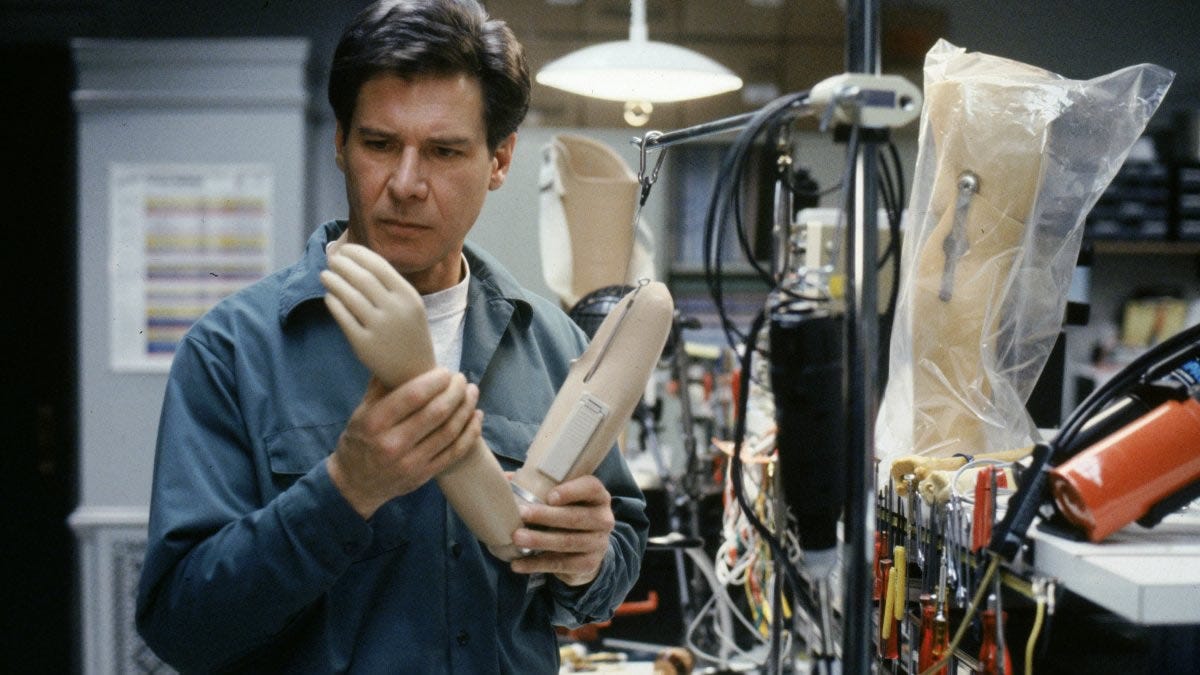
The Fugitive
Andrew Davis, 1993
Rating: BBBB
Cast: Harrison Ford, Tommy Lee Jones, Sela Ward, Joe Pantoliano, Andreas Katsulas, Jeroen Krabbé, Daniel Roebuck, Tom Wood, L. Scott Caldwell, Johnny Lee Davenport, Julianne Moore, Ron Dean, Joseph Kosala, Jane Lynch, Dick Cusack, Andy Romano, Nick Searcy, Eddie Bo Smith, Neil Flynn, Richard Riehle, Kirsten Nelson, David Darlow, Frank Ray Perilli, Lester Holt, David U. Hodges, John M. Watson Sr.
Fans of the sixties television show might not find much in common with this film adaptation, but it hasn’t stopped its being one of the most successful films in Harrison Ford’s career, bested at the box office only by Jurassic Park and Mrs. Doubtfire that year. Richard Kimble (Ford) is a respected doctor who comes home to find his wife (Sela Ward) murdered and the evidence pointing towards him, enough to get him sentenced to prison. Managing a break during a very exciting transport, Kimble must keep on the lam from the law until he can clear his name and prove that he didn’t commit the crime, pursued the entire time by an FBI agent who is determined to get him dead or alive. Jones’ brilliant portrayal is the highlight of what is already a sterling cast (which also include future luminaries like Julianne Moore and Jane Lynch), so successful after his Oscar win that 1995 Oscar host David Letterman joked that he had appeared in every film made in America that year; in 1998, a sequel to this film, U.S. Marshals was made with Jones in the lead. The original still has its reputation intact, as journeyman action filmmaker Davis manages to deliver a breathless pace and sense of tight storytelling that rises above the standards of mainstream action fare.
Winner: Best Supporting Actor (Tommy Lee Jones); Nominations: Best Picture; Best Music (Original Score); Best Sound; Best Sound Effects Editing; Best Film Editing; Best Cinematography
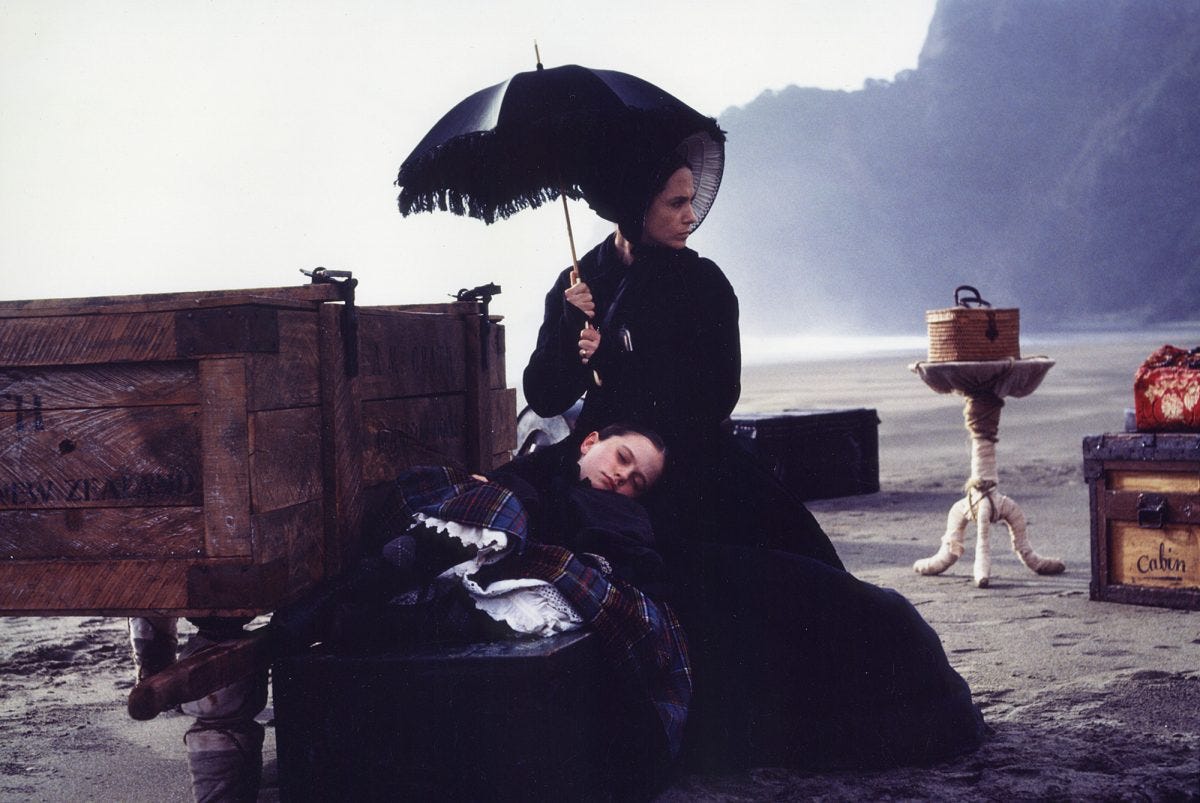
The Piano
Jane Campion, 1993
Rating: BBBBB
Cast: Holly Hunter, Harvey Keitel, Sam Neill, Anna Paquin, Kerry Walker, Genevieve Lemon, Tungia Baker, Ian Mune, Peter Dennett, Cliff Curtis, Pete Smith, Te Whatanui Skipwith, Mere Boynton, George Boyle, Rose McIver, Mika Haka, Gordon Hatfield, Bruce Allpress, Stephen Papps
A mute Scottish woman named Ada (Holly Hunter) with an iron will is sent to New Zealand as a mail-order bride for farmer Stewart (Sam Neill), bringing along her equally fiery and imaginative daughter Flora (Anna Paquin, debuting at the age of 11 and becoming one of the youngest Oscar winners ever). Upon their arrival, Stewart has his indigenous workers carry her luggage and belongings back to his property, but insists on leaving her piano behind because it is too bulky and too superfluous an object to be transported across the newly colonized rough terrain. What he doesn’t realize is that, for this woman, the piano is her only means of emotional expression and a deep and important part of who she is. Neighbouring settler Baines (Harvey Keitel) is more in tune with her needs and takes the piano for himself, asking if Ada can give him lessons; it soon becomes clear that he’s more interested in her than her musical skills, and offers her a sexual bargain that she accepts in order to get her beloved instrument back. Spielberg’s eventual winner was the only film more celebrated than Campion’s breakthrough hit, gorgeously photographed by Stuart Dryburgh and given a sense of gritty muddiness that the usually pristine genre of period films would adapt going forward. As the co-winner of the year’s Palme D’Or, this film was also discussed by myself and Gregory Rosebrugh on the Riviera Rats podcast, on our inaugural episode!
Winner: Best Actress (Holly Hunter); Best Supporting Actress (Anna Paquin); Best Writing (Screenplay Written Directly For The Screen); Nominations: Best Picture; Best Cinematography; Best Costume Design; Best Directing (Campion); Best Film Editing
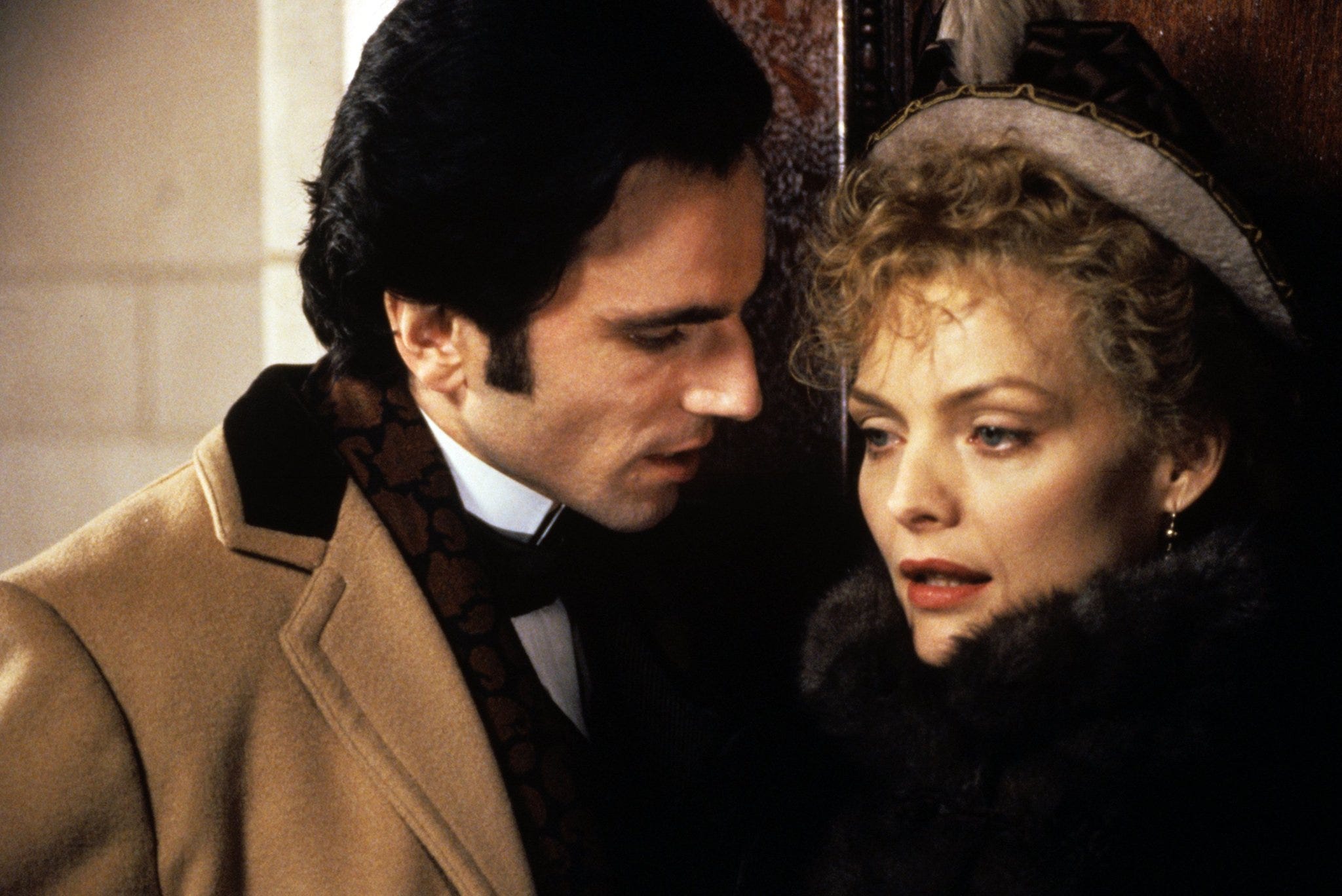
The Age of Innocence
Martin Scorsese, 1993
Rating: BBBBB
Cast: Daniel Day-Lewis, Michelle Pfeiffer, Winona Ryder, Miriam Margolyes, Geraldine Chaplin, Michael Gough, Richard E. Grant, Mary Beth Hurt, Robert Sean Leonard, Norman Lloyd, Alec McCowen, Siân Phillips, Carolyn Farina, Jonathan Pryce, Alexis Smith, Stuart Wilson, June Squibb, Joanne Woodward
Newland Archer (Daniel Day-Lewis) is a young member of New York late nineteenth-century aristocratic set. He has the affluent life anyone in his position should have, a career as a lawyer, a beautiful home, and has just become engaged to the beautiful and, ahem, proper May Welland (Winona Ryder). Upon announcing his engagement, he meets May’s cousin, Countess Olenska (Michelle Pfeiffer), who has just returned from Europe after leaving her abusive Polish Count husband, and it is soon obvious that they are locked in a passion that is practically deadly in the watchdog society they live in. Archer must decide if he will play by the rules and enjoy a comfortable life, or pursue his heart and risk doom. Scorsese, the man most famous for giving gangsters a loud, cinematic voice, has done the unthinkable with Edith Wharton’s Pulizer Prize-winning novel and made one of the most elegant film ever created. Out-costuming the Merchant Ivory team, he has taken the starch out of period dramas and perfectly translates Wharton’s writing on two important levels: having key passages from the book directly narrated (so languidly) by Joanne Woodward, and visually translating Wharton’s sentiments with his camera movements and Thelma Schoonmaker’s skillful editing.
I recorded an episode of the My Criterions podcast about the significance of this film in my life, one that my best friend of thirty years and I have shared as “our film” since the first time we saw it in a movie theatre as teenagers. Listen to it here:
Winner: Best Costume Design; Nominations: Best Supporting Actress (Winona Ryder); Best Art Direction; Best Music (Original Score); Best Writing (Screenplay Based on Material Previously Produced or Published)
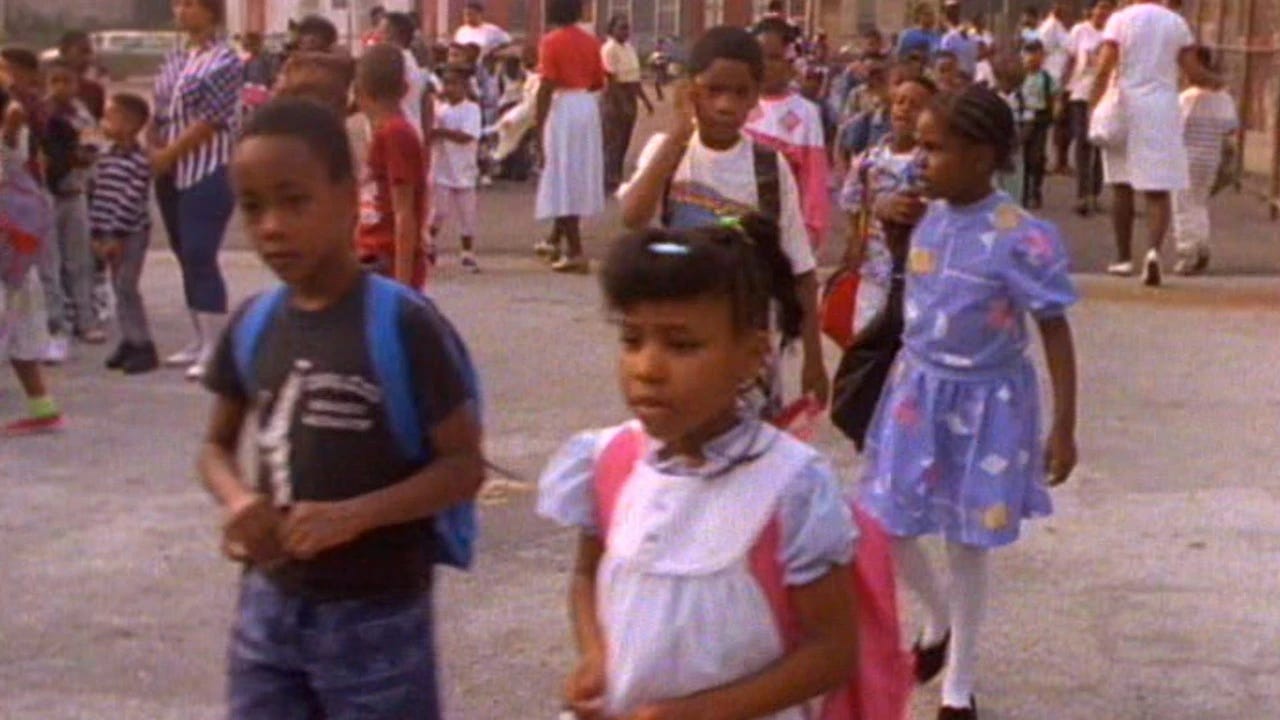
I Am A Promise: The Children of Stanton Elementary School
Susan Raymond, 1993
Rating: BBBB
An elementary school in a rough Philadelphia neighbourhood is, in this heartfelt documentary, the voice of all underfunded inner-city schools in America. Filmmakers Susan and Alan Raymond turned their cameras on E.M. Stanton Elementary School for a whole year and, particularly, on its principal Deanna Burney, as she takes what appears to be a personal one-on-one approach with all the children in her school, encouraging their successes and holding them responsible for their failures. Ninety percent of students at Stanton come from single-parent households, almost all live in poverty and the school is situated in an area that frequently has crime and drug busts happening nearby. Burney’s belief is that being from the inner city is no reason to believe these children can’t fulfill the promise of their potential, and worries about doing enough for them given that she knows their background will be held against them later in life. How audiences react to Burney’s methods, particularly in her way of seeming like she is co-parenting with a child’s mother or father during parent-teacher meetings, will vary; the optics of a well-dressed white lady running a school for an almost entirely African-American student body will be even more provocative for viewers now than they were at the time the film was made. Either way the content hits you, however, there’s no denying that the Raymonds do an expert job of knowing what scenes and situations are riveting enough to be kept in the finished film, and they create something that is at once sympathetic, moving and challenging.
Winner: Best Documentary (Feature)
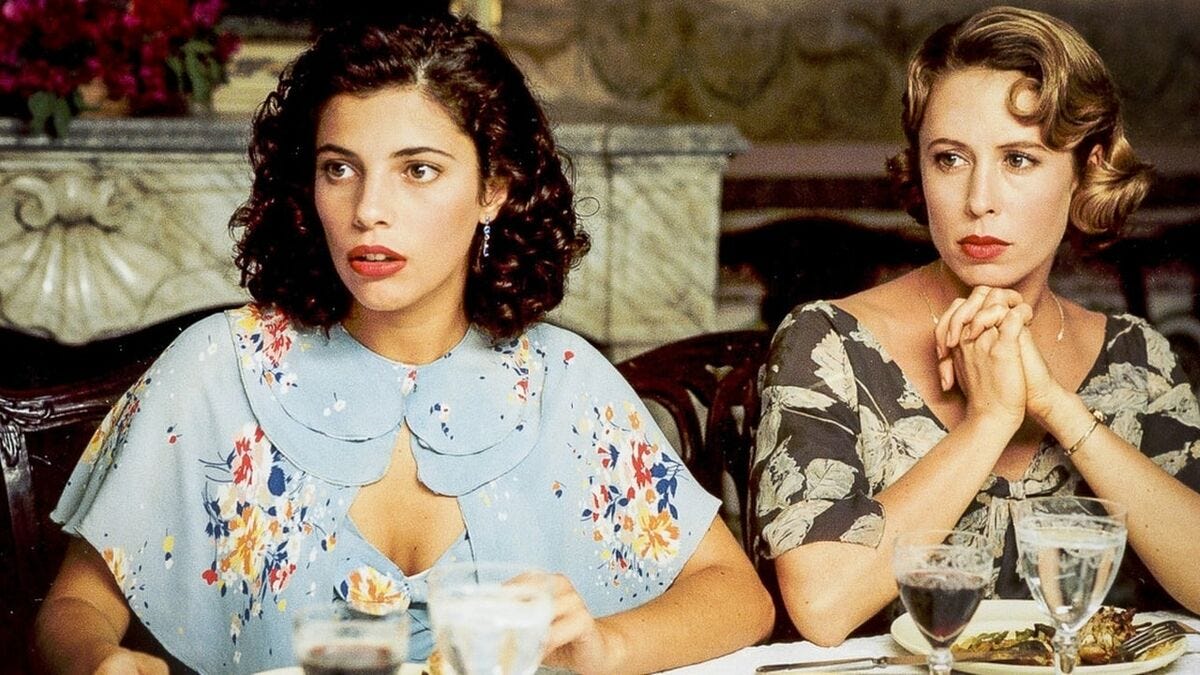
Belle Epoque
Fernando Trueba, 1992
Rating: BBB
Cast: Jorge Sanz, Fernando Fernán-Gómez, Maribel Verdú, Ariadna Gil, Penélope Cruz, Miriam Díaz Aroca, Gabino Diego, Agustín González, Chus Lampreave, Mary Carmen Ramírez, Michel Galabru, Jesús Bonilla, María Galiana, Manolo Huete, José Antonio Sacristán, Marciano de la Fuente
An army deserter happens upon a farm that houses a man and his four daughters. Immediately offering him shelter, the old man has no idea what trouble he is inviting by introducing this young buck to four girls who have too little exposure to the male element. One by one the sisters seduce him until he finally finds the one that captures his heart. The Academy frequently chooses the safest option in the Foreign-Language (later “International”) film category, it’s hard to see why this one’s more impressive than Farewell, My Concubine unless you didn’t bother to watch both, but it is a warm and witty comedy that will be cherished by those who don’t forget it. Well before she became a household name in America, it also features an early performance by the great Penélope Cruz.
Winner: Best Foreign-Language Film
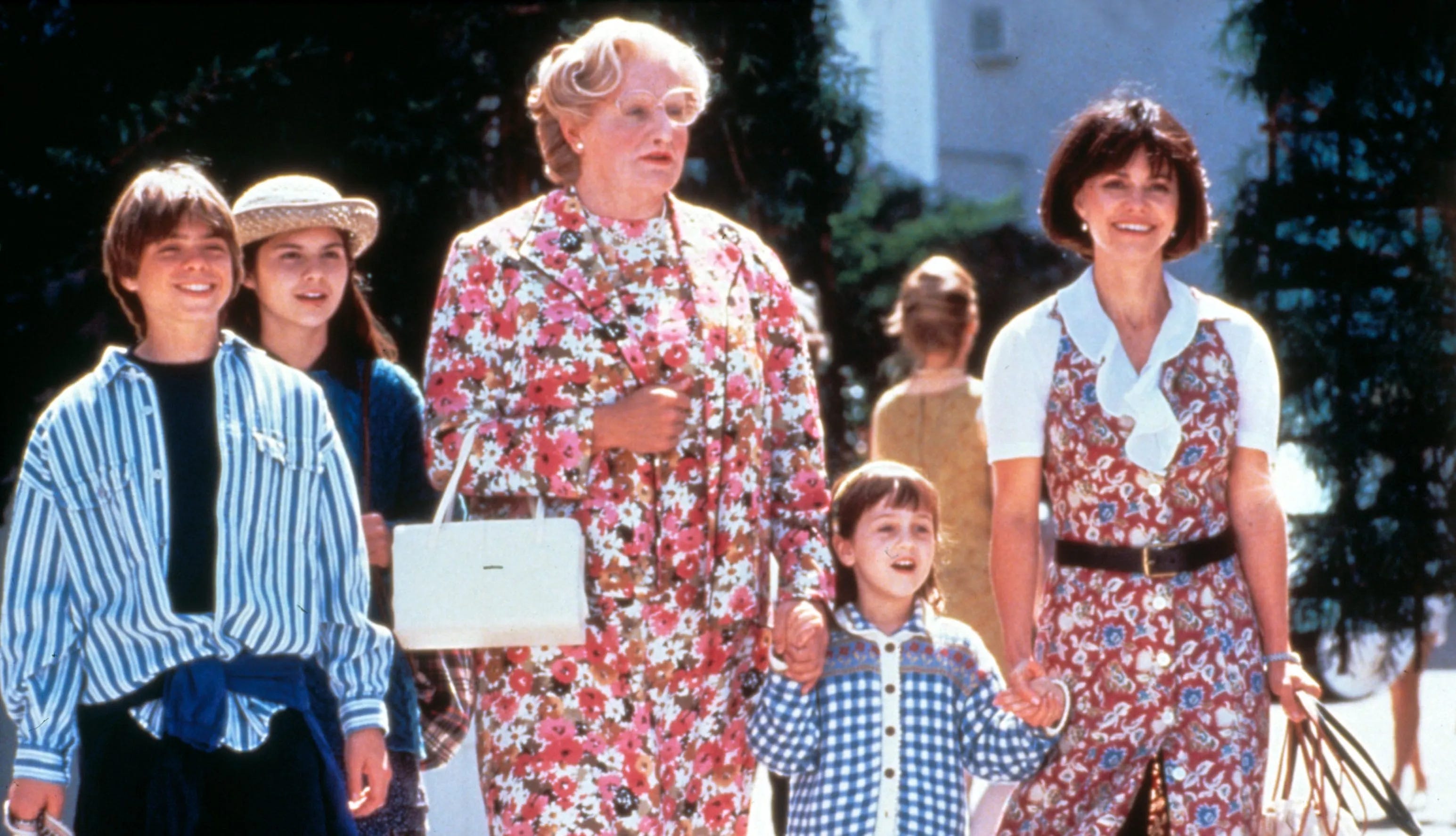
Mrs. Doubtfire
Chris Columbus, 1993
Rating: BBBB
Cast: Robin Williams, Sally Field, Pierce Brosnan, Harvey Fierstein, Polly Holliday, Lisa Jakub, Matthew Lawrence, Mara Wilson, Robert Prosky, Anne Haney, Scott Capurro, Martin Mull, William Newman
After a bitter custody battle with ex-wife Sally Field, Robin Williams is terrified of losing time with his three children when he learns that she plans to hire a housekeeper to keep watch over her house in order to focus on her career. He answers Field’s ad after having taken on the disguise of an elderly English woman, quickly earning the position and almost immediately winning over the hearts of the entire household. One of the biggest hits of the year, this one’s impressive makeup effects make it believable that Williams would fool the people on screen, never creepy looking and easily facilitating the warm and humour of one of his career-best performances. The film runs much longer than it should, but despite a plot that feels a bit alarming when examined too close, as concept comedy it’s a pure delight.
Winner: Best Makeup
Jurassic Park
Steven Spielberg, 1993
Rating: BBBB
Cast: Sam Neill, Laura Dern, Jeff Goldblum, Richard Attenborough, Bob Peck, Martin Ferrero, B.D. Wong, Joseph Mazzello, Ariana Richards, Samuel L. Jackson, Wayne Knight, Jerry Molen, Miguel Sandoval, Cameron Thor, Whit Hertford, Greg Burson, Richard Kiley
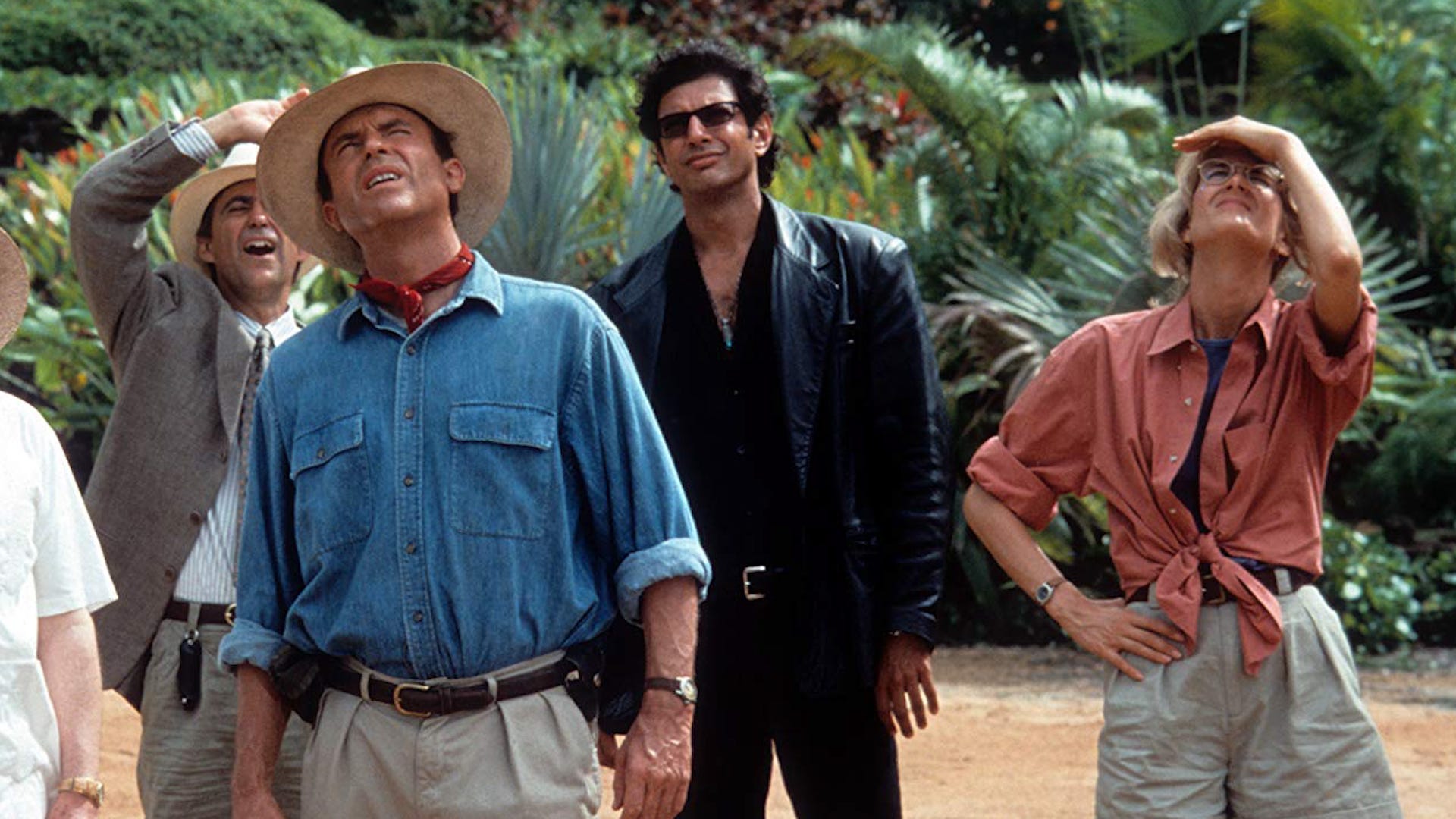
Sam Neill and Laura Dern are paleontologists who are invited to a remote Costa Rican island belonging to a billionaire (Richard Attenborough) to view his latest project. After years of digging up fossilized dinosaur bones, you could just imagine their surprise to find that Attenborough’s island is, thanks to some scientific wizardry, populated by living, breathing dinosaurs; the plans are to make it a theme park, and the insurance companies require an endorsement by trained professionals before going ahead with the project. Joined by a mathematician (Jeff Goldblum) and Attenborough’s adorable nephew (Joseph Mazzello) and niece (Ariana Richards), Neill and Dern tour the park until something goes wrong: malfunctions in the system occur and the beasts are let out of their cages, leaving a group of people at the mercy of T-Rexes and vicious raptors. Sequels and ripoffs have abounded plenty from this marvelous disaster film, one which had the but none of them have been able to master the sense of wonder and excitement of the original. Acting is top-notch, the script (based very loosely on Michael Crichton’s original novel) is thorough and Spielberg, who managed to have quite the successful year between this and his Best Picture winner, has a marvelous time returning to the kind of entertainment upon which he established his reputation.
Winner: Best Sound; Best Sound Effects Editing; Best Visual Effects
Defending Our Lives
Winner: Best Documentary (Short Subject)
The Wrong Trousers
Winner: Best Short Film (Animated)
Black Rider
Winner: Best Short Film (Live-Action)