
The 1947 Oscars: Part 1
The Winners
The year that is more or less the beginning of the blacklist was also, ironically enough, the first time Elia Kazan won Oscars. There were no sweeps this year, three was the maximum number of awards won by any film including the Best Picture prize, while Song of the South, which was initially released in 1946, was given its music prize a year later (and today can rarely be seen in its complete form).
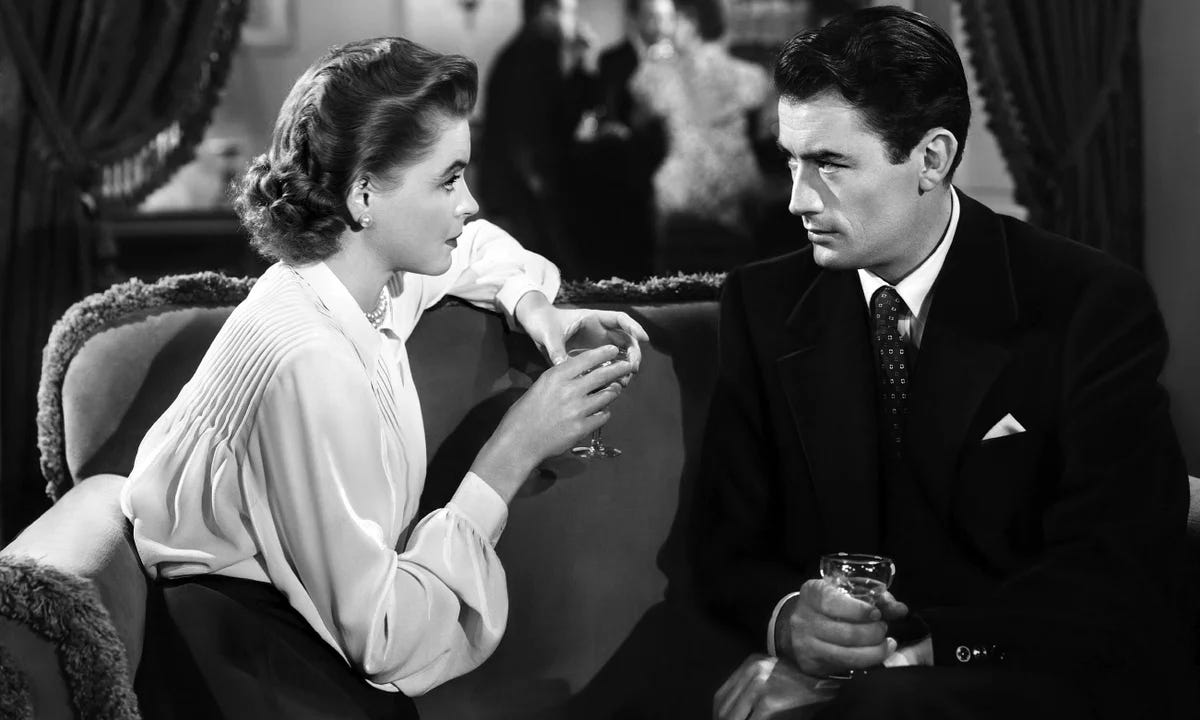
Gentleman’s Agreement
Elia Kazan, 1947
Rating: BBB
Cast: Gregory Peck, Anne Revere, Dorothy McGuire, June Havoc, John Garfield, Albert Dekker, Celeste Holm, Jane Wyatt
Gregory Peck decides to research anti-Semitism for his newspaper by taking up residence under a Jewish name, and seeing how he is treated by others in his community. This film has many great moments that point out racism and bigotry in America (such as, in one poignant dinner scene, showing that someone going along with an offensive joke is just as culpable as the one telling it). It feels tamer than it should, even for its time, but I suppose the decision to even tell this story is admirable enough when you consider that the target audience being lectured (mostly white Americans) was the one expected to buy tickets.
Winner: Best Picture; Best Supporting Actress (Celeste Holm); Best Director (Elia Kazan); Nominations: Best Actor (Gregory Peck); Best Actress (Dorothy McGuire); Best Supporting Actress (Anne Revere); Best Film Editing; Best Writing (Screenplay)
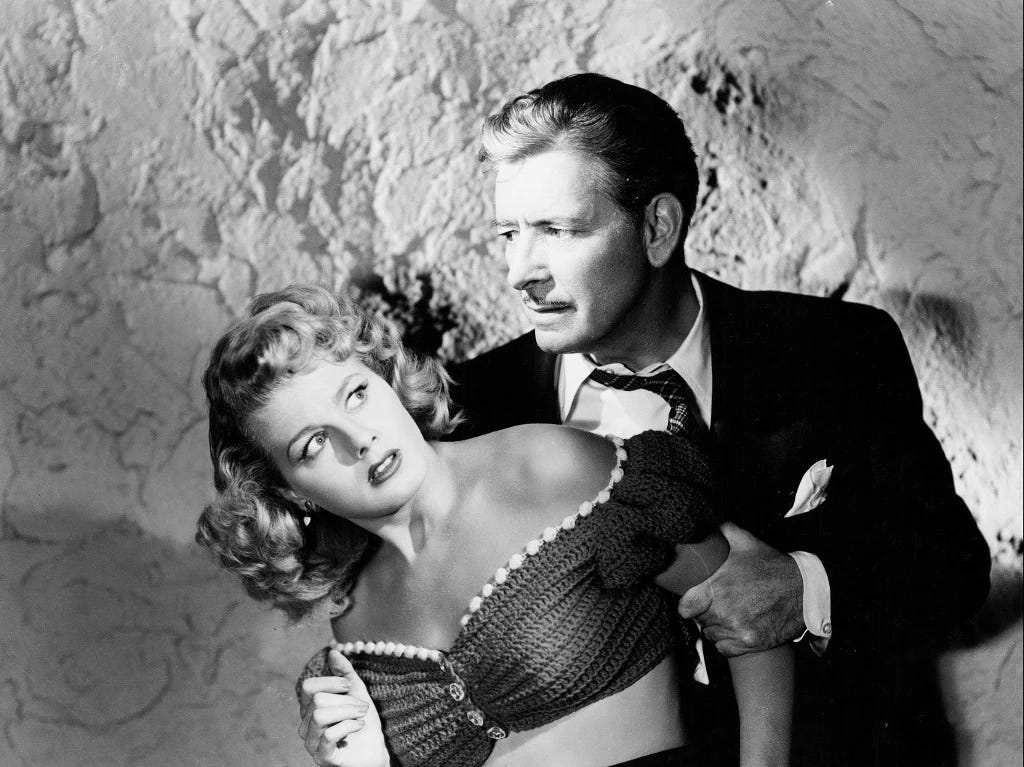
A Double Life
George Cukor, 1947
Rating: BB
Cast: Ronald Colman, Signe Hasso, Edmond O’Brien, Shelley Winters, Ray Collins, Philip Loeb, Millard Mitchell, Joe Sawyer, Charles La Torre, Whit Bissell
Ronald Colman plays a famous Broadway actor who struggles with detaching from the job, frequently co-starring with Signe Hasso after having romanced, married and divorced her (all depending on the mood that his latest role has put him in). Following the success of a social comedy in which he played a lovelorn butler, Colman accepts his next challenge despite his fear of the role’s darkness: Shakespeare’s Othello, opposite Hasso as Desdemona. The production is a huge success and runs for over a year as Colman is slowly taken over by the character, becoming a jealous tyrant who suspects women of treachery and infidelity even when he hardly knows them. Sounds like a fun idea for a film and one that the usually stalwart writing team of Ruth Gordon and Garson Kanin could write in their sleep, but between their plastic understanding of theatre and acting (Colman’s character isn’t a method actor, he’s a psychopath) and George Cukor’s unmotivated direction, this one is an undeniable dud. Colman’s performance doesn’t help much either, a gorgeous movie star and elegant charmer who doesn’t have the layers required for the role (and whose career-making performances, to be clear, never required them). Shelley Winters appears as a rough waitress at an Italian food restaurant willing to do whatever it takes to make it on the stage, and, other than the beautiful cinematography and terrific art direction, she is the film’s most memorable element.
Winner: Best Actor (Ronald Colman); Best Score of a Dramatic or Comedy Picture; Nominations: Best Directing (George Cukor); Best Writing (Original Screenplay)
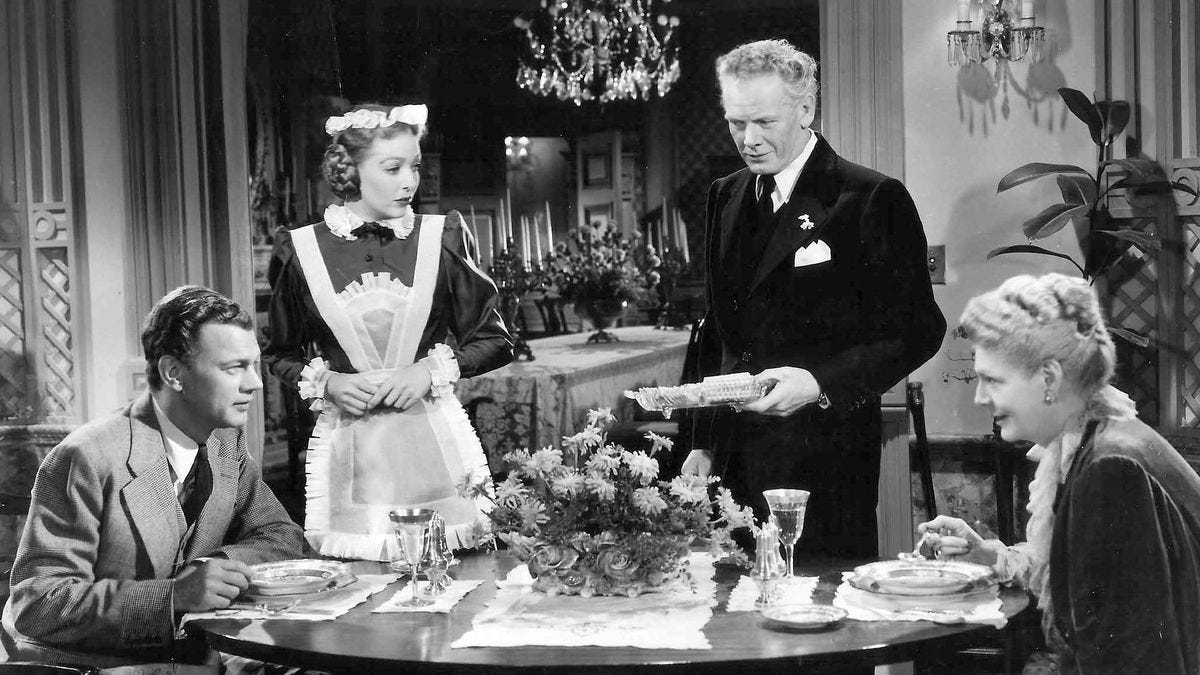
The Farmer’s Daughter
H.C. Potter, 1947
Rating: BBB.5
Cast: Loretta Young, Joseph Cotten, Ethel Barrymore, Charles Bickford, Rose Hobart, Rhys Williams, Harry Davenport, Tom Powers, William Harrigan, Lex Barker, Harry Shannon, Keith Andes, Thurston Hall, Art Baker, Don Beddoe, James Arness, Anna Q. Nilsson, John Gallaudet, William B. Davidson, Cy Kendall, Frank Ferguson, William Bakewell, Charles Lane
Loretta Young is delightful in this curiously funny story about a Swedish farm girl who moves to the big city to become a nurse and ends up being a housemaid for a congressman (Joseph Cotten) and his mother (Ethel Barrymore). Young constantly gives her intelligent input during political conversations at the dinner table until it culminates with a rally where she challenges the family’s top political candidate and unwittingly becomes one herself. Now she finds herself running for congress, but not before her opponent makes good use of an inconvenient secret of her past in order to smear her. This intelligently written film benefits from a marvelously rebellious ending: where women in movies are usually forced to give up their careers for marriage, this lady decides she can have it all. Young deserved her Oscar, a rare choice for a comedy performance, but she’s just the beginning of the delights to be had here.
Winner: Best Actress (Loretta Young); Nominations: Best Supporting Actor (Charles Bickford)
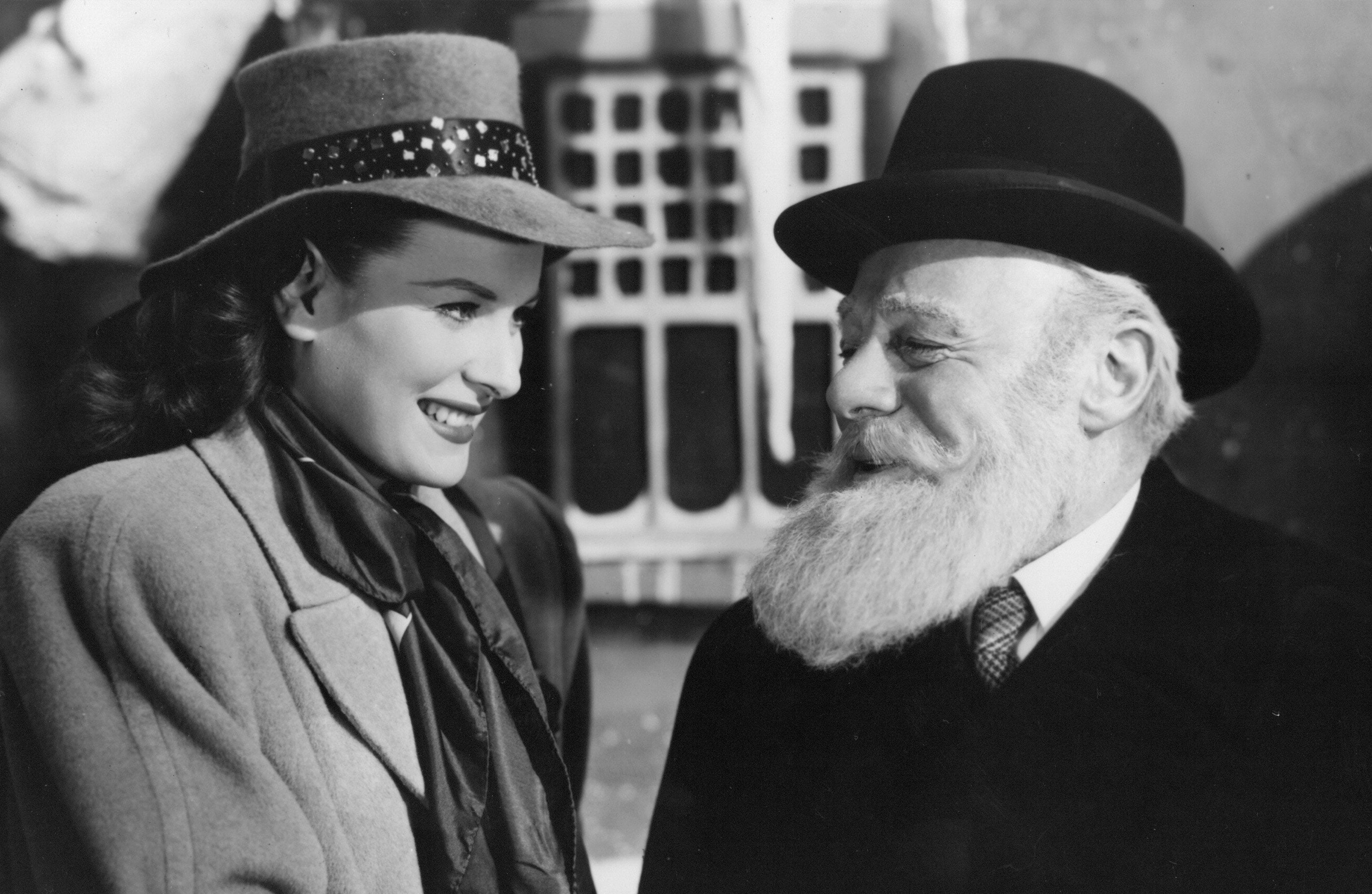
Miracle on 34th Street
George Seaton, 1947
Rating: BBBB
Cast: Maureen O’Hara, John Payne, Edmund Gwenn, Gene Lockhart, Natalie Wood, Porter Hall, William Frawley, Jerome Cowan, Philip Tonge
Although not as ubiquitously adored as It’s A Wonderful Life as classic Christmas movies go, this one has the advantage of being much sassier than Capra’s heartwarmer. Maureen O’Hara is excellent as a Macy’s employee who is in serious trouble when the Santa Claus she has hired for the annual Christmas parade turns up drunk and unable to fulfill his duties. A kindly older gentleman (Edmund Gwenn) shows up and insists he is right for the job, which he does so well that he is then hired as the store’s Santa for the holiday period, charming everyone around him with his sparkly personality and social ease. Calling himself Kris Kringle and assuring everyone that he actually is the man from the North Pole, the impish senior gets in trouble when he tells children to go to other department stores to find toys that aren’t available at Macy’s, which nearly gets him fired until the store’s executives find a way to turn his tactic into something with which to promote their own confident good nature. Meanwhile, O’Hara’s daughter (a young and already commanding Natalie Wood) doubts his claims that he is Santa Claus but slowly gives in to his appeal, all the while the store’s vengeful staff psychiatrist puts the old man’s assertions to the test and gets him in trouble with the law. Rife with message that question the morality of post-war capitalism, the film was made only moments before this kind of healthy skepticism would raise Red Scare flags; seeing O’Hara and John Payne fall in love while rich old men find ways to succeed in business without really trying is a cinematic three course meal, a movie with a message that is also genuinely lovely and heartfelt. Gwenn’s incredibly deft comedic turn steals the show, however, deservedly winning an Academy Award for good cheer that is rooted in something much deeper than sentimental fluff (you’ll fall as much in love with him when he speaks to a little Dutch refugee as Wood does). Remade in 1994 with Richard Attenborough and Mara Wilson (and with a hearing-impaired girl in the film’s most endearing scene).
Winner: Best Supporting Actor (Edmund Gwenn); Best Writing (Motion Picture Story); Best Writing (Screenplay); Nomination: Best Motion Picture
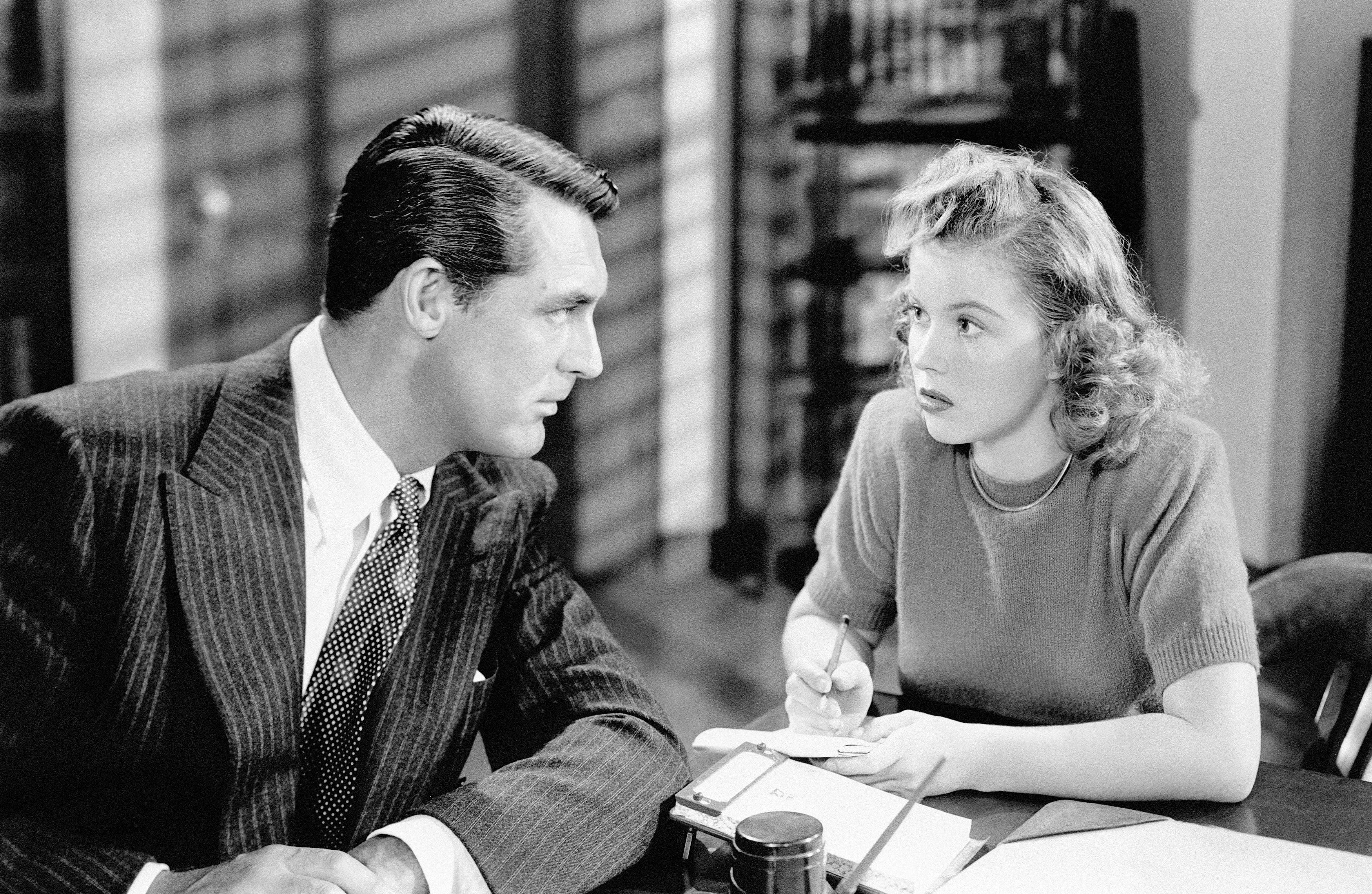
The Bachelor and the Bobby-Soxer
Irving Reis, 1947
Rating: BBB
Cast: Cary Grant, Myrna Loy, Shirley Temple, Rudy Vallée, Ray Collins, Harry Davenport, Johnny Sands, Don Beddoe, Lillian Randolph, Veda Ann Borg, Dan Tobin, Ransom M. Sherman, William Bakewell, Irving Bacon, Ian Bernard, Carol Hughes, William Hall, Gregory Gaye
Witty but dated romantic comedy featuring a grown-up Shirley Temple as a lovelorn teenager. While her older sister Myrna Loy flouts tradition by remaining single and working as a judge, Temple ignores her high school boyfriend when she meets wayward bachelor Cary Grant and becomes obsessed with him. It gets complicated when he falls in love with Loy, which is even further tangled by the fact that they meet when he is brought before her under charges of being drunk and disorderly. The manic energy with which the ruse is performed moves the story so quickly that you don’t have time to notice that it’s preposterous, and with Grant looking that good in a series of exquisite suits, at least all the madness pointed in his direction makes perfect sense. It’s a perfect time capsule of a bygone age, but Sidney Sheldon’s Oscar-winning screenplay, written well before he was the purveyor of bestselling beach reads, sparkles with fun moments of zesty dialogue, and the stars are just wonderful.
Winner: Best Writing (Original Screenplay)
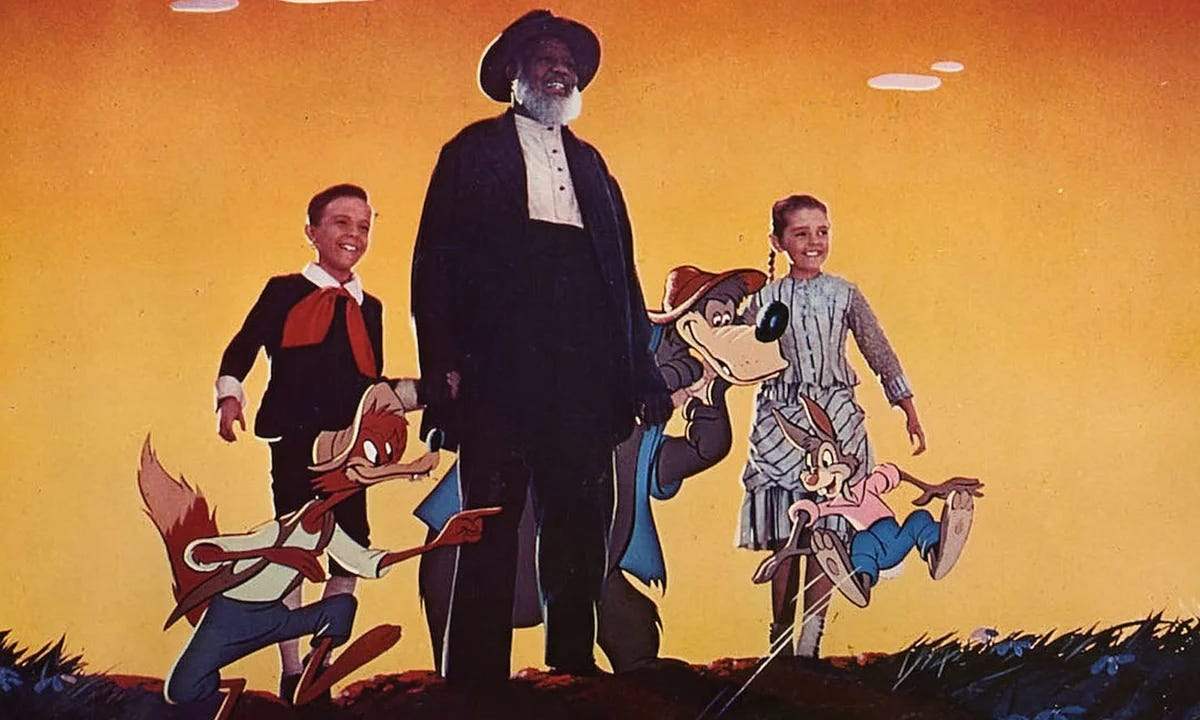
Song of the South
Harve Foster, Wilfred Jackson, 1946
Rating: BB
Cast: James Baskett, Bobby Driscoll, Luana Patten, Glenn Leedy, Ruth Warrick, Lucile Watson, Hattie McDaniel, Erik Rolf, Olivier Urbain, Mary Field, Anita Brown, George Nokes, Gene Holland, Johnny Lee, James Baskett, Nick Stewart
Disney has a tendency to keep this one hidden from the nostalgia machine that trots out their classics from the same period, embarrassed in more modern and enlightened times by a film that sets its storytelling in the milieu of a slave quarters, with an African American character who is treated as something of a delightful simpleton. At the time of its release, the film’s mythologizing of the Ole’ South was well received and Bobby Driscoll became a child star for his role as a young boy who is brought to his grandmother’s plantation, distraught over his father’s having left his mother behind while they work out their marital differences. Attempting to run away, Driscoll is interrupted in his escape by loveable Uncle Remus (James Baskett), who tells him stories of Brer Rabbit that mirror the child’s own conundrum and move the film from its lush live-action photography into animated sequences. Inspired by Joel Chandler Harris’s stories (which he took from traditional Gullah tales), the film falters as entertainment even if you choose to take on the burden of its problematic racial politics, the live-action story is dull and Driscoll is not a particularly likeable figure, while the cartoon sequences are not directed with much skill. A few brief sequences that place Baskett in an animated surrounding show the Disney studio at the forefront of film technology development, it looks about as good as it would in Mary Poppins almost twenty years later, but other than this and the Oscar winning tune “Zip-A-Dee-Doo-Dah”, I can’t say there’s much to recommend it.
Winner: Best Music (Song) (”Zip-A-Dee-Doo-Dah”); Special Award (James Baskitt); Nominations: Best Music (Scoring of a Musical Picture)
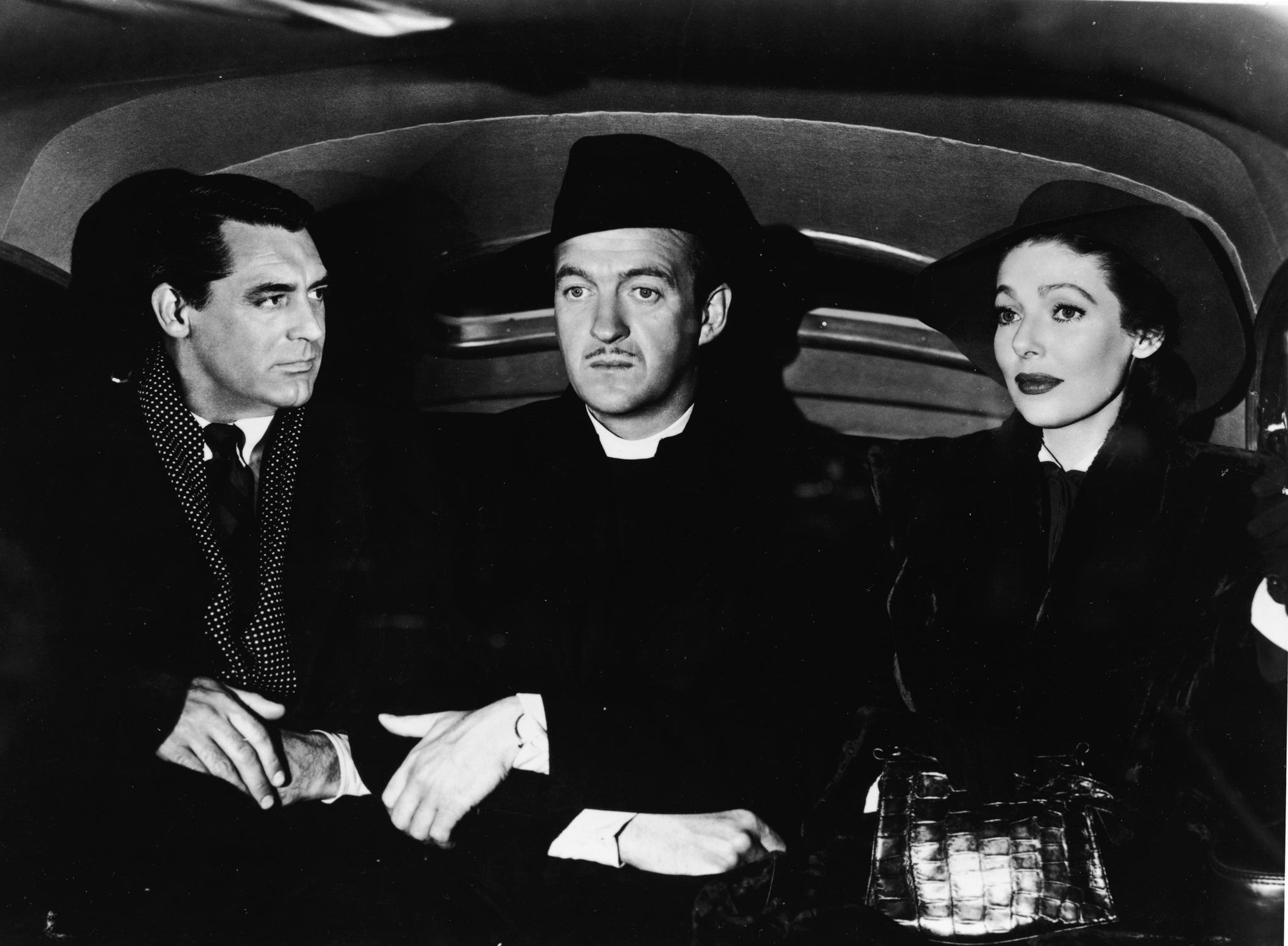
The Bishop’s Wife
Henry Koster, 1947
Rating: BBBB
Cast: Cary Grant, Loretta Young, David Niven, Monty Woolley, James Gleason, Gladys Cooper, Elsa Lanchester, Sara Haden, Karolyn Grimes, Tito Vuolo, Regis Toomey, Sarah Edwards, Margaret McWade, Anne O’Neal, Ben Erway, Erville Alderson, Bobby Anderson, Teddy Infuhr, Eugene Borden, Almira Sessions, Florence Auer, Margaret Wells, Isabel Jewell, David Leonard, Dorothy Vaughan, Edgar Dearing, The Mitchell Boychoir
Delightful romantic comedy about a frustrated bishop (David Niven) who can’t find a way to build a new cathedral for his parish or work things out with his unhappily ignored wife (Loretta Young). After praying for guidance, an angel appears (in the form of Cary Grant) to help him along, only this angel has a devilish appetite for mischief and a yen for the bishop’s beautiful wife. Beautifully photographed and scored, the films threatens to invade sappy territory on more than one occasion but thankfully never succeeds; Young is perfectly lovely as the wife, and Grant is so dapper that you just have to love the story even if it dares oppose all credibility (just indulge in the scene where he reduces Gladys Cooper to tears). Remade, less successfully, as The Preacher’s Wife in 1996.
Winner: Best Sound Recording; Nominations: Best Motion Picture; Best Director (Koster); Best Film Editing; Best Music (Music Score of a Dramatic or Comedy Picture)
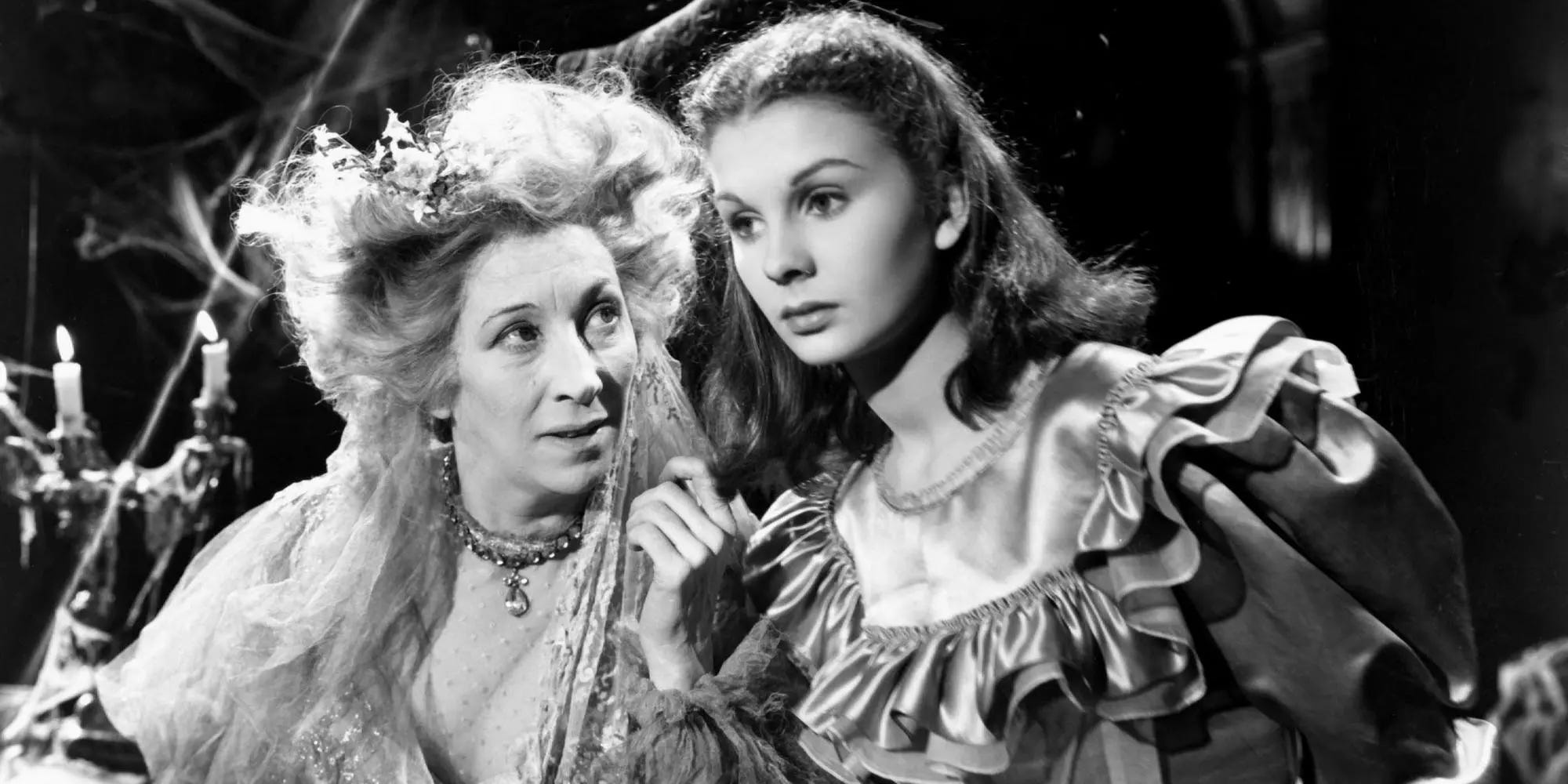
Great Expectations
David Lean, 1946
Rating: BBBBB
Cast: John Mills, Anthony Wager, Valerie Hobson, Jean Simmons, Bernard Miles, Francis L. Sullivan, Finlay Currie, Martita Hunt, Alec Guinness, John Forrest, Ivor Barnard, Freda Jackson, Eileen Erskine, George Hayes, Hay Petrie, Torin Thatcher, O. B. Clarence, John Burch, Richard George, Grace Denbeigh-Russell, Everley Gregg, Anne Holland, Frank Atkinson, Gordon Begg, Edie Martin, Walford Hyden, Roy Arthur
The best adaptation of a Dickens novel that I have ever seen. A young boy called Pip is sent to the house of a strange woman (Martita Hunt) who lives in a crumbling mansion with her beautiful niece Estella. She is raising her niece to feel indifferent to the affections of men in order to make up for a lost love of her own, but is challenged by Pip’s strong feelings for the girl. When he grows up and pursues his own success, he finds himself helped by unknown benefactors and held back by his own naivete, coming to find that the opportunity to know yourself and gain wisdom is far more valuable than the validations of the material world. Gorgeously photographed, endlessly entertaining, this is an exceptionally fine drama with a marvelous cast that also includes John Mills, as the grown up Pip, and Alec Guinness.
Winner: Best Art Direction-Black-and-White; Best Cinematography-Black-and-White; Nominations: Best Motion Picture; Best Directing (Lean); Best Writing (Screenplay)

Black Narcissus
Michael Powell, Emeric Pressburger, 1947
Rating: BBBBB
Cast: Deborah Kerr, Sabu, David Farrar, Flora Robson, Esmond Knight, Jean Simmons, Kathleen Byron, Jenny Laird, Judith Furse, May Hallatt, Eddie Whaley Jr., Shaun Noble, Nancy Roberts, Ley On
One of the best British films ever made, shot entirely at Pinewood with painted matte backgrounds to recreate the Himalayas (and astonishingly well at that), superbly textured and mature, thematically ahead of any movie made in its period. Sister Clodagh (Deborah Kerr) heads a superb group of performers as the Sister Superior of a group of Anglican nuns who move to a convent in a remote mountain village in India, only to find that their confidence and strength in their religion is no match for the mystic powers of the East. Sexual frustration over local white man Dean (David Farrar), weakening faith, harsh climate and the growing fondness for their homeland soon get to the sisters and they are forced to leave or die. It isn’t long before Kerr is having to outrun the jealous anger of a sex-crazed sister, and the richly colourful images rendered by cinematographer Jack Cardiff, winning an Oscar for his effort, reach their zenith in the stunning conclusion. It’s the greatest achievement from the team of Powell and Pressburger, adapted from the disturbingly erotic novel by Rumer Godden, though it was a long time before North Americans could appreciate it properly. Clodagh’s flashbacks to her youth and disappointment over her teenage sweetheart were cut by American censors upon first release, likely upset about allowing a film to show a nun who has taken her vows to escape a failed love affair (the scenes have since been restored).
Winner: Best Art Direction-Colour; Best Cinematography-Colour
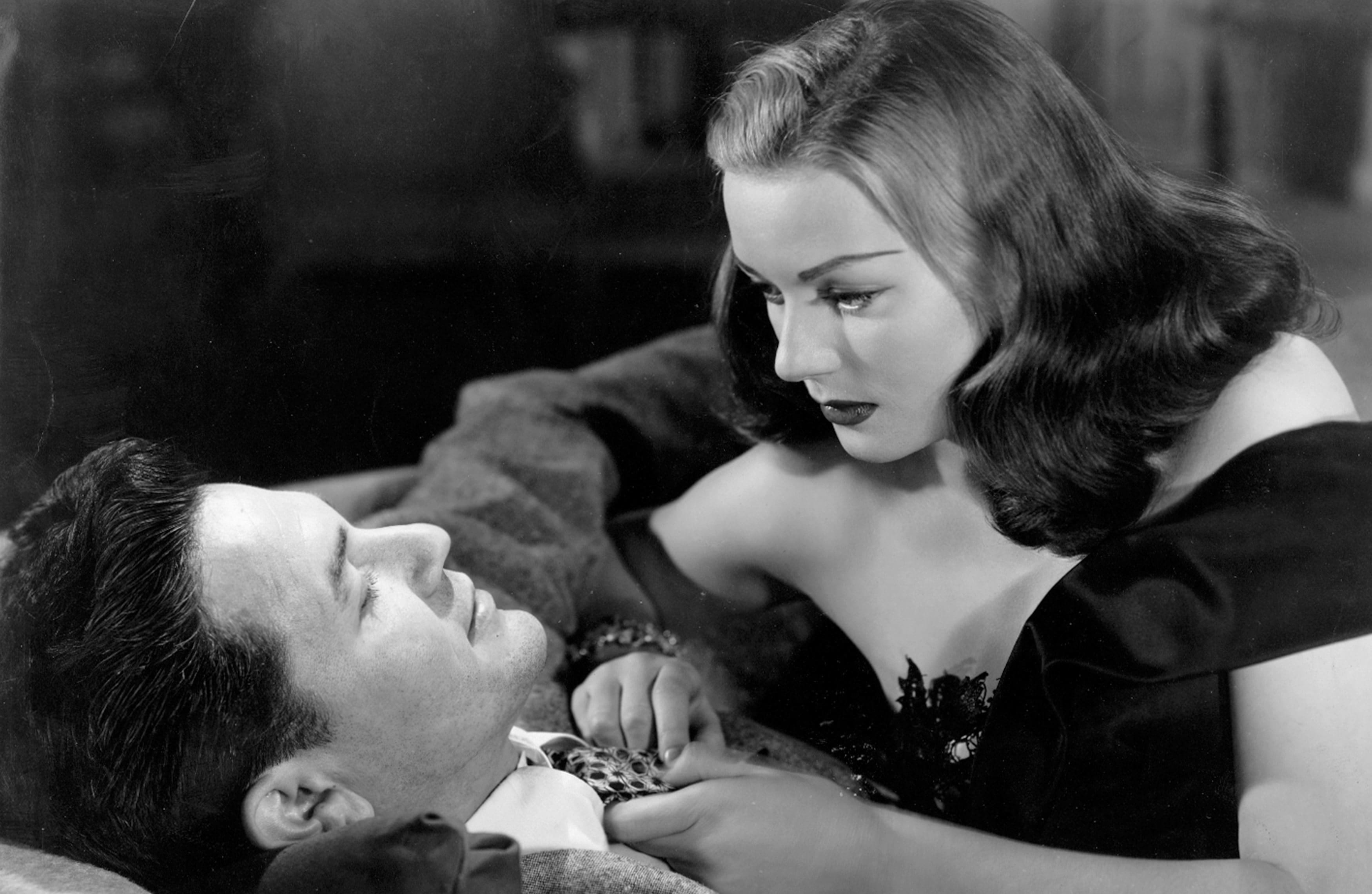
Body and Soul
Robert Rossen, 1947
Rating: BBBB.5
Cast: John Garfield, Lilli Palmer, Hazel Brooks, Anne Revere, William Conrad, Joseph Pevney, Lloyd Gough, Canada Lee, Art Smith, Larry Steers
John Garfield plays a kid from the wrong side of the tracks who is desperate to make good and take care of his mother after the tragic death of his shop owner father. He starts prizefighting for money, something he did for fun before his father’s death but now must take seriously and do well at, but his obsession with climbing the ladder of success leads to destruction. Anne Revere is memorable as Garfield’s sarcastic mother, and Lilli Palmer lends wonderful support as his girlfriend, but the film all belongs to the lead actor’s powerhouse performance.
Winner: Best Film Editing; Nomination: Best Actor (John Garfield); Best Original Screenplay
Green Dolphin Street
Victor Saville, 1947
Winner: Best Special Effects; Nominations: Best Cinematography-BW, Best Film Editing, Best Sound Recording
Design For Death
Richard Fleischer, 1947
Winner: Best Documentary Feature
Mother Wore Tights
Walter Lang, 1947
Winner: Best Music (Scoring of a Musical Picture); Nominations: Best Cinematography-Color; Best Music (Song) (”You Do”)